Goodreads helps you follow your favorite authors. Be the first to learn about new releases!
Start by following Joseph Telushkin.

Showing 1-30 of 43
“Then when G-d asks [Cain], 'Where is your brother
Abel?' he arrogantly responds, 'I do not know. Am I
my brother's keeper?' In essence, the entire Bible is
written as an affirmative response to this question.”
―
Abel?' he arrogantly responds, 'I do not know. Am I
my brother's keeper?' In essence, the entire Bible is
written as an affirmative response to this question.”
―
“I learned from this episode that a person can totally disagree with another opinion without feeling that the other opinion has to be silenced. Confidence in your idea means that you don’t have to make other people wrong for you to be right. Unfortunately, there are many people, among them many religious people, who don’t have this attitude.”
― Rebbe: The Life and Teachings of Menachem M. Schneerson, the Most Influential Rabbi in Modern History
― Rebbe: The Life and Teachings of Menachem M. Schneerson, the Most Influential Rabbi in Modern History
“This is what true love is about, the Rebbe told Sharfstein. “It’s the small acts that you do on a daily basis that turn two people from a ‘you and I’ into an ‘us'.”
― Rebbe: The Life and Teachings of Menachem M. Schneerson, the Most Influential Rabbi in Modern History
― Rebbe: The Life and Teachings of Menachem M. Schneerson, the Most Influential Rabbi in Modern History
“One year, on Yom Kippur eve, Salanter did not show up in synagogue for services. The congregation was extremely worried; they could only imagine that their rabbi had suddenly taken sick or been in an accident. In any case, they would not start the service without him. During the wait, a young woman in the congregation became agitated. She had left her infant child at home asleep in its crib; she was certain she would only be away a short while. Now, because of the delay, she slipped out to make sure that the infant was all right. When she reached her house, she found her child being rocked in the arms of Rabbi Salanter. He had heard the baby crying while walking to the synagogue and, realizing that the mother must have gone off to services, had gone into the house to calm him.”
― Jewish Literacy
― Jewish Literacy
“The fact that you are feeling unhappy does not entitle you to inflict your bad mood on others.”
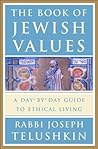
― The Book of Jewish Values: A Day-by-Day Guide to Ethical Living
― The Book of Jewish Values: A Day-by-Day Guide to Ethical Living
“She answered that she loved to read novels. The Rebbe responded that as novels are fiction, what you read in them is not necessarily what happens in real life. It’s not as if two people meet and there is a sudden, blinding storm of passion. That’s not what love or life is, or should be, about. Rather, he said, two people meet and there might be a glimmer of understanding, like a tiny flame. And then, as these people decide to build a home together, and raise a family, and go through the everyday activities and daily tribulations of life, this little flame grows even brighter and develops into a much bigger flame until these two people, who started out as virtual strangers, become intertwined to such a point that neither of them can think of life without the other. This is what true love is about, the Rebbe told Sharfstein. “It’s the small acts that you do on a daily basis that turn two people from a ‘you and I’ into an ‘us.”
― Rebbe: The Life and Teachings of Menachem M. Schneerson, the Most Influential Rabbi in Modern History
― Rebbe: The Life and Teachings of Menachem M. Schneerson, the Most Influential Rabbi in Modern History
“action is the paramount thing. And certainly one should not use words to justify one’s own self-interest.” When”
― Rebbe: The Life and Teachings of Menachem M. Schneerson, the Most Influential Rabbi in Modern History
― Rebbe: The Life and Teachings of Menachem M. Schneerson, the Most Influential Rabbi in Modern History
“Whoever cannot survive without taking charity, such as an old, sick, or greatly suffering individual, but who stubbornly refuses to accept aid, is guilty of murdering himself…yet one who needs charity but postpones taking it and lives in deprivation so as to not trouble the community, shall live to provide for others." —Rabbi Joseph Karo (1488–1575), Shulkhan Arukh (The Code of Jewish Law), Yoreh Deah 255:2”
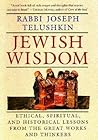
― Jewish Wisdom
― Jewish Wisdom
“God gave each of us a soul, which is a candle that He gives us to illuminate our surroundings with His light,” the Rebbe taught at a 1990 worldwide Chanukah satellite linkup. “We must not only illuminate the inside of homes, but also the outside, and the world at large.”
― Rebbe: The Life and Teachings of Menachem M. Schneerson, the Most Influential Rabbi in Modern History
― Rebbe: The Life and Teachings of Menachem M. Schneerson, the Most Influential Rabbi in Modern History
“Ameikh ami, ve’Elo-hai-ikh Elo-hai—Your people shall be my people, and your God my God.”
― Jewish Literacy
― Jewish Literacy
“Rabbi Hiyya advised his wife, “When a poor man comes to the door, be quick to give him food so that the same may be done to your children.” She exclaimed, “You are cursing our children [with the suggestion that they may become beggars].” But Rabbi Hiyya replied, “There is a wheel which revolves in this world.” —Babylonian Talmud, Shabbat 151b”
― Jewish Wisdom
― Jewish Wisdom
“The Rebbe then elaborated: “All knowledge you’ll ever learn, every experience you’ll have in life, are the circles. They’re not the center. If you don’t have a solid center, you’ll have jagged circles, incomplete circles, many different circles. I sense that you need that center before you start building your circles.”
― Rebbe: The Life and Teachings of Menachem M. Schneerson, the Most Influential Rabbi in Modern History
― Rebbe: The Life and Teachings of Menachem M. Schneerson, the Most Influential Rabbi in Modern History
“The question of bread for myself is a material question, but the question of bread for my neighbor is a spiritual question.”
― Jewish Wisdom
― Jewish Wisdom
“It’s not as if two people meet and there is a sudden, blinding storm of passion. That’s not what love or life is, or should be, about. Rather, he said, two people meet and there might be a glimmer of understanding, like a tiny flame. And then, as these people decide to build a home together, and raise a family, and go through the everyday activities and daily tribulations of life, this little flame grows even brighter and develops into a much bigger flame until these two people, who started out as virtual strangers, become intertwined to such a point that neither of them can think of life without the other. This is what true love is about, the Rebbe told Sharfstein. “It’s the small acts that you do on a daily basis that turn two people from a ‘you and I’ into an ‘us.”
― Rebbe: The Life and Teachings of Menachem M. Schneerson, the Most Influential Rabbi in Modern History
― Rebbe: The Life and Teachings of Menachem M. Schneerson, the Most Influential Rabbi in Modern History
“On the Rebbe’s willingness to offer opinions and advice on a large range of issues, including theology, business, family affairs, and even medical questions: “[First] I am not afraid to answer that I don’t know. If I know, then I have no right not to answer. When someone comes to you for help and you can help him to the best of your knowledge, and you refuse him this help, you become a cause of his suffering.”
― Rebbe: The Life and Teachings of Menachem M. Schneerson, the Most Influential Rabbi in Modern History
― Rebbe: The Life and Teachings of Menachem M. Schneerson, the Most Influential Rabbi in Modern History
“Only God can give us credit for the angry words we did not speak. —Rabbi Harold Kushner, When All You’ve Ever
Wanted Isn’t Enough, page 187”
― Jewish Wisdom
Wanted Isn’t Enough, page 187”
― Jewish Wisdom
“An important feature of good characterization in a novel is that the characters are dimensionalized and are not all of one piece. Human beings, as Singer noted, have contradictions.”
― Hillel: If Not Now, When?
― Hillel: If Not Now, When?
“The Rebbe now spoke in a manner that anticipated the work that was later to be done by the shluchim whom he dispatched throughout the United States and the world: “One must go to a place where nothing is known of Godliness, nothing is known of Judaism, nothing is even known of the Hebrew alphabet, and while there, put one’s own self aside and ensure that the other calls out to God! . . . Indeed, if one wants to ensure his own connection to God, he must make sure that the other person not only becomes familiar with but actually calls out to God!” It was not enough, it was never enough, to simply practice Judaism by oneself or in an already religiously observant community; one has to bring others to embrace God as well”
― Rebbe: The Life and Teachings of Menachem M. Schneerson, the Most Influential Rabbi in Modern History
― Rebbe: The Life and Teachings of Menachem M. Schneerson, the Most Influential Rabbi in Modern History
“Rabbi Simcha Bunam suggested that every person carry in his or her pockets two pieces of paper. On one should be written, “For my sake was the world created,” while the other should contain the words Abraham recited when he entreated God to spare the cities of Sodom and Gomorrah: “I am but dust and ashes” (Genesis 18:27).”
― The Book of Jewish Values: A Day-by-Day Guide to Ethical Living
― The Book of Jewish Values: A Day-by-Day Guide to Ethical Living
“In general, it should be noted, biblical law is evolutionary, not revolutionary...”
― Jewish Wisdom
― Jewish Wisdom
“The cruelty of Plato’s thinking, the Rebbe emphasized that day, was not just in breaking up the family unit. It was in depriving children of parental love. For it is the parents, not the state and its functionaries, who have a genuine love for their children. And depriving children of this love, which is their due, was perhaps Plato’s greatest cruelty.”
― Rebbe: The Life and Teachings of Menachem M. Schneerson, the Most Influential Rabbi in Modern History
― Rebbe: The Life and Teachings of Menachem M. Schneerson, the Most Influential Rabbi in Modern History
“Spinoza was a pantheist: He believed that God was within nature, not a separate Being with an independent will. “In Spinoza’s system,” Jewish philosopher Louis Jacobs has written, “God and Nature are treated as different names for the same thing. God is not ‘outside’ or apart from Nature. He did not create Nature but is Nature.” This doctrine set Spinoza at loggerheads with both Judaism and Christianity. It was absurd in his view to credit God with attributes such as will or intellect; that was like demanding that Sirius bark, just because people refer to it as the Dog Star. Spinoza tried to posit a system of ethics based on reason, not supernatural revelation.”
― Jewish Literacy
― Jewish Literacy
“In a world that was even more chauvinistic than our own, the Torah mandates that the Israelite people love peaceful non-Israelites living among them no less than they love themselves.
The German-Jewish philosopher Hermann Cohen rightly identifies this law as the beginning of what is known as 'ethical monotheism': 'The stranger was to be protected, although he was not a member of one's family, clan, religion, community or people, simply because he was a human being. In the stranger, therefore, man discovered the idea of humanity.”
― Biblical Literacy: The Most Important People, Events, and Ideas of the Hebrew Bible
The German-Jewish philosopher Hermann Cohen rightly identifies this law as the beginning of what is known as 'ethical monotheism': 'The stranger was to be protected, although he was not a member of one's family, clan, religion, community or people, simply because he was a human being. In the stranger, therefore, man discovered the idea of humanity.”
― Biblical Literacy: The Most Important People, Events, and Ideas of the Hebrew Bible
“As the former British chief rabbi Jonathan Sacks has expressed it: “If the Nazis searched out every Jew in hate, the Rebbe wished to search out every Jew in love.”
― Rebbe: The Life and Teachings of Menachem M. Schneerson, the Most Influential Rabbi in Modern History
― Rebbe: The Life and Teachings of Menachem M. Schneerson, the Most Influential Rabbi in Modern History
“sinat chinam, causeless hatred,”
― Rebbe: The Life and Teachings of Menachem M. Schneerson, the Most Influential Rabbi in Modern History
― Rebbe: The Life and Teachings of Menachem M. Schneerson, the Most Influential Rabbi in Modern History
“Never use damaging personal information to invalidate your adversary and, by implication, his contentions. ... If you watch your words when you fight, the issue can usually be resolved.”
― The Book of Jewish Values: A Day-by-Day Guide to Ethical Living
― The Book of Jewish Values: A Day-by-Day Guide to Ethical Living
“We all understand in theory that we should be able to love and respect those with whom we disagree, but few of us can do so. Often, people end up concluding that there is something deficient either in the intelligence or character of those with whom they disagree. Quite characteristically, this is what liberals and conservatives commonly think of each other, that their opponent has something wrong either with his head or his heart.”
― Rebbe: The Life and Teachings of Menachem M. Schneerson, the Most Influential Rabbi in Modern History
― Rebbe: The Life and Teachings of Menachem M. Schneerson, the Most Influential Rabbi in Modern History
“In 1952, a year after becoming Chabad’s leader, the Rebbe undertook to send a newly married couple to serve as shluchim in Brazil. Unlike the Lipskers, in this case the bride and her parents, all three Lubavitchers, were very unhappy with the Rebbe’s request. The father, who held a key position for the movement in Israel, couldn’t comprehend the idea of his daughter and son-in-law moving to a country with little Jewish infrastructure in place, and he wrote to the Rebbe to express his unhappiness. We possess no copy of the father’s letter, but the basic content of what he said is clear from the Rebbe’s response (when the letter was published, the Rebbe, as was his custom, omitted all names). The father, clearly pleased about the marriage, wrote that the family’s “happy event was [now] disturbed” by the news that the couple were to be sent abroad. It seems apparent from the Rebbe’s response that the father made no effort to disguise his displeasure at what the Rebbe had done. The Rebbe was in no way apologetic. He wrote in his capacity as a leader, in a sense as a military general who understood the need to deploy his troops where they were most needed, to “a place where your son-in-law and your daughter can fully utilize their potential.” The Rebbe acknowledged that moving to a foreign and largely nonobservant Jewish community requires a certain measure of self-sacrifice (mesirut nefesh), but he then posed a rhetorical question intended to overwhelm any further opposition. To paraphrase: “If one can’t expect such self-sacrifice from a graduate of our yeshiva, one who is a child as well of such a graduate and who is married to the daughter of such a graduate, if even from such people one can’t ask for a measure of self-sacrifice, then upon whom can one rely?” The Rebbe proceeded to offer both a carrot and a stick. Thus, he assured the father—knowing that the letter would be read by his daughter as well—that the couple would flourish in every meaningful manner by undertaking such a mission: “The vastness of the good fortune that will result if they accept this offer, including good fortune in a physical sense, is obvious to me.” On the other hand—and the Rebbe stated this as a fact, not a threat—refusing such a mission would cut the couple off from the work of the Previous Rebbe (who had died just two years earlier), and, by implication, from the Rebbe himself. Although he expressed “shock” that an offer to spread “the light of Torah and Chasidus” to unknowledgeable Jews could lead to the parents feeling that their happiness had been “disturbed,” he also set down, near the letter’s end, his trademark conclusion: “As stated above, I am not giving an order, Heaven forbid. This is only a suggestion.”
― Rebbe: The Life and Teachings of Menachem M. Schneerson, the Most Influential Rabbi in Modern History
― Rebbe: The Life and Teachings of Menachem M. Schneerson, the Most Influential Rabbi in Modern History
“Deborah agrees to accompany Barak, but can’t resist a jab at the sexism of the Israelite society: “Very well, I will go with you. However, there will be no glory for you in the course you are taking, for then the Lord will deliver Sisera into the hands of a woman”
― Biblical Literacy: The Most Important People, Events, and Ideas of the Hebrew Bible – A Complete Encyclopedia of Old Testament Stories and Laws
― Biblical Literacy: The Most Important People, Events, and Ideas of the Hebrew Bible – A Complete Encyclopedia of Old Testament Stories and Laws
“the trait a leader most needs is a lack of fear. Many people of extraordinary capabilities are held back by fear, fear of challenging others, fear of rejection, fear of being laughed at or of appearing to be naive or foolish.”
― Rebbe: The Life and Teachings of Menachem M. Schneerson, the Most Influential Rabbi in Modern History
― Rebbe: The Life and Teachings of Menachem M. Schneerson, the Most Influential Rabbi in Modern History