Goodreads helps you follow your favorite authors. Be the first to learn about new releases!
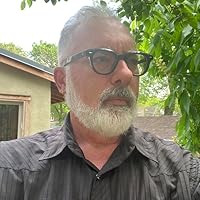
Start by following Ken Wilson.
Showing 1-4 of 4
“Kathleen takes my picture. She emails it to me later. I look ridiculous with the orange Buff pulled up over my head. We say goodbye and I continue walking past fields of swathed canola. Houses stand beyond them. I’m walking the interface between the country and the city: a shallow space, with fields butting up against houses, industry and agriculture commingled. The stubble is a rusty colour. Crispy blue J Cloth towels, scraps of sky, are caught in the roadside weeds.”
― Walking the Bypass: Notes on Place From the Side of the Road
― Walking the Bypass: Notes on Place From the Side of the Road
“I walk back across the overpass. A police car speeds by, lights flashing and siren wailing. A flock of red-winged blackbirds is singing in an overgrown dugout. There are so many of them; every slough and dugout has its own population. I surprise a pair of ducks, which splash into the air. I cross the Canadian Pacific Railway tracks. A Towmotor grumbles in the yard at Brandt Industries. I pick up a quartz crystal from the shoulder—discarded, perhaps, because its curative powers were exaggerated. An abandoned shoe lies next to the road. A plastic bag in a dry slough moves in the wind like a wounded bird.”
― Walking the Bypass: Notes on Place From the Side of the Road
― Walking the Bypass: Notes on Place From the Side of the Road
“Everything I can see from the shoulder of this highway—all the land, stretching far beyond the horizon in every direction—was the exclusive territory of Indigenous Peoples before settlers arrived and claimed ownership. What gives me—or any other settler—the right to be here? Is there any ethical basis for my presence here on Treaty 4 land? Or am I here only because of colonialist arguments like terra nullius, the doctrine of occupation, and the doctrine of discovery?”
― Walking the Bypass: Notes on Place From the Side of the Road
― Walking the Bypass: Notes on Place From the Side of the Road
“The spaces where I’m walking—grid roads, busy streets, and eventually the shoulder of a four-lane highway that partially encircles a small, provincial capital—are what Marc Augé would call non-places, “the real measure of our time.” While places are
about the possibility of stories, about human action, non-places are spaces of passive spectatorship, of looking—perhaps through the windshield of a car travelling at 110 kilometres per hour or faster—rather than doing. Non-places have no stories, no relationships, no connections. Instead, we interact with various institutions through the prescriptive, prohibitive, or informational signs posted in them for us to read: turn right, no smoking, Saskatoon 205 km. They are spaces with which most of us are
familiar, even if we usually hurry through them, paying little attention. They are more or less the same no matter where we are, and they define much of our contemporary reality: highways, airports,
shopping malls.”
―