Goodreads helps you follow your favorite authors. Be the first to learn about new releases!
Start by following Emily Stimpson.

Showing 1-7 of 7
“That’s the sacramental worldview. It’s a worldview where heaven comes to earth, grace penetrates matter, and every individual’s story is part of the cosmic story of salvation history. It’s a worldview where everything has a meaning, everyone has a purpose, and every moment is accounted for in a Divine Plan. It is, ultimately, a worldview that says Sartre was wrong and Flannery O’Connor was right. Hell isn’t other people. Other people are Christs.1 Without the sacramental worldview, there would be no plays by Shakespeare or concertos by Bach, no stories by Chesterton or mythologies by Tolkien. There would be no St. Peter’s, no Notre Dame, no Sistine Chapel, no David, no university system, no scientific method. The sacramental worldview made all that and more possible as gifted men and women strove to convey in words, music, marble, and methods the divine splendor of the world in which they lived. Then, that stopped. The Modernist Prism”
― These Beautiful Bones: An Everyday Theology of the Body
― These Beautiful Bones: An Everyday Theology of the Body
“It's about being ourselves, our real best selves, the women God made us to be. It's about reading the writing on our feminine souls—writing engraved there from the moment God formed us in our mothers' wombs—then living what that writing proclaims.”
―
―
“Our secondary vocation is what we do on the path to holiness. And our job is part of what we do. Whatever our work may be—doctor, ditch digger, or diaper changer—it doesn't matter. That work is part of our journey towards heaven. It's one of thing that help us get to God.”
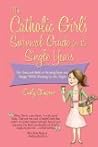
― The Catholic Girl's Survival Guide for the Single Years: The Nuts and Bolts of Staying Sane and Happy While Waiting for Mr. Right
― The Catholic Girl's Survival Guide for the Single Years: The Nuts and Bolts of Staying Sane and Happy While Waiting for Mr. Right
“God isn't impressed by fancy titles or Ivy League degrees. He's impressed by how faithfully we carry out the work he's entrusted to us. That work always has eternal significance, even if it seems to be of little temporal importance.”
― The Catholic Girl's Survival Guide for the Single Years: The Nuts and Bolts of Staying Sane and Happy While Waiting for Mr. Right
― The Catholic Girl's Survival Guide for the Single Years: The Nuts and Bolts of Staying Sane and Happy While Waiting for Mr. Right
“The goal of holiness is never to become a clone of St. Thérèse, St. Clare, or the Virgin Mary. The goal is to become you, a beautiful, one-of-a-kind daughter of God. Voices that tell you otherwise should be roundly dismissed.”
― The Catholic Girl's Survival Guide for the Single Years: The Nuts and Bolts of Staying Sane and Happy While Waiting for Mr. Right
― The Catholic Girl's Survival Guide for the Single Years: The Nuts and Bolts of Staying Sane and Happy While Waiting for Mr. Right
“Only in trusting what we can’t see or understand, will we ever see or understand.”
― The Catholic Girl's Survival Guide for the Single Years
― The Catholic Girl's Survival Guide for the Single Years
“as modernism sees it, the human body is nothing more than matter, to be molded, manipulated, and used. Devoid of divine purpose or meaning, it’s left for each of us, as individuals, to decide what we want to do with our body. We can ignore it and neglect it, or we can indulge its every appetite. We can nip it and tuck it, remaking it into whatever shape we desire, or we can cut it, starve it, and put it to rest when age, pain, or disease become too much to bear. We can give it away, again and again, to anyone we fancy in whatever ways we fancy, and we can do what we like with any new life that comes of that giving. When the body is seen as mere matter, anything goes. The body, however, isn’t mere matter. That’s a modernist fiction. Rather, as the Catholic anthropology of the theology of the body reminds us, man is a union of body and soul, made in the image of God. Which means our bodies are us. Your body is you. My body is me.”
― These Beautiful Bones: An Everyday Theology of the Body
― These Beautiful Bones: An Everyday Theology of the Body