Goodreads helps you follow your favorite authors. Be the first to learn about new releases!
Start by following A.N. Wilson.

Showing 1-30 of 81
“I'm not saying all publishers have to be literary, but some interest in books would help.”
―
―
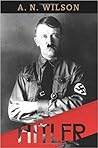
“As Hitler himself later enunciated, it matters not how idiotic the creed, what matters is the firmness with which it is enunciated.”
―
―
“[..] when a friendship has become a matter of arranging to meet, dates in diaries, agreement that next week or the next are 'no good', then it has been silently acknowledged that the old intimacy has gone.”
― My Name Is Legion: A Novel
― My Name Is Legion: A Novel
“When I left this country, the best part of forty years ago, England still seemed to have a soul. It had pulled together after the war and committed itself to a welfare system …"
"Jesus, it was the welfare system which drained this fucking country of its soul—can't you see that? The dependency culture destroyed any sense of having to do something for yourself. Do you think those violent, criminal bastards in your parish would have time to be muggers if they had ever been made to work?”
― My Name Is Legion: A Novel
"Jesus, it was the welfare system which drained this fucking country of its soul—can't you see that? The dependency culture destroyed any sense of having to do something for yourself. Do you think those violent, criminal bastards in your parish would have time to be muggers if they had ever been made to work?”
― My Name Is Legion: A Novel
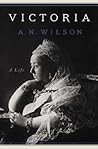
“The extreme paradox arose that one of the most passionate, expressive, humorous and unconventional women who ever lived was paraded before the public as a stiff, pompous little person, the ‘figurehead’ to an all-male imperial enterprise. This”
― Victoria: A Life
― Victoria: A Life
“I once asked Lady Moseley what she found so beguiling about Hitler's conversation. 'Oh, the jokes', she said at once.”
―
―
“The 1890s were apprentice years for Yeats. Though he played with Indian and Irish mythology, his symbolism really developed later. The decade was for him, as a poet, the years of lyric, of the Rhymers’ Club, of those contemporaries whom he dubbed the ‘tragic generation’. ‘I have known twelve men who killed themselves,’ Arthur Symons looked back from his middle-aged madness, reflecting on the decade of which he was the doyen. The writers and artists of the period lived hectically and recklessly. Ernest Dowson (1867–1900) (one of the best lyricists of them all – ‘I cried for madder music and for stronger wine’) died from consumption at thirty-two; Lionel Johnson (1867–1902), a dipsomaniac, died aged thirty-five from a stroke. John Davidson committed suicide at fifty-two; Oscar Wilde, disgraced and broken by prison and exile, died at forty-six; Aubrey Beardsley died at twenty-six. This is not to mention the minor figures of the Nineties literary scene: William Theodore Peters, actor and poet, who starved to death in Paris; Hubert Crankanthorpe, who threw himself in the Thames; Henry Harland, editor of The Yellow Book, who died of consumption aged forty-three, or Francis Thompson, who fled the Hound of Heaven ‘down the nights and down the days’ and who died of the same disease aged forty-eight. Charles Conder (1868–1909), water-colourist and rococo fan-painter, died in an asylum aged forty-one.”
― The Victorians
― The Victorians
“Kingsley wrote to Maurice, ‘They find that now they have got rid of an interfering God – a master-magician, as I call it – they have to choose between the absolute empire of accident, and a living, immanent, ever-working God.’21 To another correspondent, an atheist, he wrote, ‘Whatever doubt or doctrinal Atheism you and your friends may have, don’t fall into moral atheism. Don’t forget the Eternal Goodness, whatever you call it. I call it God.’22”
― The Victorians
― The Victorians
“Hitler suffered acutely from meteorism; perhaps he did not suffer so acutely as those around him, since meteorism is uncontrolled farting, a condition exacerbated by Hitler's strictly vegetarian diet.”
―
―
“In general, Hitler embodied the view of any popular newspaper.”
―
―
“What is most coveted in this country,’ said The Times in September 1851, ‘more than wealth, more than talent, more than fame, more even than power, is aristocratic position, to obtain or improve which other things are only sought as the means.”
― The Victorians
― The Victorians
“Thackeray’s The Rose and the Ring (1855), Christina Rossetti’s Goblin Market (1862), Kingsley’s The Water Babies (1863).”
― The Victorians
― The Victorians
“Young England movement, in the Oxford Movement, in the social thinking of John Ruskin (1819–1900), in Pre-Raphaelitism, Gothic Revivalism, William Morris’s (1834–96) News from Nowhere, down to the time of Chesterton himself in the early years of the twentieth century. Some of its manifestations were ‘right’, others ‘left’-wing, others apolitical. Chartism partook of some of this Merrie England idealism, though the experiences of those brave enough to present the Charter as a public petition to Parliament in 1839 were far from merry.”
― The Victorians
― The Victorians
“John Ruskin did not go to school. Nor did Queen Victoria, nor John Stuart Mill, George Eliot or Harriet Martineau. It would be absurd to suggest that Disraeli, Dickens, Newman or Darwin, to name four very different figures, who attended various schools for short spells in their boyhood, owed very much to their schooling. Had they been born in a later generation, school would have loomed much larger in their psychological stories, if only because they would have spent so much longer there, and found themselves preparing for public examinations. It is hard not to feel that a strong ‘syllabus’, or a school ethos, might have cramped the style of all four and that in their different ways – Disraeli, comparatively rich, anarchically foppish, indiscriminately bookish; Darwin, considered a dunce, but clearly – as he excitedly learned to shoot, to fish and to bird-watch – beginning his revolutionary relationship with the natural world; Newman, imagining himself an angel; Dickens, escaping the ignominy of his circumstances through theatrical and comedic internalized role-play – they were lucky to have been born before the Age of Control. For the well-meaning educational reforms of the 1860s were the ultimate extension of those Benthamite exercises in control which had begun in the 1820s and 1830s. Having exercised their sway over the poor, the criminals, the agricultural and industrial classes, the civil service and – this was next – the military, the controllers had turned to the last free spirits left, the last potential anarchists: the children.”
― The Victorians
― The Victorians
“In addition to the devastating ravages of capitalism, rural England in late Victorian times suffered a series of terrible natural calamities. In 1865–6 and 1877 outbreaks of cattle plague (rinderpest) and pleuropneumonia were so severe that the government had to restrict the movement of cattle and pay compensation to the owners of slaughtered beasts to check the spread of infection.8 A run of wet seasons from 1878 to 1882 produced an epidemic of liver-rot in sheep in Somerset, north Dorset and the Lincolnshire marshes – 4 million sheep were lost in the period.9 The floods caused wipe-out for many arable farmers. Foot-and-mouth disease raged, out of control, through British livestock from 1881 to 1883. Wheat and wool – the two staples of English and Welsh prosperity since the Middle Ages – fell into the hands of overseas markets.10”
― The Victorians
― The Victorians
“Shortly after moving into The Kilns, Minto had engaged a gardener to help her with the eight acres of ground. His name was Fred Paxford, and he lived in a small wooden bungalow on the other side of the brick kilns. Paxford was a 'character', given to looking on the black side of every passing scene, and to lugubrious murmurings of 'Abide With Me' and other hymns while he toiled. His pessimistic character was fairly faithfully reproduced in Puddleglum, the Marshwiggle in The Silver Chair.”
― C.S. Lewis: A Biography
― C.S. Lewis: A Biography
“Much of this pattern of thought finds its echo in the Pre-Raphaelite Brotherhood – who were young enough to be Carlyle’s sons. The ‘brotherhood’ began in 1848 at 83 Gower Street, when a group of art students vowed ‘to produce thoroughly good pictures and statues’. Of the original seven, three members of the PRB – Dante Gabriel Rossetti, aged twenty, John Everett Millais, aged nineteen, and William Holman Hunt, aged twenty-one – went on to be famous artists. Other painters whom we think of as ‘Pre-Raphaelite’ – such as Ford Madox Brown himself – never in fact joined the Brotherhood, which was never a very tightly knit guild, and which dissolved with the years. One sees the way in which these”
― The Victorians
― The Victorians
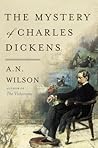
“Anyone who dies with a secret on their conscience must wonder at what juncture, if any, it will come to light.”
― The Mystery of Charles Dickens
― The Mystery of Charles Dickens
“bagatelle!”
― The Victorians
― The Victorians
“When he came to write novels, there is one aspect of Dickens’s genius that must trouble even his most ardent admirers: namely, his depiction of women, and his imaginative need to desex them, to eviscerate them sexually, emotionally, imaginatively.”
― The Mystery of Charles Dickens
― The Mystery of Charles Dickens
“We are not surprised at Romeo loving Juliet, though he is a Montague and she is a Capulet. But if we found in addition that Lady Capulet was by birth a Montague, that Lady Montague was a first cousin of old Capulet, that Mecutio was at once the nephew of a Capulet and the brother-in-law of a Montague, that count Paris was related on his father’s side to one house and on his mother’s side to the other, that Tybalt was Romeo’s uncle’s stepson and that the Friar who had married Romeo and Juliet was Juliet’s uncle and Romeo’s first cousin once removed, we would probably conclude that the feud between the two houses was being kept up for dramatic entertainment of the people of Verona.”
―
―
“When the Brothers Grimm, whose collection of German fairy stories was published in the year of Dickens’s birth, began their researches, they were appalled to discover how many of the folktales related to incest, or to parents in one way or another neglecting, brutalizing or mismanaging their children; so in the published version, the wicked mothers were converted into wicked stepmothers.”
― The Mystery of Charles Dickens
― The Mystery of Charles Dickens
“The poor, and the children of the poor, continued throughout this decade to lead their scarcely endurable existences. On 13 April 1861 the Statistical Society of London visited a single room, occupied by five families. A separate family ate, drank, and slept in each of the four corners of the room, a fifth occupying the centre. ‘But how can you exist?’ asked the visitor of a poor woman whom he had found in the room (the other inmates being absent on their several avocations).39 ‘How could you possibly exist?’ ‘Oh, indeed, your honour,’ she replied, ‘we did very well until the gentleman in the middle took a lodger.”
― The Victorians
― The Victorians
“Writing in the Quarterly Review Cecil insisted – in October 1862 – that the democratic idea is not merely a folly. It is a chimera. It is idle to discuss whether it ought to exist; for, as a matter of fact, it never does. Whatever may be the written text of a Constitution, the multitude always will have leaders among them, and those leaders not selected by themselves. They may set up the pretence of political equality, if they will, and delude themselves with a belief in its existence. But the only consequence will be that they will have bad leaders instead of good. Every community has natural leaders, to whom, if they are not misled by the insane passion for equality, they will instinctively defer. Always wealth, in some countries birth, in all intellectual power and culture, mark out the men to whom, in a healthy state of feeling, a community looks to undertake its government.”
― The Victorians
― The Victorians
“Broad Church,”
― The Victorians
― The Victorians
“Oh who is that young sinner with the handcuffs on his wrists? And what has he been after that they groan and shake their fists? And wherefore is he wearing such a conscience-stricken air? Oh they’re taking him to prison for the colour of his hair. Now ’tis oakum for his fingers and the treadmill for his feet And the quarry-gang on Portland in the cold and in the heat, And between his spells of labour in the time he has to spare He can curse the God that made him for the colour of his hair.39 A.E. Housman (1859”
― The Victorians
― The Victorians
“Mill. It was a battle which took half a century to win, but Mill’s rallying-cry is still impressive: I know there is an obscure feeling, a feeling which is ashamed to express itself openly – as if women had no right to care about anything, except how they may be the most useful servants of some men … This claim to confiscate the whole existence of one half of the species for the supposed convenience of the other appears to me, independently of its injustice, particularly silly.16 He ended on a dark note: I should like to have a return laid before this House of the number of women who are actually beaten to death, kicked to death, or trampled to death by their male protectors; and in an opposite column, the amount of the sentences passed, in those cases where the dastardly criminals did not get off altogether. As the Norton case had made clear thirty years earlier, these cases were not limited to the poorer classes.”
― The Victorians
― The Victorians
“After Beardsley, no ‘modern art’ – not Picasso, not the Dadaists nor the Surrealists of the twentieth century – is a surprise. He has been there before.”
― The Victorians
― The Victorians
“This was the side which Ruskin acted up when he stayed as Gladstone’s guest – ‘We had a conversation once about Quakers,’ Gladstone recalled, ‘and I remarked how feeble was their theology and how great their social influence. As theologians, they have merely insisted on one or two points of Christian doctrine, but what good work they have achieved socially! – Why, they have reformed prisons, they have abolished slavery, and denounced war.’ To which Ruskin answered, ‘I am really sorry, but I am afraid I don’t think that prisons ought to be reformed, I don’t think slavery ought to have been abolished, and I don’t think war ought to be denounced.”
― The Victorians
― The Victorians
“..for a man ( Roger Scruton ) whose calling and raison d'etre is that difficult business - not just telling the truth but finding out what the truth would be like if we told it - it was a huge blow to be exposed as a lickspittle of tobacco giants. If your job is enquiry, you cannot accept money for providing the answers before the question has been examined.”
―
―