Goodreads helps you follow your favorite authors. Be the first to learn about new releases!
Start by following David Shenk.

Showing 1-23 of 23
“You have to want it, want it so bad you will never give up, so bad that you are ready to sacrifice time, money, sleep, friendships, even your reputation,” he writes. “You will have to adopt a particular lifestyle of ambition, not just for a few weeks or months but for years and years and years. You have to want it so bad that you are not only ready to fail, but you actually want to experience failure: revel in it, learn from it.”
― The Genius in All of Us: Why Everything You've Been Told About Genetics, Talent, and IQ Is Wrong
― The Genius in All of Us: Why Everything You've Been Told About Genetics, Talent, and IQ Is Wrong
“It’s not that I’m so smart,” Albert Einstein once said. “It’s just that I stay with problems longer.” Einstein’s simple statement is a clarion call for all who seek greatness, for themselves or their children. In the end, persistence is the difference between mediocrity and enormous success.”
― The Genius in All of Us: New Insights into Genetics, Talent, and IQ
― The Genius in All of Us: New Insights into Genetics, Talent, and IQ
“Because talent is a function of acquired skills rather than innate ability, adult achievement depends completely on long-term attitude and resources and process rather than any particular age-based talent quotient.”
― The Genius in All of Us: New Insights into Genetics, Talent, and IQ
― The Genius in All of Us: New Insights into Genetics, Talent, and IQ
“Deliberate practice requires a mind-set of never, ever, being satisfied with your current ability. It requires a constant self-critique, a pathological restlessness, a passion to aim consistently just beyond one’s capability so that daily disappointment and failure is actually desired, and a never-ending resolve to dust oneself off and try again and again and again.”
― The Genius in All of Us: New Insights into Genetics, Talent, and IQ
― The Genius in All of Us: New Insights into Genetics, Talent, and IQ
“In a sense, all schooling in the United States was an elaborate training session for the free market, democratic, meritocratic, modern, bloodless warfare that would dominate their adult lives.”
― The Immortal Game: A History of Chess, or How 32 Carved Pieces on a Board Illuminated Our Understanding of War, Art, Science and the Human Brain
― The Immortal Game: A History of Chess, or How 32 Carved Pieces on a Board Illuminated Our Understanding of War, Art, Science and the Human Brain
“Playing well requires study—period. There are more and less sophisticated ways to play the game, and those unwilling to face up to the reality of chess knowledge will be consigned forever to be ineffective, ignorant underachievers. (Understanding this hard truth didn’t amount to acting on it, but it was at least a good first step.)”
― The Immortal Game: A History of Chess
― The Immortal Game: A History of Chess
“ Regardless of whether a child seems to be exceptional, mediocre, or even awful at any particular skill at a particular point in time, the potential exists for that”
― The Genius in All of Us: New Insights into Genetics, Talent, and IQ
― The Genius in All of Us: New Insights into Genetics, Talent, and IQ
“For the English player, more comfort is not required. He sits straight as a poker on his chair, keeps his thumbs in his waistcoat pockets, and does not move until he for an hour has [surveyed] the chessboard. His opponent has sighed hundreds of times when the Englishman eventually moves his piece.”
― The Immortal Game: A History of Chess
― The Immortal Game: A History of Chess
“Serious converts to the game usually have some powerful motivation—perhaps unknown to them—for investing in the game at a particular time in their lives.”
― The Immortal Game: A History of Chess
― The Immortal Game: A History of Chess
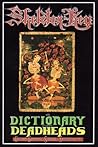
“You’re a good lot, you Deadheads. I’m proud to be one of you.”
― Skeleton Key: A Dictionary for Deadheads
― Skeleton Key: A Dictionary for Deadheads
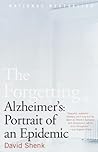
“There is pain in forgetfulness,” he wrote”
― The Forgetting: Alzheimer's: Portrait of an Epidemic
― The Forgetting: Alzheimer's: Portrait of an Epidemic
“Chess holds its master in its own bonds,” Albert Einstein once said, “shackling the mind and brain so that the inner freedom of the very strongest must suffer.”
― The Immortal Game: A History of Chess
― The Immortal Game: A History of Chess
“Acquire knowledge. It guideth us to happiness; it sustaineth us in misery; it is an ornament amongst friends, and an armour against enemies.”
― The Immortal Game: A History of Chess, or How 32 Carved Pieces on a Board Illuminated Our Understanding of War, Art, Science and the Human Brain
― The Immortal Game: A History of Chess, or How 32 Carved Pieces on a Board Illuminated Our Understanding of War, Art, Science and the Human Brain
“Finally, often as we relax or “tune out” other distractions, sometime after “retirement” for example, some previously hidden, latent interests, talents or abilities quite suddenly, and surprisingly, emerge. Sometimes that emergence is actually a re-kindling of some earlier childhood abilities, such as art, for whatever reason set aside with maturation and “growing up.”
― The Genius in All of Us: New Insights into Genetics, Talent, and IQ
― The Genius in All of Us: New Insights into Genetics, Talent, and IQ
“One legend has it that Ferdinand was himself right in the middle of a chess game when Christopher Columbus approached the court with his plan to sail west in search of the Indies; at that moment, victory came to Ferdinand on the chess-board, putting him in such a good mood that he quickly approved Columbus’s request.”
― The Immortal Game: A History of Chess
― The Immortal Game: A History of Chess
“Control what you can control”
― The Forgetting: Alzheimer's: Portrait of an Epidemic
― The Forgetting: Alzheimer's: Portrait of an Epidemic
“Very often I wander around looking for something which I know is very pertinent”
― The Forgetting: Alzheimer's: Portrait of an Epidemic
― The Forgetting: Alzheimer's: Portrait of an Epidemic
“Seasoned players realized all too well that with the tweaking of a few pieces’ powers of motion, it was an entirely new game.”
― The Immortal Game: A History of Chess
― The Immortal Game: A History of Chess
“Play the opening like a book, the middle game like a magician, and the endgame like a machine,” Viennese player Rudolf Spielmann would later advise. Even”
― The Immortal Game: A History of Chess
― The Immortal Game: A History of Chess
“It seems most of you believe that people are inherently good and to be trusted, that strangers are friends and friends brethren.”
― Skeleton Key: A Dictionary for Deadheads
― Skeleton Key: A Dictionary for Deadheads
“The paradox of illuminating complexity is that it is inherently difficult to do so without erasing all of the nuance.”
― The Immortal Game: A History of Chess, or How 32 Carved Pieces on a Board Illuminated Our Understanding of War, Art, Science and the Human Brain
― The Immortal Game: A History of Chess, or How 32 Carved Pieces on a Board Illuminated Our Understanding of War, Art, Science and the Human Brain
“Such warnings are not to be taken lightly, and it behooves every chess parent, chess organizer, and chess instructor to be mindful of the game’s destructive power—to work on tapping into chess’s positive Benjamin Franklin forces while avoiding its corrosive Bobby Fischer forces.”
― The Immortal Game: A History of Chess
― The Immortal Game: A History of Chess
“Our model of savant abilities suggests that our brains operate at two levels, the quantum and the classical. These two levels are no more exclusionary than classical (or Newtonian) physics and quantum mechanics. One major difference between them is that the forces in classical physics operate locally, whereas forces in quantum physics operate nonlocally. Both types of forces operate in our brains, which is why our brains can process consciousness both locally and nonlocally. Some people have conditions such as autism that shift the balance between local and nonlocal processes by knocking out the functioning of the neocortex. The rest of us can decrease this classical dominance by such mind-quieting practices as meditation.”
― The Genius in All of Us: New Insights into Genetics, Talent, and IQ
― The Genius in All of Us: New Insights into Genetics, Talent, and IQ