Goodreads helps you follow your favorite authors. Be the first to learn about new releases!
Start by following Leland Ryken.

Showing 1-30 of 44
“Earlier in this century someone claimed that we work at our play and play at our work. Today the confusion has deepened: we worship our work, work at our play, and play in our worship.”
― Redeeming the Time: A Christian Approach to Work and Leisure
― Redeeming the Time: A Christian Approach to Work and Leisure
“It is untrue that fiction is nonutilitarian. The uses of fiction are synonymous with the uses of literature. They include refreshment, clarification of life, self-awareness, expansion of our range of experiences, and enlargement of our sense of understanding and discovery, perception, intensification, expression, beauty , and understanding. Like literature generally, fiction is a form of discovery, perception, intensification, expression, beauty, and understanding. If it is all these things, the question of whether it is a legitimate use of time should not even arise.”
― Realms of Gold: The Classics in Christian Perspective
― Realms of Gold: The Classics in Christian Perspective
“literature enlarges our world of experience to include both more of the physical world and things not yet imagined, giving the “actual world” a “new dimension of depth” (Lewis, Of Other Worlds 29). This makes it possible for literature to strip Christian doctrines of their “stained glass” associations and make them appear in their “real potency” (37), a possibility Lewis himself realized in the Narnia series and the space trilogy.”
― The Christian Imagination: The Practice of Faith in Literature and Writing
― The Christian Imagination: The Practice of Faith in Literature and Writing
“There is no valid reason for the perennial Christian preference of biography, history, and the newspaper to fiction and poetry. The former tell us what happened, while literature tells us what happens. The example of the Bible, which is central to any attempt to formulate a Christian approach to literature, sanctions the imagination as a valid form of truth. The Bible is in large part a work of imagination. Its most customary way of expressing truth is not the sermon or the theological outline, but the story, the poem, and the vision--all of them literary forms and products of the imagination (though not necessarily the fictional imagination). Literary conventions are present in the Bible from start to finish, even in the most historically factual parts.”
― The Christian Imagination: The Practice of Faith in Literature and Writing
― The Christian Imagination: The Practice of Faith in Literature and Writing
“As Francis Schaeffer reminded us, “The Christian is the one whose imagination should fly beyond the stars”
― The Christian Imagination: The Practice of Faith in Literature and Writing
― The Christian Imagination: The Practice of Faith in Literature and Writing
“Passion is a far better prioritizer than any organization system. Soul refreshment comes from SEEING glory – not getting stuff done.”
― Redeeming the Time: A Christian Approach to Work and Leisure
― Redeeming the Time: A Christian Approach to Work and Leisure
“If you want to make a Christian work, then be Christian, and simply try to make a beautiful work, into which your heart will pass; do not try to “make Christian.”
― The Christian Imagination: The Practice of Faith in Literature and Writing
― The Christian Imagination: The Practice of Faith in Literature and Writing
“The only knowledge that is worthwhile, writes Northrop Frye. "is the knowledge that leafs to wisdom, for knowledge without wisdom is a body without life.”
― The Liberated Imagination: Thinking Christianly About the Arts
― The Liberated Imagination: Thinking Christianly About the Arts
“Vincit qui patitur [he who suffers conquers].”
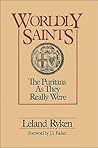
― Worldly Saints
― Worldly Saints
“Ease and luxury, such as our affluence brings us today, do not make for maturity; hardship and struggle do,”
― Worldly Saints
― Worldly Saints
“Western culture generally, as well as the Christian subculture specifically, has had an unwarranted tendency to think that abstract ideas and facts are the only valid type of knowledge that we possess. Literature challenges that bias, and so does the Bible. The Bible is not a theological outline with proof texts attached. It is an anthology of literature.”
― The Christian Imagination: The Practice of Faith in Literature and Writing
― The Christian Imagination: The Practice of Faith in Literature and Writing
“Part of what Milton valued in a good book then was contact with the mind of an author rendered otherwise inaccessible by distance or time. Such contact is precisely what much modern and postmodern criticism insists we cannot have. Perhaps a secular world view inevitably leads to a universe in which a text is merely a playing field for the reader’s own intellectual athleticism. Perhaps only a Christian view (such as Milton’s) of the imago descending from God to author to text can preserve the writing of literature as an act of communication.”
― The Christian Imagination: The Practice of Faith in Literature and Writing
― The Christian Imagination: The Practice of Faith in Literature and Writing
“As long as one has a living art, its forms will change. The past art forms, therefore, are not necessarily the right ones for today or tomorrow. To demand the art forms of yesterday in either word systems or art is a bourgeois error. It cannot be assumed that if a Christian painter becomes “more Christian” he will necessarily become more and more like Rembrandt. This would be like saying that if the preacher really makes it next Sunday morning, he will preach to us in Chaucerian English. Then we’ll really listen!”
― The Christian Imagination: The Practice of Faith in Literature and Writing
― The Christian Imagination: The Practice of Faith in Literature and Writing
“Richard Rogers was lecturing at Wethersfield, Essex, someone told him, “Mr. Rogers, I like you and your company very well, but you are so precise.” To which Rogers replied, “O Sir, I serve a precise God.”
― Worldly Saints
― Worldly Saints
“The end of learning, he said, is to “repair the ruins of our first parents by regaining to know God aright, and out of that knowledge to love him, to imitate him, to be like him” by acquiring “true virtue” (Hughes 631). This reinforces and expands Sidney’s point that the end of learning is virtuous action.”
― The Christian Imagination: The Practice of Faith in Literature and Writing
― The Christian Imagination: The Practice of Faith in Literature and Writing
“Meaning in fiction is thus viewed as what an action leads to, results in, or implies. If the experiment in living succeeds, the work can be said to affirm that world view. If the experiment fails, the work denies that view of reality and by implication usually suggests an alternative.”
― The Liberated Imagination: Thinking Christianly About the Arts
― The Liberated Imagination: Thinking Christianly About the Arts
“Ye fearful saints, fresh courage take;
The clouds ye so much dread
Are big with mercy, and shall break
In blessings on your head. Judge not the Lord by feeble sense,
But trust him for his grace;
Behind a frowning providence
He hides a smiling face. His purposes will ripen fast,
Unfolding every hour;
The bud may have a bitter taste,
But sweet will be the flower. Blind unbelief is sure to err,
And scan his work in vain.
God is his own interpreter,
And he will make it plain.”
― 40 Favorite Hymns on the Christian Life: A Closer Look at Their Spiritual and Poetic Meaning
The clouds ye so much dread
Are big with mercy, and shall break
In blessings on your head. Judge not the Lord by feeble sense,
But trust him for his grace;
Behind a frowning providence
He hides a smiling face. His purposes will ripen fast,
Unfolding every hour;
The bud may have a bitter taste,
But sweet will be the flower. Blind unbelief is sure to err,
And scan his work in vain.
God is his own interpreter,
And he will make it plain.”
― 40 Favorite Hymns on the Christian Life: A Closer Look at Their Spiritual and Poetic Meaning
“Teaching the Bible involves far more than simply giving out information about the Bible. Bible teaching is ministering to people, liberating them from their inadequate concepts of God, expanding their notion of what it means to live faithfully before God, helping them cast aside old self-defeating habits and replace them with habits of holiness.”
― Effective Bible Teaching
― Effective Bible Teaching
“The first thing the Bible does is introduce us to the God of the universe. He is introduced as a creative artist.”
― The Liberated Imagination: Thinking Christianly About the Arts
― The Liberated Imagination: Thinking Christianly About the Arts
“Os puritanos sabiam que a Escritura é a regra inalterada da santidade, e eles nunca se permitiram esquecer disso.”
― Santos no Mundo: Os puritanos como realmente eram
― Santos no Mundo: Os puritanos como realmente eram
“Covenant denoted a relationship of mutual trust and obligation.”
― Worldly Saints
― Worldly Saints
“No coração do puritanismo estava a crença de que a graça de Deus é a fonte de todo benefício humano e que não se pode adquiri-la por mérito humano.”
― Santos no Mundo: Os puritanos como realmente eram
― Santos no Mundo: Os puritanos como realmente eram
“At the risk of oversimplification, it could be said that Reformation Protestantism was a religion of literacy, domestic prayer, and the family bible in the family home, all buttressed by the public sermon.”
― Worldly Saints
― Worldly Saints
“How does one balance the fallen and redeemed aspects of life in the artistic portrayal of human experience in the world?”
― The Liberated Imagination: Thinking Christianly About the Arts
― The Liberated Imagination: Thinking Christianly About the Arts
“Os puritanos pensavam que o futuro da igreja repousava num clero distinguido... por um novo fervor, um equipamento intelectual superior, um poder de comunicar... O principal propósito do novo clérigo era comunicar zelo aos leigos, tornando-os capazes de unirem-se para selecionar seus próprios ministros, examinar suas próprias vidas espirituais, dirigir orações em família, ler livros santos e tomar parte na administração eclesiástica.[”
― Santos no mundo: os puritanos como realmente eram
― Santos no mundo: os puritanos como realmente eram
“William Perkins said, “The end of a man’s calling is not to gather riches for himself…but to serve God in the serving of man, and in the seeking the good of all men.”
― Worldly Saints
― Worldly Saints
“Works of art can simultaneously present ugliness (at the level of subject or content) and beauty (at the level of form). People who want things tidy and controlled will stumble at this paradox, but we will make far more sense of modern art if we are bold enough to accept the paradox.”
― The Liberated Imagination: Thinking Christianly About the Arts
― The Liberated Imagination: Thinking Christianly About the Arts
“dizer quantos autores temos lido, o quanto somos familiarizados com os escolásticos, quão linguisticamente críticos nós somos ou coisa semelhante. É uma miserável ostentação”.”
― Santos no mundo: os puritanos como realmente eram
― Santos no mundo: os puritanos como realmente eram
“Vamos trazer nossos filhos tão próximo do céu quanto pudermos... Está em nosso poder restringi-los e reformá-los, e isso devemos fazer”.”
― Santos no mundo: os puritanos como realmente eram
― Santos no mundo: os puritanos como realmente eram
“When we first read about the image of God in people in Genesis 1, we have as yet heard nothing about God as redeemer or the God of providence or the covenant God or the God of moral truth. The one thing that we know about God is that he created the world. In its immediate narrative context, then, the doctrine of the image of God in people emphasizes that people, are, like God, creators.”
― The Liberated Imagination: Thinking Christianly About the Arts
― The Liberated Imagination: Thinking Christianly About the Arts