Goodreads helps you follow your favorite authors. Be the first to learn about new releases!
Start by following David M. Kennedy.
Showing 1-30 of 188
“No less dispiriting to FDR than the actual defeat on the World Court treaty was the manner of its accomplishment. As Coughlin moved to consolidate and wield his political influence, he exhibited a wicked genius for unsealing some of the dankest chambers of the national soul. He played guilefully on his followers' worst instincts: their suspicious provincialism, their unworldly ignorance, their yearning for simple explanations and extravagant remedies for their undeniable problems, their readiness to believe in conspiracies, their sulky resentments, and their all too human capacity for hatred. The National Union for Social Justice remained an inchoate entity in early 1935, and Coughlin's sustainable political strength was still a matter of conjecture. But if the Radio Priest could succeed in shepherding his followers into an alliance with some of the other dissident protest movements”
― Freedom from Fear: The American People in Depression and War, 1929-1945
― Freedom from Fear: The American People in Depression and War, 1929-1945
“. and a knell rang in the ears of the victors, even in their hour of triumph. —Winston Churchill, 1927”
― Freedom from Fear: The American People in Depression and War, 1929-1945
― Freedom from Fear: The American People in Depression and War, 1929-1945
“Little by little, new facts become blurred through old glasses fitted, as it were, for the needs of another generation; older men, assuming that the scene is the same as it was in the past, cease to explore or inquire into the present or the future.”7”
― The American People in the Great Depression: Freedom from Fear, Part One
― The American People in the Great Depression: Freedom from Fear, Part One
“The backdrop of their bright lights, visible up to ten miles from shore, created a neon shooting gallery in which the U-boats nightly lay in wait on the seaward side of the shipping lanes and picked off their sharply silhouetted victims at will. A single U-boat prowling off New York harbor in January sank eight ships, including three tankers, in just twelve hours. On February 28 a German”
― Freedom from Fear: The American People in Depression and War, 1929-1945
― Freedom from Fear: The American People in Depression and War, 1929-1945
“Brandeis thought him "the biggest figure”
― Freedom from Fear: The American People in Depression and War, 1929-1945
― Freedom from Fear: The American People in Depression and War, 1929-1945
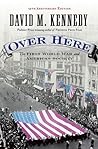
“The very fates seemed arrayed against the President’s party. Death claimed eight Democratic Senators during the 65th Congress, thinning their already sparse majority. Perhaps the cruelest blow of all was the accidental shotgun killing of Wisconsin’s Paul O. Husting on a duck-hunting trip in October 1917. Husting, the first Democrat sent to the Senate from Wisconsin in more than twenty years, had been elected in 1914; in the normal course of events his seat would not have been contested again until 1920. Democratic retention of this one seat would have meant a Democratic Senate in 1919–20, which might have had quite different consequences for the passage of the Versailles Treaty and the history of the postwar world. But it was not to be.”
― Over Here: The First World War and American Society
― Over Here: The First World War and American Society
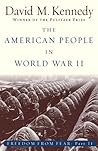
“The American People in the Great Depression Freedom from Fear Part One DAVID M. KENNEDY”
― The American People in the Great Depression: Freedom from Fear, Part One
― The American People in the Great Depression: Freedom from Fear, Part One
“It was now that he began to elaborate the thesis with which he began his Memoirs: "In the large sense the primary cause of the Great Depression was the war of 1914–1918."2”
― Freedom from Fear: The American People in Depression and War, 1929-1945
― Freedom from Fear: The American People in Depression and War, 1929-1945
“Victory took only a bit longer in the American colony of the Philippines. At his Manila headquarters Douglas MacArthur”
― Freedom from Fear: The American People in Depression and War, 1929-1945
― Freedom from Fear: The American People in Depression and War, 1929-1945
“Not with a bang”
― Freedom from Fear: The American People in Depression and War, 1929-1945
― Freedom from Fear: The American People in Depression and War, 1929-1945
“As for Kennedy”
― Freedom from Fear: The American People in Depression and War, 1929-1945
― Freedom from Fear: The American People in Depression and War, 1929-1945
“Roosevelts dream was the old progressive dream of wringing order out of chaos”
― Freedom from Fear: The American People in Depression and War, 1929-1945
― Freedom from Fear: The American People in Depression and War, 1929-1945
“Under these less than auspicious circumstances the siege of Guadal-canal began. It would constitute one of the longest and most complicated American campaigns of the war”
― Freedom from Fear: The American People in Depression and War, 1929-1945
― Freedom from Fear: The American People in Depression and War, 1929-1945
“The explosive growth of advertising, an infant industry before the 1920s, provided further sign of the fear that the limits of "natural" demand were being reached. General Motors alone annually spent some $20 million on advertising in the 1920s in an effort to nurture consumer desires that transcended consumer needs. Together, credit and advertising sustained automobile sales for a time, but without new foreign outlets or a significant redistribution of domestic purchasing power—especially to the impoverished rural half of the country—the boundaries of consumer demand were apparently being approached.”
― Freedom from Fear: The American People in Depression and War, 1929-1945
― Freedom from Fear: The American People in Depression and War, 1929-1945
“Roosevelt may have anticipated defections of that sort”
― Freedom from Fear: The American People in Depression and War, 1929-1945
― Freedom from Fear: The American People in Depression and War, 1929-1945
“The Western powers proved willing to sacrifice the Sudetenland on the altar of appeasement. The Czech crisis”
― Freedom from Fear: The American People in Depression and War, 1929-1945
― Freedom from Fear: The American People in Depression and War, 1929-1945
“By early March Roosevelt abandoned his arguments about inefficiency and senescence and began to make his case squarely on the grounds of judicial philosophy”
― Freedom from Fear: The American People in Depression and War, 1929-1945
― Freedom from Fear: The American People in Depression and War, 1929-1945
“He was arguably the most respected man in America, a man, said the novelist Sherwood Anderson, who had "never known failure."1 A wave of popular acclamation had lifted him to the White House just six months earlier, after a famously distinguished career as a mining engineer, international businessman, relief and food administrator in the Great War of 1914–18, and exceptionally influential secretary of commerce in the Republican administrations of Warren G. Harding and Calvin Coolidge.”
― Freedom from Fear: The American People in Depression and War, 1929-1945
― Freedom from Fear: The American People in Depression and War, 1929-1945
“In the broadest sense”
― Freedom from Fear: The American People in Depression and War, 1929-1945
― Freedom from Fear: The American People in Depression and War, 1929-1945
“Girdler and Little Steel adopted what came to be called the "Mohawk Valley Formula," a union-busting strategy that had originated at the Remington Rand Corporations plants in upstate New York in 1936. The Mohawk Valley Formula called for branding union organizers as Communists”
― Freedom from Fear: The American People in Depression and War, 1929-1945
― Freedom from Fear: The American People in Depression and War, 1929-1945
“The lessons of Flint were not lost on the steelmakers. Given the manifest unwillingness of government to throw its weight to the side of management”
― Freedom from Fear: The American People in Depression and War, 1929-1945
― Freedom from Fear: The American People in Depression and War, 1929-1945
“he proposed lynching bill," he wrote”
― Freedom from Fear: The American People in Depression and War, 1929-1945
― Freedom from Fear: The American People in Depression and War, 1929-1945
“On many sides, impatience with Roosevelt's admittedly energetic but apparently ineffective leadership deepened through 1934. On the right, conservative Republicans like Herbert Hoover and disaffected Democrats like Al Smith nattered crankily about the loss of individual liberty and the corruption of American ideals. Some of them gathered in the American Liberty League.”
― Freedom from Fear: The American People in Depression and War, 1929-1945
― Freedom from Fear: The American People in Depression and War, 1929-1945
“Roosevelts decision to join hands with Stalin raised new logistical nightmares for the beleaguered American planners. They continued to be frustrated by the timidity of civilian manufacturers and were still racked between the pull of their mandate to expand the American armed forces and the tug of the presidents insistence on sending Lend-Lease supplies to Britain”
― Freedom from Fear: The American People in Depression and War, 1929-1945
― Freedom from Fear: The American People in Depression and War, 1929-1945
“As his visitors talked, FDR would nod in apparent approval, often interjecting, "Yes, yes, yes." Many who spoke with him took this to mean agreement when it merely signified that Roosevelt understood the point being made or, possibly, that he wanted to avoid the unpleasantness of open argument.”
― Freedom from Fear: The American People in Depression and War, 1929-1945
― Freedom from Fear: The American People in Depression and War, 1929-1945
“Here was an attitude toward government—to call it a philosophy would be too much—that defined a distinct difference from Hoover, who stewed in anxieties about the dole and endlessly lashed the Congress and the country with lectures about preserving the nation's moral fiber, not to mention the integrity of the federal budget, by avoiding direct federal payments for unemployment relief. No issue more heavily burdened Hoover in the presidential election year of 1932. The Great Humanitarian who had fed the starving Belgians in 1914, the Great Engineer so hopefully elevated to the presidency in 1928, now appeared as the Great Scrooge, a corrupted ideologue who could swallow government relief for the banks but priggishly scrupled over government provisions for the unemployed. Declaiming against budget deficits and the dangers of the dole, Hoover vetoed the Garner-Wagner relief bill on July”
― Freedom from Fear: The American People in Depression and War, 1929-1945
― Freedom from Fear: The American People in Depression and War, 1929-1945
“Later studies suggest that Hopkins indeed had a formula, and it was one that he and FDR had learned from the old urban political machines. FERA checks flowed disproportionately to certain "swing" states, outside the already secure solid South, in an effort to win votes and cultivate political loyalty.”
― Freedom from Fear: The American People in Depression and War, 1929-1945
― Freedom from Fear: The American People in Depression and War, 1929-1945
“Economically, the Hawley-Smoot Tariff signaled the world that as the depression lowered the United States was moving toward the same autarkic, beggar-thy-neighbor, protectionist policies with which other nations were already dangerously flirting. Many observers warned of the perils of this position. One thousand economists signed a petition urging Hoover to veto the bill. Thomas Lamont, a partner in J. P. Morgan and Company and usually an influential economic adviser to Hoover, recalled that "I almost went down on my knees to beg Herbert Hoover to veto the asinine Hawley-Smoot Tariff. That Act intensified nationalism all over the world.”
― Freedom from Fear: The American People in Depression and War, 1929-1945
― Freedom from Fear: The American People in Depression and War, 1929-1945
“PROSPERITY LASTED long enough for Coolidge to sound plausible in 1928. But deep down in the bowels of the economy, small but fateful contractions had already set in. The agonies of agriculture had long been apparent. Now other sectors began to feel similar pain. Automobile manufacturing slowed its prodigious rate of growth as early as 1925. Residential construction turned down in the same year. A boom in Florida real estate drowned in a devastating hurricane in September 1926. Bank clearings in Miami sank from over a billion dollars in 1925 to $143 million in 1928, a chilling adumbration of the financial clotting that would soon choke the entire banking system. Business inventories began to pile up in 1928, nearly quadrupling in value to some $2 billion by midsummer of 1929.37”
― Freedom from Fear: The American People in Depression and War, 1929-1945
― Freedom from Fear: The American People in Depression and War, 1929-1945
“Long had mastered the populist tongue to a degree that few could match, before or since. Other than Franklin Roosevelt himself, no figure flashed more incandescently across the Depression-darkened American political landscape.”
― Freedom from Fear: The American People in Depression and War, 1929-1945
― Freedom from Fear: The American People in Depression and War, 1929-1945