Goodreads helps you follow your favorite authors. Be the first to learn about new releases!
Start by following Dan Neuharth.

Showing 1-10 of 10
“Part Two, “Understanding the Problem,” will help you reckon with control’s lingering costs. You’ll begin to understand the complex, powerful process of overcontrol and find answers to major quandaries such as, “How did my parents do it?” and “Why do I feel the way I do?” You’ll gain clarity on your feelings as a child and discover connections between those feelings and your present-day problems. By exploring the aspects of yourself you had to disown or distort in childhood, you’ll pave the way for reclaiming your total self. And, you’ll get a clear sense of why your parents acted as they did, which will hasten your healing.”
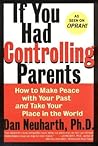
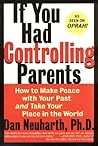
― If You Had Controlling Parents: How to Make Peace with Your Past and Take Your Place in the World
― If You Had Controlling Parents: How to Make Peace with Your Past and Take Your Place in the World
“Part One, “Naming the Problem,” will help you see the full extent of parental control by describing in detail eight styles of controlling parents. You’ll be able to determine which of these types—or combination of types—fits one or both of your parents. When you know your parents’ styles, you can better recognize the continuing effects of their early control on you.”
― If You Had Controlling Parents: How to Make Peace with Your Past and Take Your Place in the World
― If You Had Controlling Parents: How to Make Peace with Your Past and Take Your Place in the World
“Controlling Families 1. Conditional Love • Parental love is given as a reward but withdrawn as punishment • Parents feel their children “owe” them • Children have to “earn” parental love Healthier Families 2. Respect • Children are seen and valued for who they are • Children’s choices are accepted Controlling Families 2. Disrespect • Children are treated as parental property • Parents use children to satisfy parental needs Healthier Families 3. Open Communication • Expressing honest thought is valued more than saying
something a certain way • Questioning and dissent are allowed • Problems are acknowledged and addressed Controlling Families 3. Stifled Speech • Communication is hampered by rules like “Don’t ask why” and
“Don’t say no” • Questioning and dissent are discouraged • Problems are ignored or denied Healthier Families 4. Emotional Freedom • It’s okay to feel sadness, fear, anger and joy • Feelings are accepted as natural Controlling Families 4. Emotional Intolerance • Strong emotions are discouraged or blocked • Feelings are considered dangerous Healthier Families 5. Encouragement • Children’s potentials are encouraged • Children are praised when they succeed and given compassion
when they fail Controlling Families 5. Ridicule • Children feel on trial • Children are criticized more than praised Healthier Families 6. Consistent Parenting • Parents set appropriate, consistent limits • Parents see their role as guides • Parents allow children reasonable control over their own bodies
and activities Controlling Families 6. Dogmatic or Chaotic Parenting • Discipline is often harsh and inflexible • Parents see their role as bosses • Parents accord children little privacy Healthier Families 7. Encouragement of an Inner Life • Children learn compassion for themselves • Parents communicate their values but allow children to develop
their own values • Learning, humor, growth and play are present Controlling Families 7. Denial of an Inner Life • Children don’t learn compassion for themselves • Being right is more important than learning or being curious • Family atmosphere feels stilted or chaotic Healthier Families 8. Social Connections • Connections with others are fostered • Parents pass on a broader vision of responsibility to others
and to society Controlling Families 8. Social Dysfunction • Few genuine connections exist with outsiders • Children are told “Everyone’s out to get you” • Relationships are driven by approval-seeking The Consequences of Unhealthy Parenting Healthier parents try, often intuitively and within whatever limits they face, to provide nurturing love, respect, communication, emotional freedom, consistency, encouragement of an inner life, and social connections. By and large they succeed—not all the time, perhaps not even most of the time, but often enough to compensate for normal parental mistakes and difficulties. Overcontrol, in contrast, throws young lives out of balance: Conditional love, disrespect, stifled speech, emotional intolerance, ridicule, dogmatic parenting, denial of an inner life, and social dysfunction take a cumulative toll. Controlling families are particularly difficult for sensitive children, who experience emotional blows and limits on their freedom especially acutely. Sensitive children also tend to blame themselves for family problems.”
― If You Had Controlling Parents: How to Make Peace with Your Past and Take Your Place in the World
something a certain way • Questioning and dissent are allowed • Problems are acknowledged and addressed Controlling Families 3. Stifled Speech • Communication is hampered by rules like “Don’t ask why” and
“Don’t say no” • Questioning and dissent are discouraged • Problems are ignored or denied Healthier Families 4. Emotional Freedom • It’s okay to feel sadness, fear, anger and joy • Feelings are accepted as natural Controlling Families 4. Emotional Intolerance • Strong emotions are discouraged or blocked • Feelings are considered dangerous Healthier Families 5. Encouragement • Children’s potentials are encouraged • Children are praised when they succeed and given compassion
when they fail Controlling Families 5. Ridicule • Children feel on trial • Children are criticized more than praised Healthier Families 6. Consistent Parenting • Parents set appropriate, consistent limits • Parents see their role as guides • Parents allow children reasonable control over their own bodies
and activities Controlling Families 6. Dogmatic or Chaotic Parenting • Discipline is often harsh and inflexible • Parents see their role as bosses • Parents accord children little privacy Healthier Families 7. Encouragement of an Inner Life • Children learn compassion for themselves • Parents communicate their values but allow children to develop
their own values • Learning, humor, growth and play are present Controlling Families 7. Denial of an Inner Life • Children don’t learn compassion for themselves • Being right is more important than learning or being curious • Family atmosphere feels stilted or chaotic Healthier Families 8. Social Connections • Connections with others are fostered • Parents pass on a broader vision of responsibility to others
and to society Controlling Families 8. Social Dysfunction • Few genuine connections exist with outsiders • Children are told “Everyone’s out to get you” • Relationships are driven by approval-seeking The Consequences of Unhealthy Parenting Healthier parents try, often intuitively and within whatever limits they face, to provide nurturing love, respect, communication, emotional freedom, consistency, encouragement of an inner life, and social connections. By and large they succeed—not all the time, perhaps not even most of the time, but often enough to compensate for normal parental mistakes and difficulties. Overcontrol, in contrast, throws young lives out of balance: Conditional love, disrespect, stifled speech, emotional intolerance, ridicule, dogmatic parenting, denial of an inner life, and social dysfunction take a cumulative toll. Controlling families are particularly difficult for sensitive children, who experience emotional blows and limits on their freedom especially acutely. Sensitive children also tend to blame themselves for family problems.”
― If You Had Controlling Parents: How to Make Peace with Your Past and Take Your Place in the World
“Controlling families are particularly difficult for sensitive children, who experience emotional blows and limits on their freedom especially acutely. Sensitive children also tend to blame themselves for family problems.”
― If You Had Controlling Parents: How to Make Peace with Your Past and Take Your Place in the World
― If You Had Controlling Parents: How to Make Peace with Your Past and Take Your Place in the World
“Part Three, “Solving the Problem,” helps you let go of a painful childhood and the lasting effects of unhealthy control so that you can emotionally leave home. We’ll explore a broad array of paths to healing, along with exercises you may find helpful. This section will help you design your own healing process, at your own speed, in a way that suits you best.”
― If You Had Controlling Parents: How to Make Peace with Your Past and Take Your Place in the World
― If You Had Controlling Parents: How to Make Peace with Your Past and Take Your Place in the World
“1. Distortions of Power and Size If one or both parents demanded absolute control and dependence or treated you in ways that made you feel small, you may have inherited distortions of power and size. You may automatically view yourself as less capable than others or, alternatively, as so big and powerful that you have to protect others from yourself. You may feel you lack permission to do things that are within your perfect right. You may feel intimidated or, conversely, contemptuous in the presence of authority figures. Distortions of power and size can handicap you at work, as a parent, and in your other intimate relationships. 2. Distortions of Feeling and Wanting If emotions were banned, inflated, or feared, and your desires shamed or thwarted, you may have inherited distortions of feeling and wanting. You may regard emotions such as anger, fear, sadness—even joy—as life-threatening and overreact to them. You may be unable to tolerate a loved one’s strong feelings. You may deprive yourself of legitimate yearnings or live with unrealistic hopes. You may unconsciously expect life to be painful and, as a result, you may automatically become uncomfortable whenever good things happen. Distortions of feeling can lead you to fear or ignore your emotions and misinterpret the emotions of others. Distortions of wanting can leave you feeling deprived. 3. Distortions of Thinking If truths were denied, perceptions discounted, or blame and shame heaped on you, you may have inherited distortions of thinking. You may accept overcontrol from others, thinking that it is normal. You may chronically doubt your perceptions. You may leap to conclusions based on all-or-nothing reasoning. Distortions of thinking may lead you to avoid personal responsibility or to assume too much responsibility for others’ actions. Distortions of thinking can put you at risk for misreading others and yourself. 4. Distortions of Relating If closeness was dangerous, or if you were infantilized for too long, or if you were thrust into the caretaker role too soon, you may have inherited distortions of relating. You may be unable to get close to others even when you want to. You may unwisely trust others or be unable to trust at all. You may see others as threats or as saviors—not simply as people. Distortions of relating can rob you of intimacy and pleasure. 5. Distortions of Self and Identity If your intuition, initiative, or needs were devalued, you may have inherited distortions of self and identity. You may underrate your abilities, undercut your potential, or underplay your strengths. You may banish parts of your personality, present a false front to others, or see yourself as an object instead of a person. Distortions of self leave your primary relationship—that with yourself—underfueled. But remember: Knowledge is power. By recognizing these distortions in your life, you can heal them.”
― If You Had Controlling Parents: How to Make Peace with Your Past and Take Your Place in the World
― If You Had Controlling Parents: How to Make Peace with Your Past and Take Your Place in the World
“David longed for recognition for his good grades, but his Depriving, Perfectionistic parents rarely made even a comment. “I did everything I was supposed to but they never approved. They never asked me how I felt, they just told me how I should react. Rules were more important than feelings.” On family car rides, David’s parents plunked him in the backseat and talked about him as if he weren’t there.”
― If You Had Controlling Parents: How to Make Peace with Your Past and Take Your Place in the World
― If You Had Controlling Parents: How to Make Peace with Your Past and Take Your Place in the World
“It’s painful to conclude that, if not for your parents’ limitations, you might have grown up happier, with healthier relationships and a less troubled life. Guilt, anger, fear, sadness, and love make relationships with our parents among the most complicated in our lives.”
― If You Had Controlling Parents: How to Make Peace with Your Past and Take Your Place in the World
― If You Had Controlling Parents: How to Make Peace with Your Past and Take Your Place in the World
“In so doing, it’s important to place responsibility where it truly belongs by acknowledging that: You aren’t responsible for what your parents did to you, they are. You are responsible for what you do with your life now, your parents aren’t.”
― If You Had Controlling Parents: How to Make Peace with Your Past and Take Your Place in the World
― If You Had Controlling Parents: How to Make Peace with Your Past and Take Your Place in the World
“David cannot recall being hugged, kissed, or told he was loved by his parents. The only physical comfort he had was from “Mammy,” an African-American housekeeper who recognized David’s needs and provided solace. On Saturdays she’d take him to a movie, where she was allowed to sit with him in the whites’ section. He is convinced that, “If I hadn’t had Mammy, I would have been in much worse shape.”
― If You Had Controlling Parents: How to Make Peace with Your Past and Take Your Place in the World
― If You Had Controlling Parents: How to Make Peace with Your Past and Take Your Place in the World