Goodreads helps you follow your favorite authors. Be the first to learn about new releases!
Start by following Thomas J. DiLorenzo.

Showing 1-20 of 20
“Tocqueville was correct in his rendition of how the Constitution was formed, but he likely never dreamed that an American president would ever send an invading army to kill some 300,000 of his own citizens in order to destroy the right of secession, a right that all of America's founding fathers held as sacrosanct and that was at the very heart of the American system of government.”
― The Real Lincoln: A New Look at Abraham Lincoln, His Agenda, and an Unnecessary War
― The Real Lincoln: A New Look at Abraham Lincoln, His Agenda, and an Unnecessary War
“Socialism is socialism. Government run enterprises are just as inept under democratic governments as they are under autocratic governments.”
― The Problem with Socialism
― The Problem with Socialism
“Woodrow Wilson would write approvingly in his 1908 book, Constitutional Government in the United States, that “the War between the States established… this principle, that the federal government is, through its courts, the final judge of its own powers.” 26 This was the Jeffersonians’ greatest fear. Thanks to Lincoln's war, states’ rights would no longer perform its most important function: protecting the citizens of the states from federal judicial tyranny.”
― The Real Lincoln: A New Look at Abraham Lincoln, His Agenda, and an Unnecessary War
― The Real Lincoln: A New Look at Abraham Lincoln, His Agenda, and an Unnecessary War
“Indeed, in government, the worse a government agency performs, the more money it can claim from a legislature, city council, or county commission. If state-run schools fail to educate children, then obviously they need more money (even if government-run schools often already spend several times more per student than private schools do). If the welfare state fails to reduce, or actually increases, poverty then obviously, say the bureaucrats, we need to expand welfare programs even further. The Obama administration actually bragged about expanding food stamp rolls and claimed they were good for the economy.”
― The Problem with Socialism
― The Problem with Socialism
“The Jeffersonians “hated and feared” the Jacobin concept of a “general will,” wrote Felix Morley in Freedom and Federalism.29 For if “the general will” were to become a practical reality regarding the operation of government, then all voluntary associations must be subjected to government regulation and control in the name of “the people” and their “will”—as interpreted by a ruling elite. This would be the road to serfdom and the end of individual liberty.”
― Hamilton's Curse: How Jefferson's Arch Enemy Betrayed the American Revolution--and What It Means for Americans Today
― Hamilton's Curse: How Jefferson's Arch Enemy Betrayed the American Revolution--and What It Means for Americans Today
“The most dangerous man to any government is the man who is able to think things out for himself, without regard to the prevailing superstitions and taboos. Almost inevitably he comes to the conclusion that the government he lives under is dishonest, insane, and intolerable.”
― The Problem with Socialism
― The Problem with Socialism
“in reality, after the fall of communism in the late 1980s the world learned of some of the worst environmental disasters imaginable—rivers so polluted that they caught on fire; forests turned into deserts; soil so polluted with chemical fertilizers that nothing would grow; floating islands of untreated sewage a mile long and three miles wide in the Soviet Union’s Lake Baikal; dangerously polluted air; sinkholes the size of football stadiums caused by overmining in coal regions; and worse. Under communism, these resources belonged to the state; in other words, they belonged to no one, which is why they were exploited so ruthlessly.”
― How Capitalism Saved America: The Untold History of Our Country, from the Pilgrims to the Present
― How Capitalism Saved America: The Untold History of Our Country, from the Pilgrims to the Present
“As George Orwell might have said, with socialism all men are created equal, only some are more equal than others.”
― The Problem with Socialism
― The Problem with Socialism
“Private property and capitalism also provide strong incentives to preserve resources for the future, whereas political resource allocation under democracy tends toward immediate gratification.”
― How Capitalism Saved America: The Untold History of Our Country, from the Pilgrims to the Present
― How Capitalism Saved America: The Untold History of Our Country, from the Pilgrims to the Present
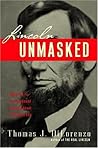
“Thus, Lincoln “saved” the federal union in the same sense that a man who has been abusing his wife “saves” his marital union by violently forcing his wife back into the home and threatening to shoot her if she leaves again. The union may well be saved, but it is not the same kind of union that existed on their wedding day. That union no longer exists. The American union of the founding fathers ceased to exist in April of 1865.”
― Lincoln Unmasked: What You're Not Supposed to Know About Dishonest Abe
― Lincoln Unmasked: What You're Not Supposed to Know About Dishonest Abe
“We who live in capitalist countries tend to take all of this—property rights, free-market pricing, entrepreneurship—for granted, but every socialist country that has ever existed in the world has taken away these key ingredients of capitalism and has consequently created an economic catastrophe.”
― How Capitalism Saved America: The Untold History of Our Country, from the Pilgrims to the Present
― How Capitalism Saved America: The Untold History of Our Country, from the Pilgrims to the Present
“When it comes down to it, what are being traded in a capitalist economy are property rights—the ownership rights in goods and services.”
― How Capitalism Saved America: The Untold History of Our Country, from the Pilgrims to the Present
― How Capitalism Saved America: The Untold History of Our Country, from the Pilgrims to the Present
“Except for spending to protect property rights, enforce the law, and protect citizens from foreign aggressors, all government spending crowds out private spending and weakens the vitality of capitalism.”
― How Capitalism Saved America: The Untold History of Our Country, from the Pilgrims to the Present
― How Capitalism Saved America: The Untold History of Our Country, from the Pilgrims to the Present
“Majority rule is not “destroyed” by smaller political units. Quite the contrary; it is rendered more efficient in serving the taxpaying public. Majority rule voting will exist in smaller political units even more efficiently than in larger, more centralized ones. That's why Switzerland, with its highly decentralized system of government and with power vested in more than sixty cantons, is arguably the world's most peaceful and prosperous democracy.”
― The Real Lincoln: A New Look at Abraham Lincoln, His Agenda, and an Unnecessary War
― The Real Lincoln: A New Look at Abraham Lincoln, His Agenda, and an Unnecessary War
“Lincoln eviscerated the U.S. Constitution. He illegally suspended the writ of habeas corpus; started the war without the consent of Congress; made mass arrests of tens of thousands of political dissenters (not spies) across the North without due process; declared martial law; confiscated private firearms; shut down hundreds of opposition newspapers; imprisoned their editors and owners; censored all telegraph communications; nationalized the railroads; invoked military conscription, yet another form of slavery; orchestrated the secession of West Virginia from Virginia without the consent of the latter, as required by the Constitution; denied the Southern states representative government while they were under federal occupation; ordered federal troops to interfere in elections in the Northern states; deported Democrat Clement L. Vallandigham, a congressional critic from Ohio, to the Confederacy; effectively nullified the Ninth and Tenth Amendments to the Constitution; and more. All of this was supposedly justified by Lincoln’s novel theory that the Constitution had to be suspended, if not destroyed, in order to save it.”
― The Problem with Lincoln: The False Virtue of Abraham Lincoln
― The Problem with Lincoln: The False Virtue of Abraham Lincoln
“Lincoln labored mightily in the political trenches of the Whig and Republican parties for nearly three decades on behalf of this economic agenda, but with only minor success. The Constitution stood in the way of the Whig economic agenda as one American president after another vetoed internal improvement and national bank bills. Beginning with Jefferson, Madison, and Monroe, Southern statesmen were always in the forefront of the opposition to this economic agenda. According to Lincoln scholar Mark Neely, Jr., Lincoln seethed in frustration for many years over how the Constitution stood in the way of his political ambitions. Lincoln thought of himself as the heir to the Hamiltonian political tradition, which sought a much more centralized governmental system, one that would plan economic development with corporate subsidies financed by protectionist tariffs and the printing of money by the central government. This”
― The Real Lincoln: A New Look at Abraham Lincoln, His Agenda, and an Unnecessary War
― The Real Lincoln: A New Look at Abraham Lincoln, His Agenda, and an Unnecessary War
“Of course, no one can have a "right" to such material things unless someone else can be compelled to pay for them.”
― The Problem with Socialism
― The Problem with Socialism
“The perpetual demonization of the South and Southerners is part and parcel of the Lincoln myth. The continued demonization of everything Southern is part of the gatekeepers’ strategy to keep the public from ever becoming curious about alternative interpretations of nineteenth-century history.”
― Lincoln Unmasked: What You're Not Supposed to Know About Dishonest Abe
― Lincoln Unmasked: What You're Not Supposed to Know About Dishonest Abe
“Modern governments actually spend relatively little on programs and systems that benefit all citizens, such as national defense or the judicial system; mainly they are concerned with infringing on the property rights of one (less politically powerful) group of citizens for the benefit of another (more politically powerful) group.”
― How Capitalism Saved America: The Untold History of Our Country, from the Pilgrims to the Present
― How Capitalism Saved America: The Untold History of Our Country, from the Pilgrims to the Present
“One way of minimizing costs is to figure out how to manufacture a product with the least possible resources. In the telecommunications industry, for example, the developed countries of the world have gone from using relatively expensive copper wire, to extremely inexpensive sand (silicon chips), to even less expensive satellite signals. Enormous natural resources (copper) have been conserved not because of environmental sensitivity but because of profit seeking in a competitive, capitalist economy. Thousands of similar examples could be cited, though environmentalists ignore these.”
― How Capitalism Saved America: The Untold History of Our Country, from the Pilgrims to the Present
― How Capitalism Saved America: The Untold History of Our Country, from the Pilgrims to the Present