Goodreads helps you follow your favorite authors. Be the first to learn about new releases!
Start by following Katie Roiphe.

Showing 1-28 of 28
“Everything that flickered could be made permanent. That was what drew him to photography, what made every painstaking step worth it: the permanence of the image. That was what fascinated him, the working against time...”
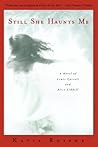
― Still She Haunts Me: A Novel of Lewis Carroll and Alice Liddell
― Still She Haunts Me: A Novel of Lewis Carroll and Alice Liddell
“It's hard to explain how this works, and I admit that it's fairly implausible or untenable as a way of life, but that seems to be how I go about my days: peaceably in person, fiercely on paper.”
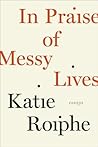
― In Praise of Messy Lives: Essays
― In Praise of Messy Lives: Essays
“She was monumentally, conspicuously damaged in a way that was, to us then, ineffably chic.”
―
―
“The poet found illness a convenient language for his skewed relation to normal life, for his inability at times to function, for his radical abdication of responsibilities. Illness offered, for decades, a comfortable way for him to think about himself. Ever the poet, he pretty much set up camp and lived in the metaphor of being sick.”
― The Violet Hour: Great Writers at the End
― The Violet Hour: Great Writers at the End
“She once complained that her stories were like ‘birds bred in cages,’ but that concentrated atmosphere, that claustrophobic hothouse of emotion, was her talent. Her stories were little masterpieces of compression: she succinctly contained whole lifetimes in a few pages, every moment loaded with as much as it could bear.”
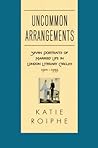
― Uncommon Arrangements: Seven Portraits of Married Life in London Literary Circles 1910-1939
― Uncommon Arrangements: Seven Portraits of Married Life in London Literary Circles 1910-1939
“For us there is little to say. After all, we know that death belongs to life, that it is unavoidable and comes when it wants.”
― The Violet Hour: Great Writers at the End
― The Violet Hour: Great Writers at the End
“Dylan Thomas was lying in a coma under an oxygen tent in St. Vincent’s Hospital. He had been lying there, unshaven, for three days. The precise cause of the coma was obscure, though he had been heard making the extravagant claim that he had eighteen whiskeys at the White Horse Tavern the night before he collapsed.”
― The Violet Hour: Great Writers at the End
― The Violet Hour: Great Writers at the End
“The Paradox: how do you lose something you never had?
The answer: There was another way to have. A transparent stretch of space between you. To love from a distance, through that space, more deeply, more colourfully, so it can be seen from faraway like a flag. Eventually the spave itself fills you. The air entering your body and replacing your blood, running through you. The halfßpleasant feeling of not being here.”
― Still She Haunts Me: A Novel of Lewis Carroll and Alice Liddell
The answer: There was another way to have. A transparent stretch of space between you. To love from a distance, through that space, more deeply, more colourfully, so it can be seen from faraway like a flag. Eventually the spave itself fills you. The air entering your body and replacing your blood, running through you. The halfßpleasant feeling of not being here.”
― Still She Haunts Me: A Novel of Lewis Carroll and Alice Liddell
“That childish ardor for a love that demands sacrifice of you, the rigors and discipline of it, can look selfless from the outside, but it is not selfless. It is instead the elevation of a private fantasy that is ambitious and greedy enough to foist itself onto the unsuspecting world.”
―
―
“Dryden’s original play, Marriage à la Mode, included the lines: “Why should a foolish marriage vow/ which long ago was made/ Oblige us to each other now/ When passion is decayed?”
― Uncommon Arrangements: Seven Portraits of Married Life in London Literary Circles 1910-1939
― Uncommon Arrangements: Seven Portraits of Married Life in London Literary Circles 1910-1939
“Simone de Beauvoir: The day when it will become possible for the woman to love in her strength and not in her weakness, not to escape from herself but to find herself, not out of resignation but to affirm herself, love will become for her as for man the source of life and not a mortal danger.”
―
―
“Why do you need to turn everything on its head, Charles”, he used to ask him, half annoyed and half wondering, “isn't the world beautiful and harmonious as it is?”
― Still She Haunts Me: A Novel of Lewis Carroll and Alice Liddell
― Still She Haunts Me: A Novel of Lewis Carroll and Alice Liddell
“Janet Malcolm: ‘We are all perpetually smoothing and rearranging reality to conform to our wishes; we lie to others and to ourselves constantly, unthinkingly. When, occasionally — and not by dint of our own efforts but under the pressure of external events — we are forced to see things as they are, we are like naked people in a storm. There are a few among us — psychoanalysts have encountered them — who are blessed or cursed with a strange imperviousness to the unpleasantness of self-knowledge. Their lies to themselves are so convincing that they are never unmasked.”
― The Power Notebooks
― The Power Notebooks
“Françoise Gilot talking to a friend at the beginning of her relationship with Picasso:
'"You're headed for a catastrophe," she said. I told her she was probably right but I felt it was the kind of catastrophe I didn't want to avoid.”
― The Power Notebooks
'"You're headed for a catastrophe," she said. I told her she was probably right but I felt it was the kind of catastrophe I didn't want to avoid.”
― The Power Notebooks
“The instinct is so deep and ingrained that it is inseparable from personality or style itself. We all do some version of this in the course of an average day: diffuse competition, brush off compliments, be self-depreciating, anticipate and dismantle the question 'What makes her think she is so special?' before it even begins to form in someone's head. Protestations of disorganization, of not being pulled together, these are such common currency in female interactions that we are barely even aware of them. One woman saying 'You look great,' the other saying without thinking, 'Oh, I haven't slept in forever. I have the hugest circles under my eyes.”
― The Power Notebooks
― The Power Notebooks
“We often describe women who write about pain or vulnerabilities as 'brave,' but this type of confession is so frequently exchanged, so par for the course, so deeply and comfortably ensconced in the language of female confidences, so nearly de rigueur in the kind of personal writing ascendant now, so deeply woven in the way women get along with each other in the world generally that bravery may not be quite the right word. It is, in a way, something more like capitulating.”
― The Power Notebooks
― The Power Notebooks
“I spent more time than was strictly necessary in the plush red corridors of the Hotel Metropole in Hanoi. For some reason, I had convinced myself that I needed to see the inside of suite 228, which was otherwise referred to in the voluminous hotel literature as "the Graham Greene Suite." Greene, whom I had been mildly fixated on for some time, had stayed there during the fifties. I was staying next door in suite 226, and after several days of wondering how I was going to get into his room, I noticed the maid's cart outside. When she finally ducked out to refill her stash of aloe shampoo and little almond soaps, I slipped through the half-opened door. Inside was a bare mahogany desk, a brass lamp, a king-size bed with a modern, striped duvet, and several spindly French sofas, also striped. I couldn't help feeling vastly let down. The setting was devoid of both Greene's seediness - he later regretted popularising the word "seedy" - and his elegance, which should not, of course, have come as a surprise. The Metropole was gutted after the war and rebuilt. And even if it hadn't been, I knew from experience that this sort of literary pilgrimage is always anticlimactic: the writer is dead and what remains of him is in his books.”
― In Praise of Messy Lives: Essays
― In Praise of Messy Lives: Essays
“After all, we know that death belongs to life, that it is unavoidable and comes when it wants.”
― The Violet Hour: Great Writers at the End
― The Violet Hour: Great Writers at the End
“I was also working on the question: Why hadn't I extricated myself sooner? Why had I not reacted for so long? Why couldn't I give up the idea sooner of marriage and at least entertained the possibility of being on my own sooner? The version of myself who was worrying about the correct way to press the elevator button was not actually me, so why had I allowed her to exist and walk around and go to playgrounds and sit in libraries and shop for dinner for so long?”
― The Power Notebooks
― The Power Notebooks
“But the break is still there, not visible but there, the break where you find in yourself the ability to walk away from everything you have known; the break is thrilling, liberating, and, as Alexis says, a little like dying. Alexis describes her mother as”
― In Praise of Messy Lives: Essays
― In Praise of Messy Lives: Essays
“Doris Lessing: You only begin to discover the difference between what you really are, your real self, and your appearance when you get a bit older...a whole dimension of life suddenly slides away and you realize that what in fact you've been using to get attention has been what you look like...it really is a most salutary and fascinating thing to go through, shedding it all.”
―
―
“boys. If I wanted to I could delve further into the great gaping insecurity that is always responsible for this sort of bad behavior: when I was thirteen I was very ill, and in and out of the hospital for a year. By the time it was clear I was going to be all right, I weighed sixty-two pounds. While my friends were cultivating the usual romantic dramas, I read books, and resigned myself to not being part of the game; and this resignation, this astonishment that a boy would like me, lingered dangerously. It turned me into something of a monster for a little while. Somehow this feeling that I was outside the romantic comings and goings of my peers got mingled with the idea that I wasn’t going to live, that I was somehow outside of life. You can see where I am going with this. You can feel, in this explanation, the silent doctor nodding in the corner. So many exquisite explanations of appalling pieces of selfishness. And yet they are all true and not true; it may just have been a warm night and a beautiful boy.”
― In Praise of Messy Lives: Essays
― In Praise of Messy Lives: Essays
“One learns from girlhood to fear the competitive energy, the ambient fury and resentment that can be aimed at powerful females. And yet at the same time, women often want or need power. The goal, then, is to take power in a way that navigates that rage or resentment; it is a little like trying to feed a dragon without getting burned.”
― The Power Notebooks
― The Power Notebooks
“Someone is talking about perfectionism: 'I felt like if I got all As in school, if I excelled at everything and won prizes, my father would stop doing drugs. Our house would stop being the meth house.' If something out of control is scaring you, you can be perfect. 'Of course,' the woman goes on, 'I was never perfect. There is always more I could do. And even if I was somehow able to be perfect, my father would not stop doing drugs. Even if I was perfect, he would not love me. It took me a long time to figure that one out. To stop trying.”
― The Power Notebooks
― The Power Notebooks
“When Salter was fifty-five, his twenty-five-year-old daughter, Allan, died in an electrical accident. She was in the shower in a cabin next door to his in Aspen. He walked in and found her lying naked on the floor, the water running. He carried her dead body in his arms. He took her outside and tried to resuscitate her, somehow thinking she was drowning. We do not talk about this. He says only, “There was the wreckage of that.”
― The Violet Hour: Great Writers at the End
― The Violet Hour: Great Writers at the End
“In the light of day, it's hard to understand why I am derailed by a tiny thing like getting out of a taxi on a Sunday night. Of course, right behind the fear that I can't manage on my own is another more terrifying fear: that I can.”
― The Power Notebooks
― The Power Notebooks
“What he means here is that he had thought his sons would die in the war and had readied himself for the loss. His faith in preparation is central: Freud’s barely submerged premise is that death is something to be mastered, something that one prepares for or practices. “If you would endure life,” he wrote in one of his essays, “be prepared for death.”
― The Violet Hour: Great Writers at the End
― The Violet Hour: Great Writers at the End
“[Simone de Beauvoir] provoked and disturbed feminists with her famous comment about her relationship with Sartre: 'There has been one undoubted success in my life: my relationship with Sartre.' I can almost understand. She adapts her whole being to the situation. She will not be hurt because she will change herself like a sculptor working in clay. She labors for it, sacrifices for it. It is an achievement, a consummately creative act: she invents herself in it.”
― The Power Notebooks
― The Power Notebooks