Goodreads helps you follow your favorite authors. Be the first to learn about new releases!
Start by following Stephen Koch.

Showing 1-20 of 20
“And please don't sink into this woeful nonsense about not having time to read...The real culprit here is almost never your schedule. It is your boredom--your boredom with the books you think you are supposed to read. Find a book you want, a book that gives you real trembling excitement, a book that is hot in your hands, and you'll have time galore.”
―
―
“Incredibly, there are people—smart people—who think a prim disdain for drama is somehow a sign of “good taste.” It is more often the reverse: a lamentable insensitivity to the essence of the art, a failure to “get it” on the most essential level. It is more often a sign not of good taste but of artistic insecurity. Not knowing how far to go, the writer goes nowhere. Lifelessness is not a form of elegance you should pursue.”
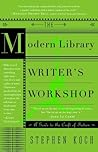
― The Modern Library Writer's Workshop: A Guide to the Craft of Fiction
― The Modern Library Writer's Workshop: A Guide to the Craft of Fiction
“The way—the only way—to “find” your story is to tell it. Nobody in the whole world has ever before told the story you are about to tell. You yourself have never told it to anyone, not even to yourself. You may have lots of intuitions about what the story is going to be, and you may even have a sort of summary overview of it. These are good and useful things to have; they are fine places to start. They are not enough. Until you actually tell the story, the whole story, it will be nothing but smoke. Moreover, you probably will not tell the story exactly right the first time you try. You'll make wrong turns, use the wrong key, or use the right key in the wrong door. After all, you have nobody to guide you. If you are like most people, you will have to tell this story more than once—maybe even several times—before you really get it down.”
― The Modern Library Writer's Workshop: A Guide to the Craft of Fiction
― The Modern Library Writer's Workshop: A Guide to the Craft of Fiction
“When I used to teach creative writing, I would tell the students to make their characters want something right away—even if it's only a glass of water. Characters paralyzed by the meaninglessness of modern life still have to drink water from time to time.”
― The Modern Library Writer's Workshop: A Guide to the Craft of Fiction
― The Modern Library Writer's Workshop: A Guide to the Craft of Fiction
“Use every mistake. The inarticulate parts point to where you must make the words say exactly what you mean. The ragged parts point to what you must polish. The gaping holes tell you what has to be filled. The dull parts tell you unfailingly what must be cut. The blank spots show exactly what you must go out and find. These are infallible guides, and though they talk tough, they are your friends.”
― The Modern Library Writer's Workshop: A Guide to the Craft of Fiction
― The Modern Library Writer's Workshop: A Guide to the Craft of Fiction
“Film and television have convinced too many writers that heaps of dialogue make novels more like movies and therefore good. This is an amateur's fantasy, and it has induced some writers to surrender the few advantages they have over cinematic storytelling. The moviemaker is stuck with what the camera can see and the microphone can hear. You have more freedom. You can summarize situations. You can forthrightly give us people's histories. You can concentrate ten years into ten words. You can move anywhere you like outside real time. You can tell us—just tell us—what people are thinking and feeling. Yes, abundant dialogue can lighten a story, make it more readable and sparkle with wonders. But it is pitiably inadequate before what it is not suited to do.”
― The Modern Library Writer's Workshop: A Guide to the Craft of Fiction
― The Modern Library Writer's Workshop: A Guide to the Craft of Fiction
“...what really makes for readability is not clarity but attitude: the attitude of your prose toward out elusive friend the Reader and the role you invent for that invented being in your invented world.”
― The Modern Library Writer's Workshop: A Guide to the Craft of Fiction
― The Modern Library Writer's Workshop: A Guide to the Craft of Fiction
“It is precisely in that relationship to the Reader that you will find most of the classic faults of style: pretension, condescension, servility, obscurantism, grandiosity, vulgarity, and the like--even academicism. That's why most faults of style can be described in language relevant to human relations. Is your style frank and open...does it have some understated agenda...is it out to prove something it does not or cannot admit...is it trying to impress...show off...is it kissing up...groveling...maybe just a tad passive-aggressive, with a mumbling half-audible voice that is unwilling to explain...is it trying to convince...overwhelm...help...seduce...give pleasure...inflict pain...There is no area of the writer's work that is more responsive to the psychology of human connection than style.”
― The Modern Library Writer's Workshop: A Guide to the Craft of Fiction
― The Modern Library Writer's Workshop: A Guide to the Craft of Fiction
“Productivity is the only path to confidence.”
― The Modern Library Writer's Workshop: A Guide to the Craft of Fiction
― The Modern Library Writer's Workshop: A Guide to the Craft of Fiction
“Since you have no choice but to begin in uncertainty, you must learn to tolerate uncertainty and, if possible, to turn it into excitement.”
― The Modern Library Writer's Workshop: A Guide to the Craft of Fiction
― The Modern Library Writer's Workshop: A Guide to the Craft of Fiction
“The most familiar of all advice on writing is the old classroom cliché “Write what you know.” It is very much a cliché, and it is going to get rather rough treatment over the course of this book. Yet, like most clichés, it has the residual virtue of being a halftruth.”
― The Modern Library Writer's Workshop: A Guide to the Craft of Fiction
― The Modern Library Writer's Workshop: A Guide to the Craft of Fiction
“And how do you make your way from beginning to end? You can be guided at every step by only one intuition: your own sense of rightness. But the sense of rightness can come only after you have been guided away from ten thousand wrong turns by your sense for what is wrong. The sense of rightness and the sense of what is wrong have no independent existence: Each is the other's reverse side. Most good stories die before they are born simply because their authors fail to understand this. That little voice inside says to them, “This is wrong, all wrong,” and they panic, they think they have failed, and they quit. They think that inner voice—wrong; this is wrong—is a reason for stopping. In fact, it is your art's best friend, the other voice of rightness. You must listen to them both, trusting that your intellect is capable of responding to their cues and discerning at least many of their mute meanings. They will be in play every hour you spend at your desk, and they alone can guide you on your path from perplexity, complexity, and conflict to the inevitable. That movement from the improbable to the inevitable is the truest course of a story, and it defines your path.”
― The Modern Library Writer's Workshop: A Guide to the Craft of Fiction
― The Modern Library Writer's Workshop: A Guide to the Craft of Fiction
“But”—you may say—“I don't even know my story yet.” My answer is: “Of course you don't know your story yet.” You are the very first person to tell this story ever, anywhere in the whole world, and you cannot know a story until it has been told. First you tell it; then you know it. It is not the other way around. That may sound illogical, but to the narrating mind, it is logic itself. Stories make themselves known, they reveal themselves—even to their tellers—only by being told. You may ask how on earth you can tell a story before you know it. You do that by letting the emerging story tell itself through you. As you tell it, you let the story give you your cues about where it is going to go next. At first, you must feel your way, letting it be your guide.”
― The Modern Library Writer's Workshop: A Guide to the Craft of Fiction
― The Modern Library Writer's Workshop: A Guide to the Craft of Fiction
“Cultivate whatever serves your persistence.”
― The Modern Library Writer's Workshop: A Guide to the Craft of Fiction
― The Modern Library Writer's Workshop: A Guide to the Craft of Fiction
“Inspiration and confidence and conviction and craft and knowledge are not what make writing possible. It's exactly the other way around. Writing makes them possible.”
― The Modern Library Writer's Workshop: A Guide to the Craft of Fiction
― The Modern Library Writer's Workshop: A Guide to the Craft of Fiction
“The rightness of things is generally revealed in retrospect, and you're unlikely to know in advance what is right and wrong in a story that has not yet been written.”
― The Modern Library Writer's Workshop: A Guide to the Craft of Fiction
― The Modern Library Writer's Workshop: A Guide to the Craft of Fiction
“The only way to begin is to begin, and begin right now. If you like, begin the minute you finish reading this paragraph. For sure, begin before you finish reading this book. I have no doubt the day is coming when you will be wiser or better informed or more highly skilled than you are now, but you will never be more ready to begin writing than you are right this minute. The time has come.”
― The Modern Library Writer's Workshop: A Guide to the Craft of Fiction
― The Modern Library Writer's Workshop: A Guide to the Craft of Fiction
“The craft of writing is bound to the experience of literacy and language itself.”
― The Modern Library Writer's Workshop: A Guide to the Craft of Fiction
― The Modern Library Writer's Workshop: A Guide to the Craft of Fiction
“The shock of recognition is a moment of excitement that shakes the soul. It may be hard to describe, but like other forms of love, you will know it when you feel it.”
―
―
“The shock of recognition is a moment of excitement that shakes the soul. It may be hard to describe, but like other forms of love, you will know it when you feel it”
― The Modern Library Writer's Workshop: A Guide to the Craft of Fiction
― The Modern Library Writer's Workshop: A Guide to the Craft of Fiction