Goodreads helps you follow your favorite authors. Be the first to learn about new releases!
Start by following Michael Lind.

Showing 1-30 of 80
“Libertarians are not the brightest lights in the candelabra, a fact that is evident from the alternatives they tend to offer to public prevention of private abuses. For example: if you don’t like working a hundred hours a week for twenty-five cents a day, then find another employer! It is obvious to intelligent people, if not libertarians, that more generous employers will price themselves out of a market whose standards are set by the most rapacious.”
―
―
“For realists, war is like surgery-a painful and dangerous activity that is sometimes necessary ... A pacifist is like a Christian Scientist who is against surgery even when the alternative is the crippling or death of the patient.”
―
―
“Laws and regulations that corporate lobbyists are unable to persuade national democratic legislatures to enact can be repackaged and hidden in harmonization agreements masked as lengthy trade treaties, which are then ratified by legislatures without adequate scrutiny. Whatever its minor benefits, legislation by treaty represents a massive transfer of power from democratic legislatures to corporate managers and bankers. Jean-Claude Juncker, the prime minister of the tax haven Luxembourg who became the president of the European Commission from 2014 to 2019, described how the European Council systematically expanded its authority by stealth: “We decree something, then float it and wait some time to see what happens. If no clamor occurs . . . because most people do not grasp what had been decided, we continue—step by step, until the point of no return is reached.”
― The New Class War: Saving Democracy from the Managerial Elite
― The New Class War: Saving Democracy from the Managerial Elite
“The appropriation of terms from psychology to discredit political opponents is part of the modern therapeutic culture that the sociologist Christopher Lasch criticized. Along with the concept of the authoritarian personality, the term “-phobe” for political opponents has been added to the arsenal of obloquy deployed by technocratic neoliberals against those who disagree with them. The coinage of the term “homophobia” by the psychologist George Weinberg in the 1970s has been followed by a proliferation of pseudoclinical terms in which those who hold viewpoints at variance with the left-libertarian social consensus of the transatlantic ruling class are understood to suffer from “phobias” of various kinds similar to the psychological disorders of agoraphobia (fear of open spaces), ornithophobia (fear of birds), and pentheraphobia (fear of one’s mother-in-law). The most famous use of this rhetorical strategy can be found in then-candidate Hillary Clinton’s leaked confidential remarks to an audience of donors at a fund-raiser in New York in 2016: “You know, to just be grossly generalistic, you could put half of Trump’s supporters into what I call the basket of deplorables. Right? They’re racist, sexist, homophobic, xenophobic, Islamophobic—you name it.”
A disturbed young man who is driven by internal compulsions to harass and assault gay men is obviously different from a learned Orthodox Jewish rabbi who is kind to lesbians and gay men as individuals but opposes homosexuality, along with adultery, premarital sex, and masturbation, on theological grounds—but both are "homophobes.” A racist who opposes large-scale immigration because of its threat to the supposed ethnic purity of the national majority is obviously different from a non-racist trade unionist who thinks that immigrant numbers should be reduced to create tighter labor markets to the benefit of workers—but both are “xenophobes.” A Christian fundamentalist who believes that Muslims are infidels who will go to hell is obviously different from an atheist who believes that all religion is false—but both are “Islamophobes.” This blurring of important distinctions is not an accident. The purpose of describing political adversaries as “-phobes” is to medicalize politics and treat differing viewpoints as evidence of mental and emotional disorders.
In the latter years of the Soviet Union, political dissidents were often diagnosed with “sluggish schizophrenia” and then confined to psychiatric hospitals and drugged. According to the regime, anyone who criticized communism literally had to be insane. If those in today’s West who oppose the dominant consensus of technocratic neoliberalism are in fact emotionally and mentally disturbed, to the point that their maladjustment makes it unsafe to allow them to vote, then to be consistent, neoliberals should support the involuntary confinement, hospitalization, and medication of Trump voters and Brexit voters and other populist voters for their own good, as well as the good of society.”
― The New Class War: Saving Democracy from the Managerial Elite
A disturbed young man who is driven by internal compulsions to harass and assault gay men is obviously different from a learned Orthodox Jewish rabbi who is kind to lesbians and gay men as individuals but opposes homosexuality, along with adultery, premarital sex, and masturbation, on theological grounds—but both are "homophobes.” A racist who opposes large-scale immigration because of its threat to the supposed ethnic purity of the national majority is obviously different from a non-racist trade unionist who thinks that immigrant numbers should be reduced to create tighter labor markets to the benefit of workers—but both are “xenophobes.” A Christian fundamentalist who believes that Muslims are infidels who will go to hell is obviously different from an atheist who believes that all religion is false—but both are “Islamophobes.” This blurring of important distinctions is not an accident. The purpose of describing political adversaries as “-phobes” is to medicalize politics and treat differing viewpoints as evidence of mental and emotional disorders.
In the latter years of the Soviet Union, political dissidents were often diagnosed with “sluggish schizophrenia” and then confined to psychiatric hospitals and drugged. According to the regime, anyone who criticized communism literally had to be insane. If those in today’s West who oppose the dominant consensus of technocratic neoliberalism are in fact emotionally and mentally disturbed, to the point that their maladjustment makes it unsafe to allow them to vote, then to be consistent, neoliberals should support the involuntary confinement, hospitalization, and medication of Trump voters and Brexit voters and other populist voters for their own good, as well as the good of society.”
― The New Class War: Saving Democracy from the Managerial Elite
“The American oligarchy spares no pains in promoting the belief that it does not exist, but the success of its disappearing act depends on equally strenuous efforts on the part of an American public anxious to believe in egalitarian fictions and unwilling to see what is hidden in plain sight.”
―
―
“A Clinton or a Bush was president, vice president, or secretary of state in every year between 1981 and 2013, an era in which working-class incomes stagnated, offshoring devastated US and European manufacturing, the world suffered the worst economic collapse since the Great Depression of the 1930s, and the US plunged into multiple disastrous wars in the Middle East and Central Asia. Trump became president by running against a Bush in the Republican primaries and a Clinton in the general election. The desire of many American voters to disrupt the quarter-century cycle of nearly identical versions of technocratic neoliberalism under alternating Bushes and Clintons is quite sufficient to explain the presidential election of 2016.”
― The New Class War: Saving Democracy from the Managerial Elite
― The New Class War: Saving Democracy from the Managerial Elite
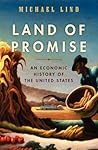
“The purpose of American economic policy in the twenty-first century is no longer to catch up with industrial Britain, but to allow the United States to participate in high-value-added global supply chains in a world of transnational production, without sacrificing strategic industries.”
― Land of Promise: An Economic History of the United States
― Land of Promise: An Economic History of the United States
“The postwar settlement in the world and at home was clearly falling apart. In the United States and other Western democracies, the post-1945 truce between labor, business, and government was threatened by inflation. The rate of economic growth in every industrial democracy slowed abruptly in the 1970s, reviving only in the late 1990s. At the same time, the demands of organized labor for higher wages added “wage-push inflation” to the causes of inflation. Inflation reached a peak of 18 percent in the last years of the Carter administration.”
― Land of Promise: An Economic History of the United States
― Land of Promise: An Economic History of the United States
“If Americans had paid attention to Adam Smith, the United States never would have become the world’s greatest industrial economy—because it never would have become an industrial economy at all. Along with most countries in the Americas, Europe, Asia, and the Middle East, the United States, according to Adam Smith, should have forever remained a supplier of foodstuffs and raw materials to industrialized Britain.”
― Land of Promise: An Economic History of the United States
― Land of Promise: An Economic History of the United States
“While the electric grid and the highway grid were visible manifestations of the second industrial order, the unseen motors hidden in household appliances were just as revolutionary. The industrialization of the household with the help of labor-saving appliances like refrigerators, washing machines, and dishwashers allowed the members of America’s new mass middle class to spend time formerly devoted to household chores on other activities, including listening to the radio, watching television shows, and going to the movies.”
― Land of Promise: An Economic History of the United States
― Land of Promise: An Economic History of the United States
“On September 5, 1901, the day before he was assassinated, President William McKinley in a speech at the Pan-American Exposition in Buffalo, New York, called for a shift in American economic strategy toward greater trade liberalization. Warning that “we must not repose in fancied security that we can forever sell everything and buy nothing,”
― Land of Promise: An Economic History of the United States
― Land of Promise: An Economic History of the United States
“To put it another way, each American republic has been destabilized by a wave of technology-driven change. The gap between a rapidly evolving society and an outmoded political order grows for several decades. Finally, during a war or depression or both, the outmoded political order crumbles and a new American republic is constructed, built on the ruins of its predecessor.”
― Land of Promise: An Economic History of the United States
― Land of Promise: An Economic History of the United States
“Following the Civil War, Carey wrote in 1867: “Slavery did not make the rebellion. British free trade gave us sectionalism, and promoted the growth of slavery, and thus led to rebellion.”
― Land of Promise: An Economic History of the United States
― Land of Promise: An Economic History of the United States
“Michael Lind quotes Frederick Douglas on page 381:
“If we had built great ships, sailed around the world, taught the science of navigation, discovered far-off islands, capes and continents, enlarged the boundaries of human knowledge, improved the conditions of man’s existence, brought valuable contributions to art, science, and literature, revealed great truths, organized great States, administered great governments, defined the laws of the universes, formulated systems of mental and moral philosophy, invented railroads, steam engines, mowing machines, sewing machines, taught the sun to take pictures, the lightning to carry messages, we then might claim, not only potential and theoretical equality, but actual and practical equality. Nothing is gained to our cause by claiming more for ourselves than of right we can establish belongs to us.”
― The Next American Nation: The New Nationalism and the Fourth American Revolution
“If we had built great ships, sailed around the world, taught the science of navigation, discovered far-off islands, capes and continents, enlarged the boundaries of human knowledge, improved the conditions of man’s existence, brought valuable contributions to art, science, and literature, revealed great truths, organized great States, administered great governments, defined the laws of the universes, formulated systems of mental and moral philosophy, invented railroads, steam engines, mowing machines, sewing machines, taught the sun to take pictures, the lightning to carry messages, we then might claim, not only potential and theoretical equality, but actual and practical equality. Nothing is gained to our cause by claiming more for ourselves than of right we can establish belongs to us.”
― The Next American Nation: The New Nationalism and the Fourth American Revolution
“In his annual address to Congress in 1902, he wrote: “These big aggregations are an inevitable development of modern industrialism, and the effort to destroy them would be futile. The line of demarcation we draw must always be on conduct, not on wealth; our objection to any given corporation must be, not that it is big, but that it behaves badly.”
― Land of Promise: An Economic History of the United States
― Land of Promise: An Economic History of the United States
“Producerists have often been willing to sacrifice free markets, if by doing so they can protect small producers.”
― Land of Promise: An Economic History of the United States
― Land of Promise: An Economic History of the United States
“The quiet McKinley has been overshadowed by his rambunctious successor Roosevelt. But he was the major transitional figure between the old Hamiltonianism of Hamilton, Clay, and Lincoln, and the new Hamiltonianism of progressives like Theodore and Franklin Roosevelt.”
― Land of Promise: An Economic History of the United States
― Land of Promise: An Economic History of the United States
“The policies of the Nixon administration can be understood as an attempt to deal with the problems caused by the contradiction between the New Deal order at home and the global economy by sacrificing America’s post-1945 hegemonic grand strategy in favor of a more overtly nationalistic US foreign military and economic policy.”
― Land of Promise: An Economic History of the United States
― Land of Promise: An Economic History of the United States
“By the 1920s, electricity and the automobile were reshaping the geography of American production, distribution, consumption, and residence. Thanks to electrical power, factories no longer needed to be located near coal mines or waterways that carried the coal that powered steam engines. Railroads were eclipsed by long-distance trucking, as canals earlier had been eclipsed by railroads. And the migration of Americans from the farms to the cities gave way to the migration from the cities to the suburbs.”
― Land of Promise: An Economic History of the United States
― Land of Promise: An Economic History of the United States
“The post-1945 boom, by allowing many firms to finance themselves to a greater degree from retained earnings, reduced the influence of the financial sector over corporate America even more.”
― Land of Promise: An Economic History of the United States
― Land of Promise: An Economic History of the United States
“Page 286: Common sense on this subject tends to be warded off by ritual invocation of the cliché that we are “a nation of immigrants.” In fact, the United States is not a nation of immigrants, and never has been. At no point in American history have people born abroad constituted more than a minority of the U.S. population”
― The Next American Nation: The New Nationalism and the Fourth American Revolution
― The Next American Nation: The New Nationalism and the Fourth American Revolution
“Page 147: Over time, this lack of participation in the military by the white overclass could lead to an increasing divergence between the norms of the civilian and the military elites in the United States, and a declining respect for civilian authority by a heavily middle-class and working-class military. The incidents of insubordination that greeted President Clinton’s attempt to end the ban on homosexual men and women in the military showed the existence of both the cultural gap and the possible consequences.”
― The Next American Nation: The New Nationalism and the Fourth American Revolution
― The Next American Nation: The New Nationalism and the Fourth American Revolution
“Wages rose in the tighter labor markets that immigration restriction produced. In 1938, looking back at the earlier era of mass immigration, economists Harry Millis and Royal Montgomery concluded that the leaders of organized labor had been correct to argue that “as labor markets were flooded, the labor supply was made more redundant, and wages were undermined.”58 In 1964, Stanley Lebergott concurred: “It [is] most unlikely that the rate of productivity advance or the nature of productivity advance changed so [much in the 1920s] as to explain [the spurt in real wage growth]. Instead we find that halting the flow of millions of migrants . . . offers a much more reasonable explanation.”
― Land of Promise: An Economic History of the United States
― Land of Promise: An Economic History of the United States
“The process by which the House of Morgan acquired, consolidated, and reorganized railroads and other companies and controlled them by placing Morgan partners on their boards of directors came to be known as “Morganization.”
― Land of Promise: An Economic History of the United States
― Land of Promise: An Economic History of the United States
“The War Assets Administration, succeeded by the General Services Administration, oversaw the sale of these assets to the private sector at a fraction of their actual cost, providing a massive transfer of public resources to private industry.”
― Land of Promise: An Economic History of the United States
― Land of Promise: An Economic History of the United States
“A Clinton or a Bush was president, vice president, or secretary of state in every year between 1981 and 2013, an era in which working-class incomes stagnated, offshoring devastated US and European manufacturing, the world suffered the worst economic collapse since the Great Depression of the 1930s, and the US plunged into multiple disastrous wars in the Middle East and Central Asia. Trump became president by running against a Bush in the Republican primaries and a Clinton in the general election. The desire of many American voters to disrupt the quarter-century cycle of nearly identical versions of technocratic neoliberalism under alternating Bushes and Clintons is quite sufficient to explain the presidential election of 2016. —”
― The New Class War: Saving Democracy from the Managerial Elite
― The New Class War: Saving Democracy from the Managerial Elite
“Abandoning his campaign pledge to balance the budget, Roosevelt engaged in deficit spending. In the introduction to the first volume of his presidential papers, FDR wrote: “To balance our budget in 1933 or 1934 or 1935 would have been a crime against the American people. To do so we should have had to make a capital levy that would have been confiscatory, or we would have had to set our face against human suffering with callous indifference.”46 Deficit spending continued until 1937, when Roosevelt and Congress repeated Hoover’s mistake by prematurely trying to balance the budget, throwing the country back into recession.”
― Land of Promise: An Economic History of the United States
― Land of Promise: An Economic History of the United States
“What Galbraith later called “countervailing power” was described by the journalist John Chamberlain as the essence of the “broker state” created by the New Deal: “The labor union, the consumers’ or producers’ co-operative, the ‘institute,’ the syndicate—these are the important things in a democracy. If their power is evenly spread, if there are economic checks and balances to parallel the political checks and balances, then society will be democratic. For democracy is what results when you have a state of tension in society that permits no one group to dare to bid for total power.”57”
― Land of Promise: An Economic History of the United States
― Land of Promise: An Economic History of the United States
“Americans should look for guidance in trade policy not to Jefferson Davis but to George Washington, who, in his first annual address to Congress in January 1790, declared that “a free people ought not only to be armed but disciplined” and that “their safety and interest required that they should promote such manufactories as tend to render them independent of others for essential, particularly military, supplies.”
― Land of Promise: An Economic History of the United States
― Land of Promise: An Economic History of the United States
“While besieged by a newly confident and aggressive free-market Right, New Deal liberalism was attacked from the Left by Marxists and environmentalists. Marxist scholars denounced “corporate liberalism,” declaring that New Deal liberals like Roosevelt and Johnson were pawns of the capitalist class and rewriting history to make industrial regulation a conspiracy by the industries themselves.”
― Land of Promise: An Economic History of the United States
― Land of Promise: An Economic History of the United States