Goodreads helps you follow your favorite authors. Be the first to learn about new releases!
Start by following Jeffrey Magee.

Showing 1-10 of 10
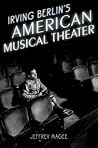
“In other words, Berlin conceived shows as events more than as works. As a result, Berlin’s shows do not exactly represent the most enduring oeuvre in the American theater: only Annie Get Your Gun, the show that least obviously addresses its time, has enjoyed an unbroken string of productions that stretches from its premiere to the present. Yet by engaging with the here-and-now, with no apparent thought of posterity but mainly of the “mob” before him, Berlin distilled and packaged musical comedy conventions that resonated in the theater deep into the twentieth century even as they held to comedy’s ancient ideals. Above all—and this I think manifests the engine that drives all of his work—Berlin seems to have understood and embraced the idea that American musical theater is always, inescapably, about itself. He probably would have scorned the term metatheater, but the boot fits. All of his stage shows and films are in some way about theater, about putting on a show, about performing in public, and about the place that tested his mettle and nourished his craft: New York City. This is the case even in shows that are not chiefly set in New York. Annie Get Your Gun may be widely considered one of the “Western” musicals of the Oklahoma! age, but it is above all a show about “show business,” and it all takes place east of (or near to) the Mississippi River and ends up in New York, with plenty of swinging tunes that resonate more with postwar Manhattan than with Annie Oakley’s earlier America in Darke County,”
― Irving Berlin's American Musical Theater
― Irving Berlin's American Musical Theater
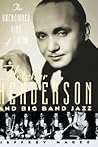
“As Duke Ellington put it, Henderson "was liberal in giving away his ideas to people. So liberal, in fact, that it is difficult to recognize the original Fletcher Henderson through his flock of imitators.”
― The Uncrowned King of Swing: Fletcher Henderson and Big Band Jazz
― The Uncrowned King of Swing: Fletcher Henderson and Big Band Jazz
“he started writing counterpoint songs for the theater in the same period that he publicly claimed his desire to compose an opera, because in opera two or more characters regularly express conflicting feelings simultaneously, as in the famous quartet from Verdi’s Rigoletto, which Berlin parodied in his first musical comedy, Watch Your Step.”
― Irving Berlin's American Musical Theater
― Irving Berlin's American Musical Theater
“End-man–style banter with an authoritative interlocutor remained fundamental to Berlin’s theater, even when the more obvious trappings of minstrelsy are absent. It resurfaces, for example, in Groucho Marx’s put-ons of Margaret Dumont (in The Cocoanuts) and the brash, benighted challenges that Ethel Merman’s homespun characters present to show business professionals (in Annie Get Your Gun) and to foreign dignitaries (in Call Me Madam).”
― Irving Berlin's American Musical Theater
― Irving Berlin's American Musical Theater
“he believed that minstrelsy’s conventions, its structure, and its vitality gave it access to the common denominator in an American audience.”
― Irving Berlin's American Musical Theater
― Irving Berlin's American Musical Theater
“Opera enjoyed a place in Berlin’s theatrical vocabulary partly because of its long presence in minstrel parody, but also because Berlin loved opera and wished to write one, one that would be widely construed as a distinctively American contribution to the genre.”
― Irving Berlin's American Musical Theater
― Irving Berlin's American Musical Theater
“Minstrelsy and opera, then, form the twin currents that charge the three genres in which he channeled his theatrical energy: vaudeville, revue, and musical comedy.”
― Irving Berlin's American Musical Theater
― Irving Berlin's American Musical Theater
“the young medium of film became Berlin’s means of preserving an old theatrical form that he knew was dying out.”
― Irving Berlin's American Musical Theater
― Irving Berlin's American Musical Theater
“All of his musicals through the mid-1930s include at least one extended, multisectional musical sequence featuring two or more characters in dialogue and action.”
― Irving Berlin's American Musical Theater
― Irving Berlin's American Musical Theater
“for Berlin, a minstrel scene was not just a good way to begin a movie but also a way to dramatize the origins and foundations of American show business.”
― Irving Berlin's American Musical Theater
― Irving Berlin's American Musical Theater