Goodreads helps you follow your favorite authors. Be the first to learn about new releases!
Start by following Patricia T. O'Conner.

Showing 1-9 of 9
“Whenever there's something wrong with your writing, suspect that there's something wrong with your thinking.”
― Words Fail Me: What Everyone Who Writes Should Know about Writing
― Words Fail Me: What Everyone Who Writes Should Know about Writing
“If the good news from cyberspace is that we're writing more, the bad news is that most of us aren't very good at it. Our words don't do justice to our ideas.”
―
―
“Contrary to popular opinion, there's no mystery to writing well. It's a skill that just about anyone can learn, more craft than art.”
― Words Fail Me: What Everyone Who Writes Should Know about Writing
― Words Fail Me: What Everyone Who Writes Should Know about Writing
“With grammar, it’s always something.”
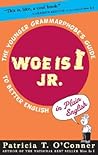
― Woe is I: The Grammarphobe's Guide to Better English in Plain English
― Woe is I: The Grammarphobe's Guide to Better English in Plain English
“First, you need something to organize: ideas, material, scraps of expertise, recipes, prognostications, anecdotes, scurrilous gossip, anything that might be relevant to what you want to write. And you get this stuff by hoarding it, by faithfully making notes and squirreling them away.”
― Words Fail Me: What Everyone Who Writes Should Know about Writing
― Words Fail Me: What Everyone Who Writes Should Know about Writing
“An idea in your head is merely an idle notion. But an idea written down, that's the beginning of something! Stripped down to its briefs, a piece of writing is nothing more than a handful of ideas, put into words and arranged to do a job. We all get ideas—try not thinking in the shower. The trick is to write them down.”
― Words Fail Me: What Everyone Who Writes Should Know about Writing
― Words Fail Me: What Everyone Who Writes Should Know about Writing
“A generation or so after slavery ended, segregationists enacted Jim Crow laws that made it impossible for most blacks to vote in the South.”
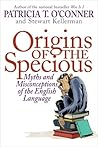
― Origins of the Specious: Myths and Misconceptions of the English Language
― Origins of the Specious: Myths and Misconceptions of the English Language
“As for other nouns of foreign origin, how do you know whether to choose an Anglicized plural (like memorandums) or a foreign one (memoranda)? There’s no single answer, unfortunately. A century ago, the foreign ending would have been preferred, but over the years we’ve given English plural endings to more and more foreign-derived words. And in common (rather than technical) usage, that trend is continuing. So don’t assume that an exotic plural is more educated. Only ignorami would say they live in condominia.”
― Woe is I: The Grammarphobe's Guide to Better English in Plain English
― Woe is I: The Grammarphobe's Guide to Better English in Plain English
“Speaking of aitches, some British speakers, especially on the telly, use “an” before words like “historic” or “hotel,” and some Anglophiles over here are slavishly imitating them. For shame! Usage manuals on both sides of the Atlantic say the article to use is “a,” not “an.” The rule is that we use “a” before a word that begins with an h that’s pronounced and “an” before a word that starts with a silent h. And dictionaries in both Britain and the United States say the h should be pronounced in “historic” and “hotel” as well as “heroic,” “habitual,” “hypothesis,” “horrendous,” and some other problem h-words.”
― Origins of the Specious: Myths and Misconceptions of the English Language
― Origins of the Specious: Myths and Misconceptions of the English Language