Goodreads helps you follow your favorite authors. Be the first to learn about new releases!
Start by following James Rosen.

Showing 1-13 of 13
“There is not a whole lot of use in being an ethnic, unless you’re running for office or perhaps going through a confirmation hearing. —Antonin Scalia, 1988”
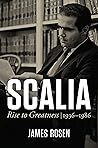
― Scalia: Rise to Greatness, 1936 to 1986
― Scalia: Rise to Greatness, 1936 to 1986
“Scalia, in a Catholic school, was in an atmosphere that causes students to feel superior to begin with. As the school was Jesuit, the atmosphere was also one of being superior to all other Catholics. And then since Xavier was a military school, its students were aggressively superior.”
― Scalia: Rise to Greatness, 1936 to 1986
― Scalia: Rise to Greatness, 1936 to 1986
“It was in Nino’s Catholic education that he encountered, for the first time, a setback: he failed the entrance exam for Regis, the prestigious Catholic high school in Manhattan he was eyeing. A classmate from this period, who”
― Scalia: Rise to Greatness, 1936 to 1986
― Scalia: Rise to Greatness, 1936 to 1986
“It is less true that we are what we eat than that we are what we do to eat.”
― Scalia: Rise to Greatness, 1936 to 1986
― Scalia: Rise to Greatness, 1936 to 1986
“The justice would term it “the shame of my life” that, despite a classical education that included six years of Latin and five of Greek, he never learned Italian as his father wished.”
― Scalia: Rise to Greatness, 1936 to 1986
― Scalia: Rise to Greatness, 1936 to 1986
“He was dismayed by countercultural contempt for the soldier and displeased when Xavier, in 1971, made regimental service optional.”
― Scalia: Rise to Greatness, 1936 to 1986
― Scalia: Rise to Greatness, 1936 to 1986
“But the phrase that the Swiss professors used with Scalia and the other native speakers of English who hailed from the United States, Canada, and Australia—les pays anglo-saxes, or the Anglo-Saxon countries—“deeply offended” the paisan from Queens.”
― Scalia: Rise to Greatness, 1936 to 1986
― Scalia: Rise to Greatness, 1936 to 1986
“Xavier High School was the most formative institution in my life,” Scalia said upon his return to the school in 2011. “The Regiment’s most important legacy, of course, was not pageantry; it was discipline, and duty, and sacrifice.”29”
― Scalia: Rise to Greatness, 1936 to 1986
― Scalia: Rise to Greatness, 1936 to 1986
“Sam didn’t like his son’s politics. “He was a liberal man,” a neighbor from Queens recalled in 1986. “The son turned out conservative, but the father wasn’t.”16”
― Scalia: Rise to Greatness, 1936 to 1986
― Scalia: Rise to Greatness, 1936 to 1986
“The vote on Rehnquist followed five days of debate on the Senate floor—the misery ended, at last, when sixteen Democrats joined in shutting it down. The debate on Scalia lasted seven minutes.9”
― Scalia: Rise to Greatness, 1936 to 1986
― Scalia: Rise to Greatness, 1936 to 1986
“Watergate dismayed Scalia. He saw in it the personal tragedy of Nixon but also the accelerating spiral of Western spiritual decline, in an age already debased by Vatican II, the counterculture, Radical Chic.”
― Scalia: Rise to Greatness, 1936 to 1986
― Scalia: Rise to Greatness, 1936 to 1986
“My dad told me once, after a party everybody had left: ‘That’s why you should work hard in school—so you can succeed and have friends like Robert Bork.’ ”5”
― Scalia: Rise to Greatness, 1936 to 1986
― Scalia: Rise to Greatness, 1936 to 1986
“He also installed in chambers a new kind of machine, useful, he reckoned, in the composition of his opinions: a word processor.”
― Scalia: Rise to Greatness, 1936 to 1986
― Scalia: Rise to Greatness, 1936 to 1986