Goodreads helps you follow your favorite authors. Be the first to learn about new releases!
Start by following Alison Wearing.

Showing 1-14 of 14
“...until we make peace with our homes, we can never quite make peace with ourselves.”
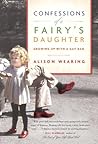
― Confessions of a Fairy's Daughter: Growing Up with a Gay Dad
― Confessions of a Fairy's Daughter: Growing Up with a Gay Dad
“In Europe they think it is a bit barbaric, this way to look for a wife," Mohammad says to his hands, which have not stopped fidgeting since we sat down. [...] "Sometimes I believe it is barbaric how do people meet each other in Europe, you know, so often through alcohol or some kind of superficial meeting, parties or someplace other. It is so easy to… how do you call it… act as some other person. I had one German girlfriend, for two years were we together and only have I seen some sides of her, very good and kind, but only the outside, fun and happy, I could not see who was she in earnest. It was always something for showing other people.”
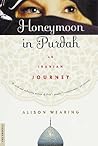
― Honeymoon in Purdah: An Iranian Journey
― Honeymoon in Purdah: An Iranian Journey
“They lean into each other, entwine arms and legs, innocently, affectionately, and I look at them, their identical eyes and smiles, and try to imagine the divergence of their lives. Mitra marrying at fourteen, while her cousin begins life in England. Mitra leaving school to have children while Farah studies, learns English, grows up in London, maybe goes on to university. I stare into the soft faces of those girls and try to imagine them meeting again, ten years from now. Farah will return for a visit. She will wear fashionable clothes and will wear a chaador with disdain. She will speak a refined English and will fit awkwardly into her mother tongue; it will no longer hold her. She will have developed a taste for philosophy over coffee, will have grown used to speaking her mind, will have had many friendships and a heartbreak that will have left her unsettled but independent, will have become successful, enviable.
She and Mitra will gasp when they see each other after all these years. They will hug and separate and hug and separate and kiss each other on the cheek again and again. Then they will sit across from each other staring, wondering how the other one got so old. Mitra will have four children; no, five; and will wear this, them, in her face. Her arms will be thick, strong, her hands calloused, and she will cry easily, not because she is sad, but because her emotions will not live behind her mind. Farah will be shocked to see her old friend and will think it pathetic, her life, all these children, this cooking and praying and serving; this waste. The visit will be pleasant but awkward, forced in a way neither of them expected. Farah will find an excuse to spend the rest of her holiday in Tehran and will return to England without seeing Mitra again. They will be cousins always but never friends, because each will have a wisdom the other cannot understand.
The girls stare at me, waiting for an answer.
"Yes," I say, "You will both be happy.”
― Honeymoon in Purdah: An Iranian Journey
She and Mitra will gasp when they see each other after all these years. They will hug and separate and hug and separate and kiss each other on the cheek again and again. Then they will sit across from each other staring, wondering how the other one got so old. Mitra will have four children; no, five; and will wear this, them, in her face. Her arms will be thick, strong, her hands calloused, and she will cry easily, not because she is sad, but because her emotions will not live behind her mind. Farah will be shocked to see her old friend and will think it pathetic, her life, all these children, this cooking and praying and serving; this waste. The visit will be pleasant but awkward, forced in a way neither of them expected. Farah will find an excuse to spend the rest of her holiday in Tehran and will return to England without seeing Mitra again. They will be cousins always but never friends, because each will have a wisdom the other cannot understand.
The girls stare at me, waiting for an answer.
"Yes," I say, "You will both be happy.”
― Honeymoon in Purdah: An Iranian Journey
“The music becomes boisterous and acoustic, at the low end of genius but brilliant in spirit and tone. It is joy by fiddle, laughter by accordion, Ireland through to the bone.”
― Moments of Glad Grace: A Memoir
― Moments of Glad Grace: A Memoir
“Canada", he told me one day through squinted eyes and smoke rings, "is full of violent cowards. People believe they are gentile, but they attack in quiet ways. They use their intellect, their knowledge, always trying to prove they are smarter, more important. The man with no ego is the gentle man, Canada is a land of civilized barbarians.”
― Honeymoon in Purdah: An Iranian Journey
― Honeymoon in Purdah: An Iranian Journey
“I want to be someone so filled with curiosity and determination that I trundle around foreign cities looking for obscure pieces of a puzzle that might help me understand who I am, and still be game for Zumba when I’m eighty.”
― Moments of Glad Grace: A Memoir
― Moments of Glad Grace: A Memoir
“When our revolution became very severe with killing in street and hostage in Emrika embassy, it made afraid all Emrika. Even it made afraid many Iranian...Emrika did think: Iran became cray! But really Iranian was same people, only difference, we have some fanatic with power. Everyone else same.”
― Honeymoon in Purdah: An Iranian Journey
― Honeymoon in Purdah: An Iranian Journey
“She opens her schoolbook to a lesson called "A Day In London", curls up beside me and rests her head on my shoulder...I read, "We are in London. It rains. It is very cold. Everyone is sad because the weather is dreadful. Churches are empty, but shops are full. Most people drive cars, but they are very expensive. Many people are without food. The Queen wears much jewellery.”
― Honeymoon in Purdah: An Iranian Journey
― Honeymoon in Purdah: An Iranian Journey
“At the entrance to the park stands a painted sign depicting two women. The one on the left wears a long black manteau and wimple, dark trousers and shoes; the figure on the right wears all of this plus a chaador overtop. Both figures are faceless. The rest of the sign is in writing. I ask Hamid what it means.
"Our sign tell that this one-" Hamid points to the woman on the left "-is good, it is cloth Islamic. But our sign tells that this-" he taps his finger against the chaadored figure on the right "-is very much good dressing, most beautiful, way of God."
"At the bottom of the sign there is, inexplicably, and English translation: Veil is ornament of women modesty. The smelling flower of chastity bush.”
― Honeymoon in Purdah: An Iranian Journey
"Our sign tell that this one-" Hamid points to the woman on the left "-is good, it is cloth Islamic. But our sign tells that this-" he taps his finger against the chaadored figure on the right "-is very much good dressing, most beautiful, way of God."
"At the bottom of the sign there is, inexplicably, and English translation: Veil is ornament of women modesty. The smelling flower of chastity bush.”
― Honeymoon in Purdah: An Iranian Journey
“In Canada, Coca-Cola," Turtle Man explains as he fills my glass. "In Iran, Pipi Zam Zam.”
― Honeymoon in Purdah: An Iranian Journey
― Honeymoon in Purdah: An Iranian Journey
“Authors Note: This is a sketchbook, a collection of my impressions of Iran and its people. For the most part, I have painted situations as they occurred, present voices as precisely as possible. At times, I have made collages of stories and faces, as often to protect the identities of people as to lend artistry to a scene. As is the case with many portraits, their truth is not in their detail, but their spirit.”
― Honeymoon in Purdah: An Iranian Journey
― Honeymoon in Purdah: An Iranian Journey
“When Karen speaks in Farsi, which she does even with her children, the tone of her Southern drawl colours the language in a strange an inimitable way. I listen for several minutes and decide that Farsi is, by nature, a language of deep greens and browns, and that Karen speaks it in bright red swaths.”
― Honeymoon in Purdah: An Iranian Journey
― Honeymoon in Purdah: An Iranian Journey
“His eyes are the colour of the lowest notes on a cello. His eyelashes are so long, I feel them brush against my face as he blinks.”
― Honeymoon in Purdah: An Iranian Journey
― Honeymoon in Purdah: An Iranian Journey
“We will never do anything like this again. I may never have the privilege of spending so much carefree time with my dad as I have just now, scurrying around Dublin, father and daughter on a lark. And it is so obvious, yet just as easily forgotten, that this time we have — with our parents, our children, the people we love — is so very finite, so very fleeting, so very, very small.”
― Moments of Glad Grace: A Memoir
― Moments of Glad Grace: A Memoir