Goodreads helps you follow your favorite authors. Be the first to learn about new releases!
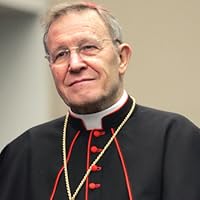
Start by following Walter Kasper.
Showing 1-30 of 48
“In the heart of Jesus, we recognize that God himself has a heart (cor) for us, who are poor (miseri), in the broadest sense of the word, and that he is, therefore, merciful (misericors).”
― Mercy: The Essence of the Gospel and the Key to Christian Life
― Mercy: The Essence of the Gospel and the Key to Christian Life
“For I am God and no mortal, the Holy One in your midst, and I will not come in wrath” (Hos 11:9). That is an astounding statement. It says: God’s holiness, his Being Wholly Other, in contradistinction to everything human, is disclosed not in his righteous anger, not even in his inscrutable and inaccessible transcendence. God’s being God is revealed in his mercy. Mercy is the expression of his divine essence.”
― Mercy: The Essence of the Gospel and the Key to Christian Life
― Mercy: The Essence of the Gospel and the Key to Christian Life
“further and speaks theologically of God’s heart. The Bible says that God chooses people according to his heart (1 Sam 13:14; Jer 3:15; Acts 13:22). It speaks of God’s heart being deeply troubled by people and their sins (Gen 6:6);”
― Mercy: The Essence of the Gospel and the Key to Christian Life
― Mercy: The Essence of the Gospel and the Key to Christian Life
“la misericordia es la perfección de la esencia divina. Lejos de condenar, Dios perdona; da y regala en una medida generosa, apretada, colmada, rebosante. La misericordia divina es, por así decir, desmesurada: desborda toda medida”
― La Misericordia: Clave del evangelio y de la vida cristiana
― La Misericordia: Clave del evangelio y de la vida cristiana
“Indeed, mercy is God’s very own justice.”
― Mercy: The Essence of the Gospel and the Key to Christian Life
― Mercy: The Essence of the Gospel and the Key to Christian Life
“In and through history, God reveals his essence, which has been hidden from human beings. We can speak of it only by way of a narrative, and not in a speculative way. In this sense, this formula is the summary of God’s self-definition in the Old Testament.”
― Mercy: The Essence of the Gospel and the Key to Christian Life
― Mercy: The Essence of the Gospel and the Key to Christian Life
“The most important expression for understanding mercy is hesed, which means unmerited loving kindness, friendliness, favor, and also divine grace and mercy.7 Hesed, therefore, goes beyond mere emotion and grief at human deprivation; it means God’s free and gracious turning toward the human person with care. It concerns a concept of relationship, which characterizes not only a single action, but rather an ongoing attitude and posture.8 Applied to God, the concept expresses an unexpected and unmerited gift of God’s grace—transcending every relationship of reciprocal fidelity—that exceeds all human expectations and bursts”
― Mercy: The Essence of the Gospel and the Key to Christian Life
― Mercy: The Essence of the Gospel and the Key to Christian Life
“In the Old Testament, God’s mercy stands in an indissoluble connection with the other ways in which God is revealed. His mercy may not be extracted from this context and be treated independently. Already the revelation of God’s name to Moses shows that divine mercy is, so to speak, encircled by graciousness and fidelity. God’s self-revelation in the prophet Hosea shows that mercy is insolubly bound up with God’s holiness and gives expression to it.”
― Mercy: The Essence of the Gospel and the Key to Christian Life
― Mercy: The Essence of the Gospel and the Key to Christian Life
“Just like the ancient views, the modern theories about compassion and mercy are also contradictory, depending on whether they take their bearings from natural, human feelings or from an ethics of reason.”
― Mercy: The Essence of the Gospel and the Key to Christian Life
― Mercy: The Essence of the Gospel and the Key to Christian Life
“en la parábola del hijo pródigo se te cuenta tu propia historia. Tú mismo eres ese hijo descarriado, también tú debes convertirte. Pero no tengas miedo. Dios mismo sale a tu encuentro y te abraza. Él no te humilla; al contrario, te restituye tu dignidad de hijo.”
― La Misericordia: Clave del evangelio y de la vida cristiana
― La Misericordia: Clave del evangelio y de la vida cristiana
“Love goes beyond the logic of exchange; it expresses an economy of gift—that logic of abundance—in contrast to the logic of parity and the economy of exchange and calculation.”
― Mercy: The Essence of the Gospel and the Key to Christian Life
― Mercy: The Essence of the Gospel and the Key to Christian Life
“According to the basic convictions of every religion, the connection of religion with violence represents, therefore, a misunderstanding, a misuse, and an aberrant form of authentic religion.”
― Mercy: The Essence of the Gospel and the Key to Christian Life
― Mercy: The Essence of the Gospel and the Key to Christian Life
“love provides the conditions for seeing what must be done. It is the eye-opener and driving force for a praxis and culture of mercy and justice. It is the driving force of justice.”
― Mercy: The Essence of the Gospel and the Key to Christian Life
― Mercy: The Essence of the Gospel and the Key to Christian Life
“If, after the end of metaphysics, which has been proclaimed by many, there is no final truth and no absolute values orienting and directing political action, then even the noblest democratic, political ideas are finally not only without a foundation; they are then without orientation and can be misused in a populist fashion.”
― Mercy: The Essence of the Gospel and the Key to Christian Life
― Mercy: The Essence of the Gospel and the Key to Christian Life
“Immanuel Kant, who clearly is the most important and most influential modern philosopher. He was critical of universal ethical systems that are based on feelings such as compassion. He wanted to promote a rational ethics of obligation. Not emotional motivation, but rather only comprehensible rational reasons can”
― Mercy: The Essence of the Gospel and the Key to Christian Life
― Mercy: The Essence of the Gospel and the Key to Christian Life
“Only one passage needs to be quoted to support this point. After the people have been subjected to the just punishment of the exile on account of their infidelity, God, in his mercy, gives them another chance. For a brief moment I abandoned you, but with great compassion I will gather you. In overflowing wrath for a moment I hid my face from you, but with everlasting love I will have compassion on you.… For the mountains may depart and the hills be removed, but my steadfast love shall not depart from you, and my covenant of peace shall not be removed, says the LORD, who has compassion on you. (Isa 54:7–8, 10)25 Mercy is God’s creative and fertile justice.”
― Mercy: The Essence of the Gospel and the Key to Christian Life
― Mercy: The Essence of the Gospel and the Key to Christian Life
“So in the act of giving, we distinguish ourselves from ourselves. In giving, we give ourselves and still remain ourselves.”
― Mercy: The Essence of the Gospel and the Key to Christian Life
― Mercy: The Essence of the Gospel and the Key to Christian Life
“Yves Congar has extensively reconstructed Thomas’ train of thought.12 He”
― Mercy: The Essence of the Gospel and the Key to Christian Life
― Mercy: The Essence of the Gospel and the Key to Christian Life
“In contrast to him, Aristotle came to a positive view of compassion. He was indeed the first who gave a kind of definition of compassion. He explained that the experience of the undeserved suffering of others affects us because we know such evil could also befall us. Sympathy, in the original sense of the word (literally, suffering with), and solidarity are involved in the experience of compassion with someone’s suffering.5 Thus, the undeserved suffering of the other affects us existentially. Because their suffering could also befall us, we identify to a certain extent with them in compassion. In his Poetics, Aristotle shows how the presentation of the hero’s fate in a tragedy effects compassion (ἔλεος) and fear (φόβος) in us and leads to an inner catharsis (ϰάθαρσις) of the observer.”
― Mercy: The Essence of the Gospel and the Key to Christian Life
― Mercy: The Essence of the Gospel and the Key to Christian Life
“«¿Dónde está tu vigor? ¿Dónde está esa tensión ideal que ha animado y hecho grande tu historia? ¿Dónde está tu espíritu de emprendedor curioso? ¿Dónde está tu sed de verdad, que hasta ahora has comunicado al mundo con pasión?»”
― EL PAPA FRANCISCO. Revolución de la ternura y el amor. Raíces teológicas y perspectivas pastorales (Presencia Teológica nº 222)
― EL PAPA FRANCISCO. Revolución de la ternura y el amor. Raíces teológicas y perspectivas pastorales (Presencia Teológica nº 222)
“The new pastoral style, which John XXIII intended, has much to do with what he said during his opening speech, when he spoke about the medicine of mercy. Since that time, the theme of mercy has become fundamental not only for the council, but also for the entire pastoral praxis of the postconciliar church.”
― Mercy: The Essence of the Gospel and the Key to Christian Life
― Mercy: The Essence of the Gospel and the Key to Christian Life
“Therefore, mercy is not opposed to justice. Mercy does not suspend justice; rather, mercy transcends it; mercy is the fulfillment of justice.14”
― Mercy: The Essence of the Gospel and the Key to Christian Life
― Mercy: The Essence of the Gospel and the Key to Christian Life
“God made everything good, in fact, very good (Gen 1:4, 10, 12, 18, 20, 25, 31). God created people in his image; as man and woman he created them. He blessed them. They should be fruitful with descendants and should”
― Mercy: The Essence of the Gospel and the Key to Christian Life
― Mercy: The Essence of the Gospel and the Key to Christian Life
“Friedrich Schiller took up this thought in his theory of tragedy and developed it further. Already the title of his text, The Theater as a Moral Institution, makes clear that for him tragedy becomes an educational institution.20”
― Mercy: The Essence of the Gospel and the Key to Christian Life
― Mercy: The Essence of the Gospel and the Key to Christian Life
“Act according to that maxim whose universality, as law, thou canst at the same time will.”23”
― Mercy: The Essence of the Gospel and the Key to Christian Life
― Mercy: The Essence of the Gospel and the Key to Christian Life
“The world today is closer together and adherents of non-Christian religions live among us. In this situation, for the sake of understanding and peaceful coexistence, it is necessary to take a look over the fence of our own cultural context into the world of religions. In the process, we ascertain that compassion and beneficence are not restricted to our cultural context, but rather are universal human and primordial religious phenomena.”
― Mercy: The Essence of the Gospel and the Key to Christian Life
― Mercy: The Essence of the Gospel and the Key to Christian Life
“Consequently, for Kant grace practically becomes a postulate of practical reason. For this reason, according to Kant, the Christian religion is the only moral religion. It offers a higher assistance to everyone who does what he or she can and must do, supplementing that which is not in his or her power.30 From a theological point of view, we have to judge such a statement as unsatisfactory because it is a Pelagian interpretation of the Christian doctrine of grace. But we have to add that we cannot at all expect from philosophy”
― Mercy: The Essence of the Gospel and the Key to Christian Life
― Mercy: The Essence of the Gospel and the Key to Christian Life
“His self-emptying is the revelation of his omnipotence in love.”
― Mercy: The Essence of the Gospel and the Key to Christian Life
― Mercy: The Essence of the Gospel and the Key to Christian Life
“Theology, no matter how clever, falls short in dealing with God, who doesn’t fit into any box.”
― Mercy: The Essence of the Gospel and the Key to Christian Life
― Mercy: The Essence of the Gospel and the Key to Christian Life
“The Septuagint, the Greek translation of the Hebrew Old Testament that came into being around 200 BCE, interpreted the revelation of God’s name according to Hellenistic philosophical thought and translated it as “I am the one who is” (Ἐγώ εἰμι ὁ ὤν). This translation made history and shaped theological thought for many centuries. On the basis of this translation, one was convinced that what is the highest in thought—Being—and what is highest in faith—God, correlate to each other. In this conviction one saw confirmation that believing and thinking are not opposed to each other, but rather correspond to each other. This interpretation is already found in the Hellenistic Jewish philosopher Philo († 40 CE). However, Tertullian soon asked: “What does Jerusalem have to do with Athens?”14 Most notably, Blaise Pascal, after having a mystical experience, highlighted the difference between the God of the philosophers and the God of Abraham, Isaac, and Jacob in his famous Memorial of 1654.15”
― Mercy: The Essence of the Gospel and the Key to Christian Life
― Mercy: The Essence of the Gospel and the Key to Christian Life