Goodreads helps you follow your favorite authors. Be the first to learn about new releases!
Start by following Ian Buruma.

Showing 1-30 of 39
“Anti-Americanism may indeed have grown fiercer than it was during the cold war. It is a common phenomenon that when the angels fail to deliver, the demons become more fearsome.”
― A Matter of Principle: Humanitarian Arguments for War in Iraq
― A Matter of Principle: Humanitarian Arguments for War in Iraq
“Citizenship of a democratic state means living by the laws of the country. A liberal democracy cannot survive when part of the population believes that divine laws trump those made by man.”
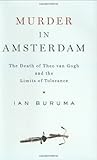
― Murder in Amsterdam: The Death of Theo Van Gogh and the Limits of Tolerance
― Murder in Amsterdam: The Death of Theo Van Gogh and the Limits of Tolerance
“Islam may soon become the majority religion in countries whose churches have been turned more and more into tourist sites, apartment houses, theatres, and places of entertainment. The French scholar Olivier Roy is right: Islam is now a European religion.”
― Murder in Amsterdam: The Death of Theo van Gogh and the Limits of Tolerance
― Murder in Amsterdam: The Death of Theo van Gogh and the Limits of Tolerance
“The solution to the Muslim problem is a Muslim Voltaire, a Muslim Nietzsche—that”
― Murder in Amsterdam: The Death of Theo Van Gogh and the Limits of Tolerance
― Murder in Amsterdam: The Death of Theo Van Gogh and the Limits of Tolerance
“I am skeptical about the idea that we can learn much from history, at least in the sense that knowledge of past follies will prevent us from making similar blunders in the future... And yet it is important to know what happened before, and to try and make sense of it. For if we don't, we cannot understand our own times.”
―
―
“after all that, after the concentration camps in Germany, after we stated definitely that our former home was changed into a mass grave, we can only grope and clasp with our finger tips the shadows of our dearest and painfully cry: I can never more see my home. The victorious nations that in the 20th century removed the black plague from Europe must understand once and for all the specific Jewish problem. No, we are not Polish when we are born in Poland; we are not Lithuanians even though we once passed through Lithuania; and we are neither Roumanians though we have seen the first time in our life the sunshine in Roumenia. We are Jews!!”
― Year Zero: A History of 1945
― Year Zero: A History of 1945
“A contemporary joke: An airplane carrying Hitler, Goering, and Goebbels crashes. All three are killed. Who is saved? Answer: The German people.”
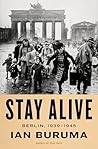
― Stay Alive: Berlin, 1939-1945
― Stay Alive: Berlin, 1939-1945
“The sacred icons of Dutch society were broken in the 1960s, as elsewhere in the Western world, when the churches lost their grip on people’s lives, when government authority was something to challenge, not obey, when sexual taboos were publicly and privately breached, and when—rather in line with the original Enlightenment—people opened their eyes and ears to civilizations outside the West. The rebellions of the 1960s contained irrational, indeed antirational, and sometimes violent strains, and the fashion for such far-flung exotica as Maoism sometimes turned into a revolt against liberalism and democracy. One by one the religious and political pillars that supported the established order of the Netherlands were cut away. The tolerance of other cultures, often barely understood, that spread with new waves of immigration, was sometimes just that—tolerance—and sometimes sheer indifference, bred by a lack of confidence in values and institutions that needed to be defended.”
― Murder in Amsterdam: The Death of Theo van Gogh and the Limits of Tolerance
― Murder in Amsterdam: The Death of Theo van Gogh and the Limits of Tolerance
“LIBERATION IS PERHAPS not the right word to describe the end of the war in colonial societies. Most Asians were more than happy to be rid of the Japanese, whose “Asian liberation” had turned out to be worse than the Western imperialism it temporarily replaced. But liberation is not quite what the Dutch had in mind for the Dutch East Indies in 1945, or the French for Indochina, or the British for Malaya.”
― Year Zero: A History of 1945
― Year Zero: A History of 1945
“Without ideology, and with nothing but jobs for the boys at stake, party politics was losing its raison d’être, and trust in the old democratic order could no longer be taken for granted.”
― Murder in Amsterdam: The Death of Theo Van Gogh and the Limits of Tolerance
― Murder in Amsterdam: The Death of Theo Van Gogh and the Limits of Tolerance
“POLAND REJECTS PEACE! POLISH ATTACKS ON THE REICH!! RADIO GLEIWITZ OCCUPIED! Headlines in the Berliner Lokal-Anzeiger, a popular Berlin newspaper, September 1, 1939 These were complete lies. The beginning of World War II began as a deadly theatrical performance staged by the SS. Hitler wanted to invade Poland, so an excuse had to be invented. Poles were cast as the aggressors. On the night of August 31, in an operation named “Grandmother Died,” the Gleiwitz radio station on the German side of the Polish border was “attacked” by German agents disguised in Polish uniforms. A brief anti-German message was broadcast in Polish. To make the imaginary act of Polish aggression seem more plausible, the corpses of a few “Polish” attackers were left on the site. They were in fact murdered concentration camp prisoners dressed up as Poles.”
― Stay Alive: Berlin, 1939-1945
― Stay Alive: Berlin, 1939-1945
“For a long time, my father’s stories about Berlin, where he was forced to work in a factory that made brakes and machine guns from the spring of 1943 until just days before the war ended in May 1945, were the only thing I knew about the German capital. He told me about the filthy flea- and lice-ridden barracks where he and other foreign workers were housed; about the Ukrainian girls he had met—a memory that still brought wistful tears to his eyes—who lived in far worse conditions in an adjacent camp; about the tedium of factory work; and about the terror and exhaustion from Allied bombing raids that went on day and night—US Eighth Air Force B-17 bombers by day, and RAF Lancasters and Halifaxes at night. A common way for Berliners to say goodbye was no longer auf Wiedersehen, or Heil Hitler, but bleiben Sie übrig, stay alive.”
― Stay Alive: Berlin, 1939-1945
― Stay Alive: Berlin, 1939-1945
“On May 7 crowds had gathered on Dam Square in the center of Amsterdam in front of the Royal Palace, cheering, dancing, singing, waving the orange flag of the Dutch royal family, in anticipation of the triumphant British and Canadian troops whose arrival was imminent. Watching the happy throng from the windows of a gentlemen’s club on the square, German naval officers decided in a last-minute fit of pique to fire into the crowd with a machine gun mounted on the roof. Twenty-two people died, and more than a hundred were badly injured. Even that was not the very last violent act of the war.”
― Year Zero: A History of 1945
― Year Zero: A History of 1945
“And yet to reach for examples from the Holocaust, or the Jewish diaspora, has become a natural reflex when the question of ethnic or religious minorities comes up. It is a moral yardstick, yet at the same time an evasion. To be reminded of past crimes, of negligence or complicity, is never a bad thing. But it can confuse the issues at hand, or worse, bring all discussion to a halt by tarring opponents with the brush of mass murder.”
― Murder in Amsterdam: The Death of Theo van Gogh and the Limits of Tolerance
― Murder in Amsterdam: The Death of Theo van Gogh and the Limits of Tolerance
“Yahudi intikamı siyasal destek görmediği için, hiçbir zaman uygulanamadı. Siyonist liderler savaşla kana bulanmış Avrupa ülkelerinden uzakta, çöl arazisini işleyen ve gururlu yurttaş-askerler olarak düşmanlarıyla çarpışan yiğit İsrailoğulları teması üzerine kurulu farklı türden bir normallik yaratmaya çalıştılar. İçe kapanık bir yaklaşımla geleceğe baktılar. Gerçi o gelecek de katliamla, etnik ve dinsel çatışmayla dolu olacaktı ama dökülen Alman kanı olmayacaktı.”
― Year Zero: A History of 1945
― Year Zero: A History of 1945
“Islam may soon become the majority religion in countries whose churches have been turned more and more into tourist sites, apartment houses, theaters, and places of entertainment. The French scholar Olivier Roy is right: Islam is now a European religion. How Europeans, Muslims as well as non-Muslims, cope with this is the question that will decide our future. And what better place to watch the drama unfold than the Netherlands, where freedom came from a revolt against Catholic Spain, where ideals of tolerance and diversity became a badge of national honor, and where political Islam struck its first blow against a man whose deepest conviction was that freedom of speech included the freedom to insult.”
― Murder in Amsterdam: The Death of Theo van Gogh and the Limits of Tolerance
― Murder in Amsterdam: The Death of Theo van Gogh and the Limits of Tolerance
“Gerçekle yüz yüze gelmeyi, çoğu kez hayal kırıklığı izler. Beauvoir'nın anlattığına göre, Sartre ABD'den "bütün gördükleri biraz afallamış" olarak döndü. İnsanlardan elbette hoşlanmış ve Roosevelt'e hayran kalmıştı; ama Beauvoir'nın ifadesiyle "Batı yarıkürenin uygarlığında ekonomik sistem, ayrımcılık ve ırkçılık dışında onu şoka uğratan birçok şey vardı - Amerikalıların tutuculuğu, değerler ölçeği, efsaneleri, iyimserlikleri, her türlü trajik şeyden kaçınışları.”
― Year Zero: A History of 1945
― Year Zero: A History of 1945
“The Nazi regime has ended. Judgment has been passed. Hitler, Goering, and Goebbels are suspended from the gallows. Goering, always the know-it-all, turns to Goebbels one last time and moans, “As I’ve always told you: The whole thing will be decided in the air.” Berlin joke”
― Stay Alive: Berlin, 1939-1945
― Stay Alive: Berlin, 1939-1945
“In a sense, the gaijin is offered a sojourn in a fool's paradise. For some lucky fools the sojourn might stretch to a lifetime.”
― A Tokyo Romance
― A Tokyo Romance
“One of the main items on the Wochenschau in January celebrated a domestic campaign that had been ordered by the Führer in December 1941: to donate socks, pullovers, scarves, ski boots, furs, fleeces, blankets, or anything else to keep the troops warm on the front lines. Eight-year-old Irène Alenfeld, the Mischling daughter of Erich Alenfeld, the Jewish banker, wrote in her schoolbook, “The Führer’s request has been fulfilled…. The Volk collected woolen goods with love and dedication. We are proud to have given something too. From now on, no German soldier will freeze in Russia.”[3]”
― Stay Alive: Berlin, 1939-1945
― Stay Alive: Berlin, 1939-1945
“did not see much of Kara after we returned to Tokyo. My honorary position in the Situation Theater had come to an end. Kara was right, of course: I was just an ordinary gaijin after all. It was as though I had flunked an important test; my immersion in a Japanese gang had run into an insurmountable barrier. That last night in Kyoto had been the moment of truth that all foreigners face in Japan at one point or another. No matter how much you might behave as a Japanese, you never will be Japanese. Some foreigners find this painful. But you cannot blame the Japanese for failing to comply with the illusions of foreigners. Just as Kara faced his Japaneseness in the Chelsea Hotel, every gaijin in Japan must realize that a gaijin he or she will always remain, no matter how well a person speaks Japanese or has mastered the etiquette of Japanese social life.”
― A Tokyo Romance
― A Tokyo Romance
“Years of officially promoted European idealism and denigration of national sentiment added to a growing sense of unease. What was it, in a world of multinational business and pan-European bureaucracy, to be Dutch, or French, or German?”
― Murder in Amsterdam: The Death of Theo van Gogh and the Limits of Tolerance
― Murder in Amsterdam: The Death of Theo van Gogh and the Limits of Tolerance
“[The city] somehow managed to wear its decadence with a certain amount of grace; the anomaly of high culture in the midst of squalor is a kind of dandyism.”
― The Missionary and the Libertine: Love and War in East and West
― The Missionary and the Libertine: Love and War in East and West
“It is always easier, particularly in what was once a deeply religious country, to erect memorials and deliver sermons than to look the angel of history directly in the face.”
― Murder in Amsterdam: The Death of Theo van Gogh and the Limits of Tolerance
― Murder in Amsterdam: The Death of Theo van Gogh and the Limits of Tolerance
“I think that Ryu Chishu, or Tanaka Kinuyo, or to be more precise, the imaginary characters they portrayed, were more real to the film buffs than any existing human being. This is why cinephiles are spookier, on the whole, than music lovers or balletomanes. For they are creatures of the dark, getting off on the lives of others.”
― A Tokyo Romance: A Memoir
― A Tokyo Romance: A Memoir
“The Japanese have an expression for human relations that are sticky with the mutual obligations and dependencies of the collective life. They use the English word “wet.” Traditional Japanese family relations are “wet.” Yakuza gangs are “wet.” Behavior that is more detached, more individualistic, often associated with a Western way of life, is “dry.” Terayama Shuji was “dry.” Kara was most definitely “wet.”
― A Tokyo Romance: A Memoir
― A Tokyo Romance: A Memoir
“The fire outside has been extinguished but my beautiful ministry has been totally destroyed. The clearing up has commenced…. Back home I pass a somewhat melancholy evening. Slowly one is beginning to realize what this war means for us all…. I am, however, absolutely determined that when this war is over, I shall not only construct a new monumental ministry—as the Führer says—but restore this old ministry to all its old glory. Goebbels’s diary, March 14”
― Stay Alive: Berlin, 1939-1945
― Stay Alive: Berlin, 1939-1945
“The fact that both killers arrived on bikes added a peculiarly Dutch flavor to their murders.”
―
―
“Between the middle of October and the end of the year more than seven thousand Berlin Jews were deported. Suicide offered one way out. Many preferred to die by their own hand. Two hundred and eighty people killed themselves in one day in October.[”
― Stay Alive: Berlin, 1939-1945
― Stay Alive: Berlin, 1939-1945
“But the death wish in the name of a higher cause, a god, or great leader is something that has appealed to confused and resentful young men through the ages and is certainly not unique to Islam.”
― Murder in Amsterdam: The Death of Theo van Gogh and the Limits of Tolerance
― Murder in Amsterdam: The Death of Theo van Gogh and the Limits of Tolerance