Goodreads helps you follow your favorite authors. Be the first to learn about new releases!
Start by following Frederick Crews.

Showing 1-29 of 29
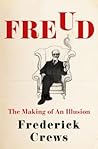
“From the mid-twentieth century until today, physiological and neurocognitive research has yielded a number of well-corroborated findings about dreams and the dreaming state. Although the brain scientists and the analysts of dream reports operate on different sets of assumptions, they are almost unanimous in putting aside the Freudian model, which turns out to have been erroneous on every point.”
― Freud: The Making of an Illusion
― Freud: The Making of an Illusion
“In the judgment of contemporary dream investigators, only a minority of dreams appear to express wishes of any kind, let alone infantile sexual ones.”
― Freud: The Making of an Illusion
― Freud: The Making of an Illusion
“No, says the modern research: these were just Freud’s guesses, and he guessed wrong every time.25”
― Freud: The Making of an Illusion
― Freud: The Making of an Illusion
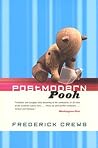
“The immediate issue here is whether the Pooh animals realise they constitute a de facto nudist colony.”
― Postmodern Pooh
― Postmodern Pooh
“But with whom, in the Pooh world, could a sexually and politically aroused Kanga speak?”
― Postmodern Pooh
― Postmodern Pooh
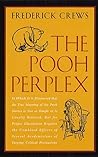
“Now, 'that sort of Bear' is of course a bear who wants to be flattered, and it is plain that the Christophoric ear is using Pooh to make its own devious request that it (the ear's projection, 'Christopher Robin') be made the center of attention. The Milnean voice, however, in its didactic-paternal role, is unprepared simply to feed the self-love of the Christophoric ear; it (the voice) must also see that it (the ear) is properly edified in a moral sense. The stories, therefore, will express a vector of the two forces pleasing and teaching the Christophoric ear.”
― The Pooh Perplex
― The Pooh Perplex
“From Freud’s account we could never suspect either that he retained a lifetime grudge against gentiles or that—as we will find—one strain of anti-Semitism affected his own apprehension of fellow Jews.”
― Freud: The Making of an Illusion
― Freud: The Making of an Illusion
“Rabbit and Owl are aging bachelors whose respective megalomania and fussiness are tempered only by their mutual friendship, of which the less said, the better.”
― The Pooh Perplex
― The Pooh Perplex
“In developing a new science,” Freud would tell his American pupil Smiley Blanton, “one has to make its theories vague. You cannot make things clear-cut.”58 Mixing quanta with qualia and energetics with exegetics, he had forged in psychoanalysis the clever absurdity of an ambiguous science.59 Its oxymoronic character was—and remains, for science-envying humanists—the principal source of its appeal. Where else could we turn for an interpretive free-for-all that is sanctioned by a tale of exploratory and therapeutic heroism yet also by a sober idiom of mechanical cause and effect? The real significance of the Project is that it equipped the psychoanalytic Freud with that idiom, safely detached from testable propositions.”
― Freud: The Making of an Illusion
― Freud: The Making of an Illusion
“At the turn of the twentieth century,” wrote the philosopher of science Clark Glymour with distaste in 1983, “Freud once and for all made his decision as to whether or not to think critically, honestly, and publicly about the reliability of his methods. The Interpretation of Dreams was his answer to the public, and perhaps to himself.”
― Freud: The Making of an Illusion
― Freud: The Making of an Illusion
“No less instructive is the story, 'Pooh Goes Visiting,' in which Rabbit, having deceitfully offered Pooh admittance to sample his overstocked larder, artfully traps his victim in the doorway and exploits him as an unsalaried towel rack for an entire week.”
― The Pooh Perplex
― The Pooh Perplex
“By most objective accounts, however, none of Freud’s pre-psychoanalytic writings were pivotal for the modern development of any discipline. Although Gordon Shepherd devotes a chapter.”
― Freud: The Making of an Illusion
― Freud: The Making of an Illusion
“The near absence of charts and tables from Freud’s scientific papers might be regarded as a peripheral matter if it weren’t symptomatic of a basic weakness of temperament: a lazy reluctance to collect sufficient evidence to ensure that a given finding wasn’t an anomaly or an artifact of careless procedures. This flaw could go unnoticed so long as Freud was microscopically analyzing dead tissues, any one of which could stand for countless identical others. For the purpose of establishing laws in most fields, though, large samples are indispensable. As a psychologist, Freud would consistently ignore that requirement. Instead, he would rest comprehensive generalizations on untested insights from a few cases or even from just one, his own.”
― Freud: The Making of an Illusion
― Freud: The Making of an Illusion
“And do not, by all means, abate your anathemata simply because today happens -- just happens -- to be our birthday. We were not expecting any presents anyway, but if you should take a notion to pelt us with tomatoes and rotten eggs, we will try to interpret them not as missiles but as missives conveying -- and in turn soliciting from ourself -- many happy returns.”
―
―
“Another Pooh Perplex, 37 years later? Well, why not?”
―
―
“Psychoanalysis is the paradigmatic pseudoscience of our epoch . . . with its facile explanation of adult behavior by reference to unobservable and arbitrarily posited childhood fantasy”
―
―
“It is hardly fortuitous that all the chief actors are property owners with no apparent necessity to work; that they are supplied as if by miracle with endless supplies of honey, condensed milk, balloons, popguns, and extract of malt; and that they crave meaningless aristocratic distinctions and will resort to any measure in their drive for class prestige. Not for nothing is the sycophant Pooh eventually invested by Christopher Robin as 'Sir Pooh de Bear.”
― The Pooh Perplex
― The Pooh Perplex
“A Visit to the Salpêtrière (1886)”
― Freud: The Making of an Illusion
― Freud: The Making of an Illusion
“Between 1877 and 1900, Freud published six extensive monographs, forty articles, and an enormous number of reviews. In books such as On Aphasia (1891), the collaborative Clinical Study on the Unilateral Cerebral Paralyses of Children (1891), and Infantile Cerebral Paralysis (1897)”
― Freud: The Making of an Illusion
― Freud: The Making of an Illusion
“Casebooks are now rarely adopted in freshman English courses; age and infirmity have taken their toll on my mental agilities; and, to be candid, I have been no less mystified by "Post-Colonialism" and "De-struction" and "Queer Chicana Studies" than have other academics trained in the once innovative principles of the New Criticism. I might have been a likelier candidate for studying someone else's updated Perplex than for compiling one myself!”
―
―
“Surfaces and depths -- now there's a comb-over concept for you.”
―
―
“Numbers and equations left him cold, and he often got details wrong or contradicted himself about them in the course of a paper. “To be tied down to exactitude and precise measurement,” Ernest Jones observed, “was not in his nature.” As Freud himself would “tell his close friend Wilhelm Fliess, “You know that I lack any mathematical talent whatsoever and have no memory for numbers and measurements.” Thus he felt compelled to exclude statistics from almost all of his technical as well as his anecdotal writings.”
― Freud: The Making of an Illusion
― Freud: The Making of an Illusion
“From the very moment of Kanga's appearance the pastoral playground is overshadowed by doubt and guilt, for the all-too-loving anima-Woman has pitched her temple here!”
― The Pooh Perplex
― The Pooh Perplex
“There's no right and wrong in criticism, only smarter and dumber. But ideologizing is always dumb. It cramps your style, foreclosing the behind-the-back dribbles, the no-look passes, and the alley-oop reverse jams that could put some soul in your critical game.”
―
―
“The world of 'Pooh,' no less than that of the 'idealistic' bourgeois pacifist Milne, is a world of sheer animalism, where the inhuman bestiality of the 'free' market has full sway. In this unconsciously revealing portrait of capitalism we glimpse, not only the sordidness of wage-slavery, speculation, and 'lawful' gangsterism, but also the possibility of a better life--of a forthcoming heroic revolution. ... This optimistc note, which is in fact the ultimate meaning of 'Winnie-the-Pooh,' is what rescues the book from the vilest decadence and makes it, after all, suitable reading for progressive children thoughout the world.”
― The Pooh Perplex
― The Pooh Perplex
“A teaching-the Conflicts English department says in effect to expectant 19-year-olds - and Hobbs kindly wrote out this baffling lingo at my request - "Here is Husserlian phenomenology, here are the Jungian archetypes, here is Jakobsonian structuralism, here is Zizekian Lakanianism, here is Counterhegemonic Post-Gramscian Marxism, and here is the Deleuzoguattarian Anti-Oedipus; now you_ decide which hermeneutic should prevail."
Thus a newly minted B.A. cab step confidently into the greater world, not knowing Milton or Gray perhaps, but knowing exactly how he would want to account for the magic of their art, should the occasion ever arise,”
― Postmodern Pooh
Thus a newly minted B.A. cab step confidently into the greater world, not knowing Milton or Gray perhaps, but knowing exactly how he would want to account for the magic of their art, should the occasion ever arise,”
― Postmodern Pooh
“Attend to Pooh without sentimentality and ask yourself what positive social traits he can plausibly be taken to represent. He is a freeloader whose affability extends no further than his next honey fix. Deconstructed, he is just a mouth and a digestive tract in charge of some rudimentary powers of rationalization. And when he is confronted with a different genus (the apian) pursuing its own programmed livelihood, he shows himself utterly incapable of acknowledging the Other. “The only reason for making honey,” he deduces with infantile self-in-fat-uation, “is so as I can eat it.” Community values? One for all and all for one? Furthermore, Pooh’s selfishness is no greater than that of the whole kapok menagerie surrounding him. It is only his inability to disguise or dignify raw need that renders him the touchstone of value-in-reverse. While the hidebound “Milne” is musing complacently about rectitude and cooperation, his principal creation embodies a brute-all Brechtian forthrightness about the priority of aliment over intellect—and therefore of his majesty the ego over moral claims. Every gregarious sentiment in these books stands self-refuted in the very act of articulation.”
― Postmodern Pooh
― Postmodern Pooh
“I am actually not at all a man of science, not an observer, not an experimenter, not a thinker. I am by temperament nothing but a conquistador—an adventurer, if you want it translated–-with all the curiosity, daring, and tenacity characteristic of a man of this sort.”39 It was a foregone conclusion that Ernst Kris and Anna Freud would omit that definitive self-assessment—the most revealing confession Freud ever made—from The Origins of Psycho-Analysis.”
― Freud: The Making of an Illusion
― Freud: The Making of an Illusion
“Although Gordon Shepherd devotes a chapter to him in his treatise on neuron theory, for example, Shepherd concludes that Freud’s papers deserve to be ranked with a large number of others. And in Joseph D. Robinson’s definitive study of how synaptic transmission came to be recognized, Freud’s name goes altogether unmentioned. His early record, furthermore, is notably discontinuous, showing little follow-through. He skipped from one self-contained task to another, augmenting the sum of generally accepted knowledge and deftly criticizing premature conclusions reached by others but never crucially testing any of his own hypotheses.”
― Freud: The Making of an Illusion
― Freud: The Making of an Illusion