Goodreads helps you follow your favorite authors. Be the first to learn about new releases!
Start by following Fiona Givens.

Showing 1-16 of 16
“Our lives are more like a canvas on which we paint, than a script we need to learn – though the illusion of the latter appeals to us by its lower risk.”
― The God Who Weeps: How Mormonism Makes Sense of Life
― The God Who Weeps: How Mormonism Makes Sense of Life
“We have no way of knowing, of course, why some are born in health and affluence, while others enter broken bodies or broken homes, or emerge into a realm of war or hunger. So we cannot give definite meaning to our place in the world, or to our neighbor's. But Plato's reflections should give us pause and invite both humility and hope. Humility, because if we chose our lot in life, there is every reason to suspect merit, and not disfavor, is behind disadvantaged birth. A blighted life may have been the more courageous choice--at least it was for Plato... So how can we feel pride in our own blessedness, or condescension in another's misfortune? And Plato's reflections should give us hope, because his myth reminds us that suffering can be sanctifying, that pain is not punishment ,and that the path to virtue is fraught with opposition.”
― The God Who Weeps: How Mormonism Makes Sense of Life
― The God Who Weeps: How Mormonism Makes Sense of Life
“If vulnerability and pain are the price of love, then joy is it's reward.”
― The God Who Weeps: How Mormonism Makes Sense of Life
― The God Who Weeps: How Mormonism Makes Sense of Life
“What one hears when the word sin is spoken, what we envision by the term God, or what it means to be saved, or saved by grace, has already been determined by centuries of usage. Reclaiming those terms for a new dispensation is an act of imaginative resistance.”
― All Things New: Rethinking Sin, Salvation, and Everything in Between
― All Things New: Rethinking Sin, Salvation, and Everything in Between
“Conventional interpreters of atonement’s roots have seen the word as indicating “to cover.” Mary Douglas, however, notes that while the Hebrew root k-p-r can mean “to cover or recover,” it has a more complex meaning: “to repair a hole, cure a sickness, mend a rift, make good a torn or broken covering. . . . Atonement does not mean covering a sin so as to hide it from the sight of God; it means making good an outer layer which has rotted or been pierced” (our emphases).36 In other words, atonement means “to heal.” Margaret Barker agrees that the Hebrew k-p-r, translated as “atone,”
― All Things New: Rethinking Sin, Salvation, and Everything in Between
― All Things New: Rethinking Sin, Salvation, and Everything in Between
“The most fruitful way of considering sin may not be to see it as an evil that leads to a hell from which we must be saved but rather as a wound that needs to be healed.”
― All Things New: Rethinking Sin, Salvation, and Everything in Between
― All Things New: Rethinking Sin, Salvation, and Everything in Between
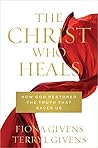
“Finding shared ground with fellow Christians is a valuable enterprise. Restoration scriptures teach repeatedly of a universal Church comprising all those who “come unto Christ,” including “holy men” and women Joseph “[knew] not of,” a community culled from all ages and cultures.2 Those same scriptures admonish us to seek after the truth in “all good books, . . . languages, tongues, and people,” as well as in scriptural records not belonging to the standard works, such as the Apocrypha.3 The Restoration scriptures encourage us as individuals and as a Church community to seek after good everywhere and make it a part of our religion. “The grand fundamental principle of Mormonism is to receive truth let it come from where it may.”4 As the Prophet Joseph Smith stated: If the Methodists, Presbyterians, or others have any truth, then we should embrace it. One must “get all the good in the world” if one wants to “come out a pure Mormon.”5”
― The Christ Who Heals: How God Restored The Truth That Saves Us
― The Christ Who Heals: How God Restored The Truth That Saves Us
“The universe's most perfect and holy Being came to heal us from our wounds, redeem us from death, and shepherd us into immortality and life eternal That was Christ's testament to our worth(inness), and no force on earth or in hell can impugn a worth so powerfully affirmed,"
"More commonly, healing begins gradually when we first open ourselves to the possibility that we are already in the embrace of a love greater than any we have known. Even those who doubt can begin by considering the rem arable, yet historical, fact of a young, itinerant Galilean rabbi who two thousand years ago offered himself up to barbaric execution as a criminal. He endured unspeakable pain, because by so doing He was offering, personally, repost from the pains and humiliations and failures and wounds of my life, whether inflicted by others or by my own foolish choices. As the Book of Mormon testified would happen, we have found ourselves "drawn" to this person of unfathomable kindness and compassion.”
― All Things New: Rethinking Sin, Salvation, and Everything in Between
"More commonly, healing begins gradually when we first open ourselves to the possibility that we are already in the embrace of a love greater than any we have known. Even those who doubt can begin by considering the rem arable, yet historical, fact of a young, itinerant Galilean rabbi who two thousand years ago offered himself up to barbaric execution as a criminal. He endured unspeakable pain, because by so doing He was offering, personally, repost from the pains and humiliations and failures and wounds of my life, whether inflicted by others or by my own foolish choices. As the Book of Mormon testified would happen, we have found ourselves "drawn" to this person of unfathomable kindness and compassion.”
― All Things New: Rethinking Sin, Salvation, and Everything in Between
“Brokenness, not sinfulness, is our general condition; healing from trauma is what is needed.”
― All Things New: Rethinking Sin, Salvation, and Everything in Between
― All Things New: Rethinking Sin, Salvation, and Everything in Between
“If God weeps over our misery why does Christ need to allay God's wrath? If we are in a state of "awful woundedness," as the angel tells Nephi, why do we call Christ our Savior rather than our Healer? If we are counseled, "Never shut the door of your hearts to your children," why do we fear our Father will shut His? If Christ came "not to condemn the world," why do we fear judgement? If Christ promises to "wipe away all tears," why do we anticipate untold sorrows to come in the next world? If we are promised everything we "are willing to receive," why are we filled with anxiety? We are told not to fear but we do. We are urged to rejoice, but we cannot. Something is wrong with this picture.”
― All Things New: Rethinking Sin, Salvation, and Everything in Between
― All Things New: Rethinking Sin, Salvation, and Everything in Between
“God the Son is the perfect reflection of exactly who God the Father always was and is:”
― All Things New: Rethinking Sin, Salvation, and Everything in Between
― All Things New: Rethinking Sin, Salvation, and Everything in Between
“Our lives and destiny are grounded in the confidence of divine beings—in Their confidence that They can shepherd us, gods in embryo, to be the kind of beings, in the kind of relationships, that constitute life eternal. A love beyond imagining prompted the proposal, and a love of infinite potency will assure the proposal’s consummation. We may wander, stumble, or lose our bearings, but the promise “thou art ever with me, and all that I have is thine” was engraved in our hearts (Luke 15:31). God “ever keepeth us in His blessed love.”32”
― All Things New: Rethinking Sin, Salvation, and Everything in Between
― All Things New: Rethinking Sin, Salvation, and Everything in Between
“Our Heavenly Parents are more generous with us than we are with ourselves because They are wiser than we are. This is why we might best understand mercy not as turning a blind eye to our actions but as seeing them with a fully understanding eye.”
― All Things New: Rethinking Sin, Salvation, and Everything in Between
― All Things New: Rethinking Sin, Salvation, and Everything in Between
“The damage wrought—to ourselves and to others—by what we call sin needs healing just as much as other forms of spiritual and emotional harm do. The most fruitful way of considering sin may not be to see it as an evil that leads to a hell from which we must be saved but rather as a wound that needs to be healed. Both the context and the identical grammar require one and only one rendering of Christ’s words to the weeping woman, and they are instructive: “Daughter, your faith has healed you. Enter into a state of peace.”
― All Things New: Rethinking Sin, Salvation, and Everything in Between
― All Things New: Rethinking Sin, Salvation, and Everything in Between
“The universe's most perfect and holy Being came to heal us from our wounds, redeem us from death, and shepherd us into immortality and life eternal That was Christ's testament to our worth(inness), and no force on earth or in hell can impugn a worth so powerfully affirmed,”
― All Things New: Rethinking Sin, Salvation, and Everything in Between
― All Things New: Rethinking Sin, Salvation, and Everything in Between
“Our entire relationship with God will change when we are able to recognize that repentance is not the discipline meted out to us when we get it wrong; repentance is the lifelong venture of accepting Christ’s willingness to help us shape our heart in his image. It is a positive engagement with the learning process, not recurrent periods in a penalty box…[Repentance is] continuation of the journey, picking ourselves up and moving forward, energized and renewed by the certainty of God’s abiding love and encouragement.”
― All Things New: Rethinking Sin, Salvation, and Everything in Between
― All Things New: Rethinking Sin, Salvation, and Everything in Between