Goodreads helps you follow your favorite authors. Be the first to learn about new releases!
Start by following Margalis Fjelstad.

Showing 1-12 of 12
“on this role almost exclusively inside the family and primarily only with the borderline or narcissist. Often Caretakers are very independent, good decision makers, competent, and capable on their own when not in a relationship with a borderline or narcissist. It is almost as if the Caretaker lives in two different worlds with two different sets of behaviors, rules, and expectations, one set with the BP/NP and another with everyone else. You may even hide your caretaking behaviors from others and try to protect other family members from taking on caretaking behavior, much like child abuse victims try to protect siblings from being abused.”
― Stop Caretaking the Borderline or Narcissist: How to End the Drama and Get On with Life
― Stop Caretaking the Borderline or Narcissist: How to End the Drama and Get On with Life
“YOU HAVE THE RIGHT TO SAY “NO”
― Stop Caretaking the Borderline or Narcissist: How to End the Drama and Get On with Life
― Stop Caretaking the Borderline or Narcissist: How to End the Drama and Get On with Life
“Don’t automatically trust your feelings. Ask yourself if your feelings are based on present reality, on past experiences, or on fears you have about the future. Only then can you decide what actions you want to take to deal with the feeling. An”
― Stop Caretaking the Borderline or Narcissist: How to End the Drama and Get On with Life
― Stop Caretaking the Borderline or Narcissist: How to End the Drama and Get On with Life
“on this role almost exclusively inside the family and primarily only with the borderline or narcissist. Often Caretakers are very independent, good decision makers, competent, and capable on their own when not in a relationship with a borderline or narcissist. It is almost as if the Caretaker lives in two different worlds with two different sets of behaviors, rules, and expectations, one set with the BP/NP and another with everyone else. You may even hide your caretaking behaviors from others and try to protect other family members from taking on caretaking behavior, much like child abuse victims”
― Stop Caretaking the Borderline or Narcissist: How to End the Drama and Get On with Life
― Stop Caretaking the Borderline or Narcissist: How to End the Drama and Get On with Life
“Unlike the BP/NP, you find it hard to identify your anger and often act passively in situations where you need to stand up for yourself.”
― Stop Caretaking the Borderline or Narcissist: How to End the Drama and Get On with Life
― Stop Caretaking the Borderline or Narcissist: How to End the Drama and Get On with Life
“You, however, see the clues but don’t leave. Instead, you feel drawn in, you may feel the BP/NP needs you, and you may feel rewarded for your rescuer responsibilities. You feel a level of excitement and hope. You see a match. At first, this seems like a comfortable relationship. To you, nothing seems particularly amiss.”
― Stop Caretaking the Borderline or Narcissist: How to End the Drama and Get On with Life
― Stop Caretaking the Borderline or Narcissist: How to End the Drama and Get On with Life
“Caretakers frequently keep hoping for things to get better with the BP/NP, and you may keep trying for years to make things better. However, the BP/NP rarely does get any better, so you begin taking up the slack, becoming more and more obligated to keep the family functioning.”
― Stop Caretaking the Borderline or Narcissist: How to End the Drama and Get On with Life
― Stop Caretaking the Borderline or Narcissist: How to End the Drama and Get On with Life
“The NP acts more sociable, likable, and quite often charismatic in public and acts out his or her emotionally explosive, volatile, and hostile feelings in the privacy of the family, especially when under pressure.”
― Stop Caretaking the Borderline or Narcissist: How to End the Drama and Get On with Life
― Stop Caretaking the Borderline or Narcissist: How to End the Drama and Get On with Life
“The difficulty of being cutoff rather than being healed from caretaking is that you still feel that vulnerability to being hooked or forced back into the Caretaker role again. This could easily happen if the BP/NP surfaces back into your life because of children you share or if the BP/NP is a dying parent or a sibling in trouble.”
― Stop Caretaking the Borderline or Narcissist: How to End the Drama and Get On with Life
― Stop Caretaking the Borderline or Narcissist: How to End the Drama and Get On with Life
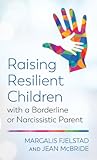
“Don’t Lie, Pretend, or Deny the Truth to Your Children You may feel that you should never say anything negative about the other parent to the children. However, when they come to you and say the NP/BP is being mean, scary, or doesn’t love them, denying their feelings and the facts of the other parent’s behaviors will be injurious to your children—making them feel wrong, crazy, or unable to trust their own perceptions. Instead, ask them to tell you what happened and how they felt. Console them, sympathize with their feelings, and ask how you can help. If your child asks you about your reactions and feelings, be honest, but brief. “Yes, that hurt my feelings. I am disappointed. This is not what I expected. No, I don’t like being yelled at.” This can be done without demeaning the other parent and without dishonesty. Teach your children words for their feelings so they can accurately assess and understand their world.”
― Raising Resilient Children with a Borderline or Narcissistic Parent
― Raising Resilient Children with a Borderline or Narcissistic Parent
“The borderline acts emotionally more negative, less social, less predictable, and more dependent. The narcissist acts more friendly, outgoing, outrageously optimistic, fantastically competent, and in control. Despite the differences in these two external personality patterns, borderlines and narcissists share a similar internal sense of low self-esteem, fear, anxiety, paranoia, and deep emotional pain from a sense of “not feeling good enough.”
― Stop Caretaking the Borderline or Narcissist: How to End the Drama and Get On with Life
― Stop Caretaking the Borderline or Narcissist: How to End the Drama and Get On with Life