Goodreads helps you follow your favorite authors. Be the first to learn about new releases!
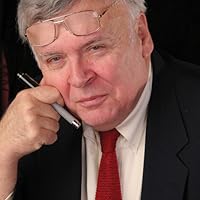
Start by following Paul Dickson.
Showing 1-14 of 14
“INFRACANINOPHILE. One who habitually champions the underdog. The creation of American writer Christopher Morley (1890–1957).”
― Authorisms: Words Wrought by Writers
― Authorisms: Words Wrought by Writers
“the Army saw slang as a morale builder no matter how cynical it became.”
― The Rise of the G.I. Army, 1940-1941: The Forgotten Story of How America Forged a Powerful Army Before Pearl Harbor
― The Rise of the G.I. Army, 1940-1941: The Forgotten Story of How America Forged a Powerful Army Before Pearl Harbor
“Brian’s Law. The longer you wait to write a thank-you note, the longer it must be.”
― The Official Rules: 5,427 Laws, Principles, and Axioms to Help You Cope with Crises, Deadlines, Bad Luck, Rude Behavior, Red Tape, and Attacks by Inanimate Objects
― The Official Rules: 5,427 Laws, Principles, and Axioms to Help You Cope with Crises, Deadlines, Bad Luck, Rude Behavior, Red Tape, and Attacks by Inanimate Objects
“Of the first million men screened by draft boards in 1940, at least 130,000 were rejected for severe disabilities relating to malnutrition.”
― The Rise of the G.I. Army, 1940-1941: The Forgotten Story of How America Forged a Powerful Army Before Pearl Harbor
― The Rise of the G.I. Army, 1940-1941: The Forgotten Story of How America Forged a Powerful Army Before Pearl Harbor
“Without question, however, the single most important hardware innovation to make its debut in the 1941 maneuvers was the portable runway dubbed the Marston Mat.”
― The Rise of the G.I. Army, 1940-1941: The Forgotten Story of How America Forged a Powerful Army Before Pearl Harbor
― The Rise of the G.I. Army, 1940-1941: The Forgotten Story of How America Forged a Powerful Army Before Pearl Harbor
“EUTRAPELIA. Clean mirth, a jest without a jeer, laughter without scorn, wit without malice, a joke without offense to one’s neighbor. A word fashioned from the Greek by Anselm Kroll, a minister from La Crosse, Wisconsin. He tried valiantly to get others to adopt the concept in a crusade that pushed for the dawning of a new day of humor without barbs. “What a lovely world it will be when its clever folk cease to strive to be satirical or sarcastic, and resolve to be eutrapeleous.”
― Authorisms: Words Wrought by Writers
― Authorisms: Words Wrought by Writers
“RESISTENTIALISM. Name for a mock-academic theory to describe “seemingly spiteful behavior manifested by inanimate objects.” In other words, a war is being fought between humans and inanimate objects, and all the little annoyances objects inflict on people throughout the day are battles between the two. The term was coined by British humorist Paul Jennings in a piece titled “Report on Resistentialism,” published in the Spectator in April 1948 and reprinted in the New York Times and elsewhere. The slogan of resistentialism is “Les choses sont contre nous”—”Things are against us.”
― Authorisms: Words Wrought by Writers
― Authorisms: Words Wrought by Writers
“The importance of Marshall’s pre–Pearl Harbor leadership is impossible to ignore. To cite one dynamic example, fully three-quarters (more than 45,000) of the Army’s lieutenants and captains who fought in all theaters of World War II were graduates of the Officer Candidate Schools he fought so hard to establish before the United States entered the war, in the face of strong opposition from both Roosevelt and Stimson.”
― The Rise of the G.I. Army, 1940-1941: The Forgotten Story of How America Forged a Powerful Army Before Pearl Harbor
― The Rise of the G.I. Army, 1940-1941: The Forgotten Story of How America Forged a Powerful Army Before Pearl Harbor
“PLENTIETH. Franklin P. Adams’s adjective of indefinite older age, as in: “He is about to celebrate his plentieth birthday.”
― Authorisms: Words Wrought by Writers
― Authorisms: Words Wrought by Writers
“One defense expert, writing for the International News Service, noted that the final cost of bringing a soldier into the 1941 maneuvers, over and above the cost of keeping that same man in camp for the same amount of time, was approximately $ 22. He added: “That’s probably the cheapest cost there has ever been for turning camp soldiers into field soldiers. And it’s field soldiers that you fight wars with.” 33”
― The Rise of the G.I. Army, 1940-1941: The Forgotten Story of How America Forged a Powerful Army Before Pearl Harbor
― The Rise of the G.I. Army, 1940-1941: The Forgotten Story of How America Forged a Powerful Army Before Pearl Harbor
“Undeniably, the bold actions of Patton and his tankers in Europe had been developed and rehearsed in the United States. Dubbing his desert training center “Little Libya” allowed him to turn metaphor into reality, when he drove his troops 1,200 miles across Libya to Tripoli, which he entered in January 1943.”
― The Rise of the G.I. Army, 1940-1941: The Forgotten Story of How America Forged a Powerful Army Before Pearl Harbor
― The Rise of the G.I. Army, 1940-1941: The Forgotten Story of How America Forged a Powerful Army Before Pearl Harbor
“APTRONYM. American columnist and wit Franklin P. Adams (1881–1960), well known by his initials F. P. A., coined this word for a name that sounds like its owner’s occupation; for instance, William Rumhole, who was a London tavern owner. In Noah Jonathan Jacobs’s Naming-Day in Eden we are told of a Russian ballerina named Olga Tumbelova. Gene Weingarten, a writer for the Washington Post, has coined inaptronym for a name that is ironic as opposed to appropriate, e.g., the late Cardinal Sin—Jaime Lachica Sin, the Roman Catholic Cardinal of Manila.”
― Authorisms: Words Wrought by Writers
― Authorisms: Words Wrought by Writers
“Somehow, Ewing was able to confirm what had been rumor when the maneuvers ended in late September 1941. Patton had indeed bought gasoline with his own money, and both General Walter Krueger and Colonel Dwight Eisenhower had called a foul on him, which was upheld by the referees. His victory in the battle of Shreveport was negated. Ewing noted that for a “long time” it was not fully revealed that Patton had left cash at filling stations along the route, with orders to attendants to “give any of my vehicles all the gas they want and keep the change.”
― The Rise of the G.I. Army, 1940-1941: The Forgotten Story of How America Forged a Powerful Army Before Pearl Harbor
― The Rise of the G.I. Army, 1940-1941: The Forgotten Story of How America Forged a Powerful Army Before Pearl Harbor
“MONDEGREEN. A term for misheard song lyrics, coined by American freelance writer Sylvia Wright (1920–1961) in 1954. It derived from her long-held belief that a song contained the line, “They had slain the Earl of Moray and Lady Mondegreen.” In fact, the line ended with the words, “and laid him on the green.”
― Authorisms: Words Wrought by Writers
― Authorisms: Words Wrought by Writers