Goodreads helps you follow your favorite authors. Be the first to learn about new releases!
Start by following Peter D. Kramer.

Showing 1-28 of 28
“Support has no direction. Our plan is to hold the patient - to strengthen the container - until the patient develops his own container-strengths or until the contents settle down. We do not know just how or when all this ought to happen. Worse we do not have a particularly cogent rationale for limiting our own actions...”
― Moments of Engagement: Intimate Psychotherapy in a Technological Age
― Moments of Engagement: Intimate Psychotherapy in a Technological Age
“In supportive work, the therapist cedes great control to the patient. It may seem otherwise. The therapist is setting limits, perhaps implicitly commenting on the patient's behavior or sense of self, and so forth, and on the surface it seems that the therapist is taking responsibility for the patient's progress. but all this activity leads nowhere except, if we succeed, to stability. In supportive therapy, change arises in a more or less miraculous way , through the patient's suddenly feeling secure enough to move in a certain direction, perhaps one unanticipated by the therapist. It is this pathless quality of supportive work - the degree of blind faith it requires of the therapist - that makes it most uncomfortable.”
― Moments of Engagement: Intimate Psychotherapy in a Technological Age
― Moments of Engagement: Intimate Psychotherapy in a Technological Age
“In his work with depression, [Donald] Klein tried to distinguish those patients who were best treated with imipramine from those best treated with MAOis (monoamine-oxidase inhibitors). Klein found that imipramine was most useful in the treatment of severe depressive episodes with a definite and rapid onset. Patients who looked less depressed, had arrived at depression more gradually, and complained mostly of boredom and apathy did not respond to imipramine but might respond to MAOis. This second group could sometimes be interrupted by distractions or amusements; in the midst of a hospitalization
for depression, they might be seen on the ward chatting happily. Yes, they were impaired. But the impairment extended only to appetitive pleasures. Though they had lost the capacity to forage,
if pleasure landed on their plate, they consumed it.”
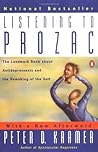
― Listening to Prozac
for depression, they might be seen on the ward chatting happily. Yes, they were impaired. But the impairment extended only to appetitive pleasures. Though they had lost the capacity to forage,
if pleasure landed on their plate, they consumed it.”
― Listening to Prozac
“Before studying imipramine, [Donald] Klein had worked with drug addicts, and he noticed that addicts had distinct preferences. Those who favored morphine could generally be distinguished from those who favored cocaine or amphetamine. And though both types of drugs give a rush of pleasure, the eventual effects are different.
Opiates satiate an addict, at least while they remain effective. Cocaine and amphetamine do not satiate but, rather, excite further desire; stimulant addicts will tend to "go on a run" and rapidly use all the
drug at their disposal.
To Klein, these varieties of pharmacologic pleasure-seeking corresponded to varieties of ordinary enjoyment. Some pleasures, like eating a big meal or sexual orgasm, are satiating and do accord with
Freud's concept of excitation reduction. But others, like "foraging, hunting, searching, and socializing," or sexual foreplay, are excitatory. Klein labeled these two sorts of pleasure "consummatory" and"appetitive.”
― Listening to Prozac
Opiates satiate an addict, at least while they remain effective. Cocaine and amphetamine do not satiate but, rather, excite further desire; stimulant addicts will tend to "go on a run" and rapidly use all the
drug at their disposal.
To Klein, these varieties of pharmacologic pleasure-seeking corresponded to varieties of ordinary enjoyment. Some pleasures, like eating a big meal or sexual orgasm, are satiating and do accord with
Freud's concept of excitation reduction. But others, like "foraging, hunting, searching, and socializing," or sexual foreplay, are excitatory. Klein labeled these two sorts of pleasure "consummatory" and"appetitive.”
― Listening to Prozac
“It is not only medicine that maintains well-being. Once we function competently, the world may pitch in.”
― Ordinarily Well: The Case for Antidepressants
― Ordinarily Well: The Case for Antidepressants
“Swimming, Freud favors the breaststroke, to keep his beard dry.”
― Freud: Inventor of the Modern Mind
― Freud: Inventor of the Modern Mind
“Today, citizens were at once less trusting and more credulous. Many had swallowed lies of vast proportion.”
― Death of the Great Man
― Death of the Great Man
“In his work with depression, [Donald] Klein cried to distinguish chose patients who were best created with imipramine from chose best treated with MAOis (monoamine-oxidase inhibitors). Klein found that imipramine was most useful in the treatment of severe depressive
episodes with a definite and rapid onset. Patients who looked less depressed, had arrived at depression more gradually, and complained mostly of boredom and apathy did not respond to imipramine but might respond to MAOis. This second group could sometimes be interrupted by distractions or amusements; in the midst of a hospitalization
for depression, they might be seen on the ward chatting happily. Yes, they were impaired. But the impairment extended only to appetitive pleasures. Though they had lost the capacity to forage,
if pleasure landed on their plate, they consumed it.”
― Listening to Prozac
episodes with a definite and rapid onset. Patients who looked less depressed, had arrived at depression more gradually, and complained mostly of boredom and apathy did not respond to imipramine but might respond to MAOis. This second group could sometimes be interrupted by distractions or amusements; in the midst of a hospitalization
for depression, they might be seen on the ward chatting happily. Yes, they were impaired. But the impairment extended only to appetitive pleasures. Though they had lost the capacity to forage,
if pleasure landed on their plate, they consumed it.”
― Listening to Prozac
“Grandiose patients often imagine that we know more about them than we do.”
― Death of the Great Man
― Death of the Great Man
“One needs to realize that the symptoms of vital depression are often not spontaneously mentioned … They are often concealed by other symptoms which may seem to be more severe. They may not come to the patient’s mind even with questioning. Patients admit to these symptoms only as the links of an integral whole in a dialogue that is free and comprehensible.”
― Ordinarily Well: The Case for Antidepressants
― Ordinarily Well: The Case for Antidepressants
“Hitler killed many millions. What of a despot whose death toll numbers in the hundreds of thousands?
Miriam recited her litany, the one that linked the Great Man to deaths. Deportation of migrants, caging of children—for her, those outrages were the first among many. The news told of dead journalists, dead churchgoers and concertgoers, dead nurses, dead checkout clerks, deaths in prisons, deaths in classrooms, deaths on city streets, deaths from domestic abuse and botched abortions, deaths from health care denied, deaths from race hatred and homophobia, deaths from floods and fires and poisonings and pollution. The deaths of despair, the suicides and overdoses—how many of those could be laid at the Regime’s door?
And that was just at home. The Great Man embraced foreign tyrants, wars erupted, and innocence perished. The Great Man squelched resistance here, and artists and writers died in distant jails. The seas rose and coastal dwellers drowned on distant shores.
For the Regime, death was a matter of policy. Nina”s arbitocracy was, to Mimi, better understood as thanatocracy. The Regime was anti-life. The Regime was pro-death.”
― Death of the Great Man
Miriam recited her litany, the one that linked the Great Man to deaths. Deportation of migrants, caging of children—for her, those outrages were the first among many. The news told of dead journalists, dead churchgoers and concertgoers, dead nurses, dead checkout clerks, deaths in prisons, deaths in classrooms, deaths on city streets, deaths from domestic abuse and botched abortions, deaths from health care denied, deaths from race hatred and homophobia, deaths from floods and fires and poisonings and pollution. The deaths of despair, the suicides and overdoses—how many of those could be laid at the Regime’s door?
And that was just at home. The Great Man embraced foreign tyrants, wars erupted, and innocence perished. The Great Man squelched resistance here, and artists and writers died in distant jails. The seas rose and coastal dwellers drowned on distant shores.
For the Regime, death was a matter of policy. Nina”s arbitocracy was, to Mimi, better understood as thanatocracy. The Regime was anti-life. The Regime was pro-death.”
― Death of the Great Man
“For unknown reasons, rare depressed patients even today will respond to no medicine except opiates, and a few researchers into depression have become newly interested in these substances. Fifty years ago, most patients who felt better on opium probably valued
it for its ability to ameliorate scattered symptoms, such as sleeplessness, anxiety, and a general sense of malaise. Perhaps for mistaken reasons, Kuhn took the occasional success of opium to set the standard
in the search for antidepressants. The hallmark of opium was that it restored energy in the depressed without being inherently energizing.
Kuhn set our "to find a drug acting in some specific manner against melancholy that is better than opium"- that is, a nonstimulating antidepressant.”
― Listening to Prozac
it for its ability to ameliorate scattered symptoms, such as sleeplessness, anxiety, and a general sense of malaise. Perhaps for mistaken reasons, Kuhn took the occasional success of opium to set the standard
in the search for antidepressants. The hallmark of opium was that it restored energy in the depressed without being inherently energizing.
Kuhn set our "to find a drug acting in some specific manner against melancholy that is better than opium"- that is, a nonstimulating antidepressant.”
― Listening to Prozac
“He could leave the land in ruins and remain beloved.
He had made history. He was the end of history.”
― Death of the Great Man
He had made history. He was the end of history.”
― Death of the Great Man
“We have, all of us, less control over our emotional states than we imagine, and not much more over our moral sensibilities.”
― Death of the Great Man
― Death of the Great Man
“We undervalue irrationality, I believe. It can protect us in hostile settings.”
― Death of the Great Man
― Death of the Great Man
“I use chaos as leverage. I have made chaos normal. Chaos engenders chaos. The chaos I reek now opens the door to the vast chaos to come. I revel in chaos.”
― Death of the Great Man
― Death of the Great Man
“Depression, in its insidious way, acts as a degenerative disease, harming nerve cells. Like”
― Ordinarily Well: The Case for Antidepressants
― Ordinarily Well: The Case for Antidepressants
“When people come into the office and say they've tried to make their marriage work, and I hear what the effort was, it seems to me that there's some lack of understanding of what effort is.”
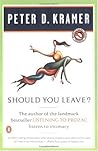
― Should you Leave? A Psychiatrist explores Intimacy and Autonomy - and the Nature of Advice
― Should you Leave? A Psychiatrist explores Intimacy and Autonomy - and the Nature of Advice
“The contrast between a patient depressed and a patient recovered is the contrast between absence and presence.”
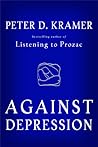
― Against Depression
― Against Depression
“Global warming, police brutality, voter suppression, racism. In his hands, weighty considerations escaped the pull of gravity. Damn, what a show!”
― Death of the Great Man
― Death of the Great Man
“We are social creatures, made anxious by our separateness. The culture offers false and easy means for addressing our anxiety—through sameness. It invites us to consume the same goods, work at the same jobs, adopt the same goals—defining ourselves through conformity and insignificant nuances of difference. But if we lack the courage to be individuals, we will never achieve love, since 'love is the union under the condition of preserving one's integrity.' Love is not taking, out of insecurity; it starts in giving—of joy, interest, understanding, humor, sadness, 'of all expressions and manifestations of that which is alive' in us.”
―
―
“Race and class divisions, power imbalances, anti-intellectualism, anti-democratic leanings, and widespread poverty—not to mention Ponzi schemes—once we saw them as glitches in a country built on high ideals.
The Great Man showed us otherwise. The flaws we had called incidental were underpinnings. They comprised a grand tradition, present always.”
― Death of the Great Man
The Great Man showed us otherwise. The flaws we had called incidental were underpinnings. They comprised a grand tradition, present always.”
― Death of the Great Man
“Asked about their gravest cases, med students say, A patient who had been doing well in treatment lost his job, could not afford his medicine, resumed drinking, missed his clinic appointments, and after four months was brought to the emergency room by the police. Paralyzing melancholy has become an element in a tale of treatment interrupted.”
― Ordinarily Well: The Case for Antidepressants
― Ordinarily Well: The Case for Antidepressants
“Lying was his brand. He was too bold to bother with accuracy and too visionary to be held accountable in small matters. Lies served as virtue signaling—the virtue of those who disdain experts, science, stability, and convention.”
― Death of the Great Man
― Death of the Great Man
“The culture was ready to be dominated by a man with his mix of braggadocio, bullheadedness, celebrity, cruelty, prejudice, know-nothingness, and, yes, narcissism and sociopathy and paranoia. My husband glommed onto a ready host, to our society with all its flaws and weaknesses, and the glomming made him great.”
― Death of the Great Man
― Death of the Great Man
“The advice that I have valued in my own life has never turned on fixed maxims or canned metaphors. More crucially, lists of precepts don't work like targeted advice because lists contain inherently constraining messages. They seem to say that complex matters are knowable, that a given process leads to foreseeable results. It implies a thin and predictable world, whereas the sort of advice that has mattered to me bespeaks a quite tentative optimism, the optimism of the quest whose outcome is finally unknowable.”
― Should you Leave? A Psychiatrist explores Intimacy and Autonomy - and the Nature of Advice
― Should you Leave? A Psychiatrist explores Intimacy and Autonomy - and the Nature of Advice
“Doctors don’t go through life mentally integrating trial results; but any automaton who had regulated his practice that way would have been in danger of underprescribing.”
― Ordinarily Well: The Case for Antidepressants
― Ordinarily Well: The Case for Antidepressants
“If you entrust a nation’s economy to an impulsive leader with no care for facts, disaster will follow.”
― Death of the Great Man
― Death of the Great Man