Goodreads helps you follow your favorite authors. Be the first to learn about new releases!
Start by following Husain Haqqani.

Showing 1-30 of 106
“Pakistan, she observed, had a policy of “profiting from the disputes of others,” and she cited Pakistan’s desire to benefit from tension between the great powers and Pakistan’s early focus on the Palestine dispute as examples of this tendency. “Pakistan was occupied with her own grave internal problem, but she still found time to talk fervently of sending ‘a liberation army to Palestine to help the Arabs free the Holy Land from the Jews”
― Pakistan: Between Mosque and Military
― Pakistan: Between Mosque and Military
“An army is a vital national institution but a nation is more than its army. It needs a vibrant economy, an educated and competitive workforce, as well as intellectual and scientific curiosity and creativity.”
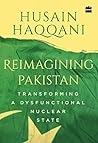
― Reimagining Pakistan: Transforming a Dysfunctional Nuclear State
― Reimagining Pakistan: Transforming a Dysfunctional Nuclear State
“At least part of Pakistan’s quality of education problem stems from its ideological orientation. The goal of education in Pakistan is not to enable critical thinking but to produce skilled professionals capable of applying transferred information instead of being able to think for themselves. To produce soldiers, engineers and doctors indoctrinated with a specifically defined Islamic ideology, the country has ignored liberal arts and social sciences.”
― Reimagining Pakistan: Transforming a Dysfunctional Nuclear State
― Reimagining Pakistan: Transforming a Dysfunctional Nuclear State
“One can sympathize with the sentiment of Pakistanis who must constantly defend their country against criticism ranging from questioning of its very creation to its current policies. But it is equally important to understand that mere survival does not equate success and that progress often requires uninhibited introspection.”
― Reimagining Pakistan: Transforming a Dysfunctional Nuclear State
― Reimagining Pakistan: Transforming a Dysfunctional Nuclear State
“India to accept a ceasefire,” he said. But there was nothing about reconciliation with India in the interview. Sulzberger noted that Bhutto “spoke gloomily of India” and implied that “India was behaving like a virtual satellite of Moscow.” He made predictions similar to those Ayub made about the Soviet Union gaining ground in the subcontinent and about India being on the verge of breaking up. “By sponsoring Bangladesh you will see that India will lose West Bengal and Assam,” he declared. “It is preposterous to think that in an association with”
― Magnificent Delusions: Pakistan, the United States, and an Epic History of Misunderstanding
― Magnificent Delusions: Pakistan, the United States, and an Epic History of Misunderstanding
“Radical and violent manifestations of Islamist ideology, which sometimes appear to threaten Pakistan’s stability, are in some ways a state project gone wrong.”
― Pakistan: Between Mosque and Military
― Pakistan: Between Mosque and Military
“Suhrawardy, who was barred from politics by Ayub Khan, challenged the concept of Pakistan as an ideological state. Emphasis on ideology, he argued, “would keep alive within Pakistan the divisive communal emotions by which the subcontinent was riven before the achievement of independence.”
― Pakistan: Between Mosque and Military
― Pakistan: Between Mosque and Military
“Ironically, support for the idea of Pakistan was strongest in regions where
Muslims were a minority and Jinnah, as well as most of his principal lieutenants, belonged to areas that would not fall in Pakistan. To emerge as chief negotiator on behalf of Muslims, Jinnah and the All-India Muslim League had to prove their support in the Muslim majority provinces. ‘Such support’, Jalal points out, ‘could not have been won by too precise a political programme since the interests of Muslims in one part of India did not suit Muslims in others.’ Jinnah invoked religion as ‘a way of giving a semblance of unity and solidity to his divided Muslim constituents’.”
― Reimagining Pakistan: Transforming a Dysfunctional Nuclear State
Muslims were a minority and Jinnah, as well as most of his principal lieutenants, belonged to areas that would not fall in Pakistan. To emerge as chief negotiator on behalf of Muslims, Jinnah and the All-India Muslim League had to prove their support in the Muslim majority provinces. ‘Such support’, Jalal points out, ‘could not have been won by too precise a political programme since the interests of Muslims in one part of India did not suit Muslims in others.’ Jinnah invoked religion as ‘a way of giving a semblance of unity and solidity to his divided Muslim constituents’.”
― Reimagining Pakistan: Transforming a Dysfunctional Nuclear State
“The alliance between the mosque and the military in Pakistan was forged over time, and its character has changed with the twists and turns of Pakistani history.”
― Pakistan: Between Mosque and Military
― Pakistan: Between Mosque and Military
“Sharif gave instructions to his staff regarding snacks he wanted served to all of us—Sharif often asked for specific food items during meetings, as if it helped him concentrate his mind.”
― Magnificent Delusions: Pakistan, the United States, and an Epic History of Misunderstanding
― Magnificent Delusions: Pakistan, the United States, and an Epic History of Misunderstanding
“Pakistan has been unfortunate that its leaders and
rulers have repeatedly chosen ideological wooden-headedness over pursuit of reasonable and viable options.”
― Reimagining Pakistan: Transforming a Dysfunctional Nuclear State
rulers have repeatedly chosen ideological wooden-headedness over pursuit of reasonable and viable options.”
― Reimagining Pakistan: Transforming a Dysfunctional Nuclear State
“Pakistan’s view of itself as a ‘citadel of Islam’ has created an environment in which violence is normal provided it is committed in the name of Islam.”
― Reimagining Pakistan: Transforming a Dysfunctional Nuclear State
― Reimagining Pakistan: Transforming a Dysfunctional Nuclear State
“In popular sentiment, just as conspiracies have made Pakistan weak and vulnerable, its destined economic greatness has been thwarted by corruption, not poor policy choices.”
― Reimagining Pakistan: Transforming a Dysfunctional Nuclear State
― Reimagining Pakistan: Transforming a Dysfunctional Nuclear State
“Pakistanis often recount how civil servants in Pakistan’s early days worked out of makeshift offices, lived in tents and ran the government with limited stationery supplies. While the account is generally accurate, and the sacrifice of the officials admirable, it is equally important to understand that the difficulty was the result of a poor choice. Pakistan’s founder had selected the country’s capital to be located in a city lacking adequate facilities, preferring it over another provincial capital with a better establishment.”
― Reimagining Pakistan: Transforming a Dysfunctional Nuclear State
― Reimagining Pakistan: Transforming a Dysfunctional Nuclear State
“Bengali leader, Huseyn Shaheed Suhrawardy (who served as Pakistan’s prime minister in 1956) had noted as early as March 1948 that Pakistan’s elite was predisposed to ‘raising the cry of “Pakistan in danger” for the purpose of arousing Muslim sentiments and binding them together’ to maintain its power.”
― Reimagining Pakistan: Transforming a Dysfunctional Nuclear State
― Reimagining Pakistan: Transforming a Dysfunctional Nuclear State
“Of all the United States’ partners in the global war on terrorism, Pakistan is the most vexing and arguably the most important.”
― Pakistan: Between Mosque and Military
― Pakistan: Between Mosque and Military
“For Jinnah, Partition was a constitutional way out of a political stalemate, as he saw it, and not the beginning of a permanent state of hostility between two countries or two nations. This explains his expectation that India and Pakistan would live side by side ‘like the United States and Canada’, obviously with open borders, free flow of ideas and free trade. It is also the reason why Pakistan’s Quaid-i-Azam insisted that his Malabar Hill house in Bombay be kept as it was so that he could return to the city where he lived most of his life after retiring as Governor-General of Pakistan.”
― Reimagining Pakistan: Transforming a Dysfunctional Nuclear State
― Reimagining Pakistan: Transforming a Dysfunctional Nuclear State
“But insecurity remains the hallmark of Pakistan’s political and intellectual conversation. Even a comment about, say, Pakistan’s relatively low ranking among nations for book readership, is portrayed as an attack on the idea of Pakistan.”
― Reimagining Pakistan: Transforming a Dysfunctional Nuclear State
― Reimagining Pakistan: Transforming a Dysfunctional Nuclear State
“Many of Pakistan’s problems—from falling behind in secular education to the rise of Islamist extremism—can be traced to the country’s founding on the basis of religious nationalism.”
― Reimagining Pakistan: Transforming a Dysfunctional Nuclear State
― Reimagining Pakistan: Transforming a Dysfunctional Nuclear State
“The focus should be on Indian atrocities in Kashmir, not on our support for the Kashmiri resistance.”
― Magnificent Delusions: Pakistan, the United States, and an Epic History of Misunderstanding
― Magnificent Delusions: Pakistan, the United States, and an Epic History of Misunderstanding
“The exigencies of maintaining the West Pakistani political, bureaucratic and military elite in power were the major reason why, after Jinnah’s death, the secular Muslim nationalist path was hurriedly abandoned.”
― Reimagining Pakistan: Transforming a Dysfunctional Nuclear State
― Reimagining Pakistan: Transforming a Dysfunctional Nuclear State
“If Jinnah—a Western educated and, by all accounts, nonpracticing Muslim—could inspire India’s Muslims to create a state by appealing to their religious sentiment, Maulana Maududi reasoned there was scope for a body of practicing Islamists to take over that state.”
― Pakistan: Between Mosque and Military
― Pakistan: Between Mosque and Military
“Unlike other countries, where the apex court is only the court of final appeal in criminal matters, Pakistan’s Supreme Court acts politically to directly make pronouncements in response to media articles or petitions by political rivals. One need not be convicted of disloyalty to the state after due process of law when innuendo, fabricated media reports and public comments by Supreme Court judges can suffice to tarnish reputations and cut public support.”
― Reimagining Pakistan: Transforming a Dysfunctional Nuclear State
― Reimagining Pakistan: Transforming a Dysfunctional Nuclear State
“Independent observers believe that the Pakistan Army killed between one hundred thousand and two hundred thousand Bengalis in a nine-month period, whereas Bangladesh puts the figure at three million.”
― Reimagining Pakistan: Transforming a Dysfunctional Nuclear State
― Reimagining Pakistan: Transforming a Dysfunctional Nuclear State
“No one who is a friend of Pakistan must say anything that harms its reputation; anyone who dares to ask tough questions or make adverse remarks must be prepared to be categorized as Pakistan’s enemy.”
― Reimagining Pakistan: Transforming a Dysfunctional Nuclear State
― Reimagining Pakistan: Transforming a Dysfunctional Nuclear State
“During Pakistan’s formative years, however, pan-Islamism was more important for Pakistan’s efforts to consolidate its national identity than as the main-stay of its foreign policy.”
― Pakistan: Between Mosque and Military
― Pakistan: Between Mosque and Military
“Fifty years and several other threats and aid suspensions later, Pakistan continues to nurture a sentimental opposition to aid, while seeking foreign assistance remains an integral part of the economic strategy pursued by successive governments, both military and civilian. There are reasons Pakistan’s economic managers have not given up on external aid despite rising remittances. Although remittances enhance the country’s foreign exchange reserves, they are spent by millions of individuals and do not enhance the government’s treasury. Only aid provides budget support in hard currency and can be used for buying military equipment that Pakistan constantly needs.”
― Reimagining Pakistan: Transforming a Dysfunctional Nuclear State
― Reimagining Pakistan: Transforming a Dysfunctional Nuclear State
“Pakistan’s unfortunate history may justify the description of Pakistan as being ‘insufficiently imagined’, but imagination is by definition not a finite process. An entity that is insufficiently imagined can be reimagined”
― Reimagining Pakistan: Transforming a Dysfunctional Nuclear State
― Reimagining Pakistan: Transforming a Dysfunctional Nuclear State
“Pakistani officers consider the most regressive clerics patriotic because, after all, they would never make common cause with Pakistan’s external enemies—the Indians and whoever else Pakistani intelligence might know or imagine as conspiring against the country at any given moment. Liberal and secular thinkers, on the other hand, are permanently suspect. If they speak up for any ethnic group, they must want Pakistan’s disintegration; if they ask for a secular state, they could be asking for eliminating Pakistan’s identity and a virtual reincorporation into India; and if they question the army’s political role or its budget, they must be in league with ‘the enemy’.”
― Reimagining Pakistan: Transforming a Dysfunctional Nuclear State
― Reimagining Pakistan: Transforming a Dysfunctional Nuclear State
“The campaign for Pakistan had, in its final stages, become a religious movement even though its leaders initiated it as a formula for resolving post-independence constitutional problems. This created confusion about Pakistan’s raison d’être, which Pakistan’s leadership has attempted to resolve through a state ideology.”
― Pakistan: Between Mosque and Military
― Pakistan: Between Mosque and Military