Goodreads helps you follow your favorite authors. Be the first to learn about new releases!
Start by following Michael R. Emlet.

Showing 1-14 of 14
“It is important to remember that we exist as body-spirit creatures. We are simultaneously body and soul. ... This means that attention to both physical and spiritual aspects of our personhood is mandatory in ministry. It is profoundly dehumanizing to ignore the "heart" - our moral-spiritual disposition and the responsibilities that go with it; and it is profoundly dehumanizing to ignore the body and the strengths and weaknesses that go with it.”
― Descriptions and Prescriptions: A Biblical Perspective on Psychiatric Diagnoses and Medications
― Descriptions and Prescriptions: A Biblical Perspective on Psychiatric Diagnoses and Medications
“The fact is that we’re all somewhere on the spectrum represented by many of these symptom lists. So we should always look for the commonalities. Because psychiatric diagnoses are not discrete entities with radically sharp boundaries, we should be able to see at least a little bit of ourselves in this other person’s experience. For the person with the diagnosis, it means that he or she is not so radically different from others, and that decreases a sense of isolation and stigma. (Later I’ll talk about the need to recognize the differences and discontinuities in our experiences, not just the commonalities.)”
― Descriptions and Prescriptions: A Biblical Perspective on Psychiatric Diagnoses and Medications
― Descriptions and Prescriptions: A Biblical Perspective on Psychiatric Diagnoses and Medications
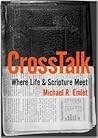
“it appears that Jesus is giving the disciples the key to understanding the Old Testament as a whole."10 Basically, Jesus is saying, "I am the lens through which you must look at the Old Testament. I am the interpretive key that opens its treasure chest of meaning. If you miss how the Old Testament testifies about me, you will miss where the story of redemption is going." This Christ-shaped (gospel-shaped) lens profoundly affects the way we go about interpreting and applying Scripture. This lens keeps our approach to Scripture "familial" and relational because we yearn to see Jesus in its pages. We desire to learn of the one in whom "we live and move and have our being" (Acts 17:28). And, as I mentioned earlier, it keeps as our purpose the mission of our king, to heal the brokenness of people and the world around us.”
― CrossTalk: Where Life & Scripture Meet
― CrossTalk: Where Life & Scripture Meet
“Hippocrates’s adage remains true for us today: “It is more important to know what sort of person has a disease than to know what sort of disease a person has.”1 Both proponents and skeptics of psychiatric classification should agree on one thing: we are wonderfully and distressingly complex creatures. This should humble us and promote dependence on God as we seek to understand and provide help within a biblical framework to those who are especially troubled.”
― Descriptions and Prescriptions: A Biblical Perspective on Psychiatric Diagnoses and Medications
― Descriptions and Prescriptions: A Biblical Perspective on Psychiatric Diagnoses and Medications
“Sometimes God’s call is simply for our attitudes to reflect his perspective, and sometimes the call is for our attitudes and our situations to change.”
― CrossTalk: Where Life & Scripture Meet
― CrossTalk: Where Life & Scripture Meet
“A related, third implication is that diagnosis is not destiny. If “God’s image bearer,” “Christ’s servant,” and “beloved son/daughter” are more primary and biblical ways of identifying strugglers, then it is important to keep in mind God’s ultimate transforming agenda for all his people in the midst of their suffering and sin.”
― Descriptions and Prescriptions: A Biblical Perspective on Psychiatric Diagnoses and Medications
― Descriptions and Prescriptions: A Biblical Perspective on Psychiatric Diagnoses and Medications
“Sadly, however, I have met people who are better evangelists for Prozac than they are for the living God. Rather than viewing medication as simply one component of a full-orbed God-centered body-soul treatment approach, they view it almost as if it was their salvation. By definition, this is idolatry: attributing ultimate power and help to something other than our triune God. If a counselee believes that what ultimately matters is fine-tuning the dose of his Paxil, and finds discussion of spiritual things superfluous or irrelevant, that’s a problem. How a person responds when the medication works—or doesn’t work—reveals her basic posture before God. Thanksgiving and a more fervent seeking after God in the wake of medication success say one thing; a lack of gratitude and a comfort-driven forgetfulness of God say another. A commitment to trust God’s faithfulness and goodness in the wake of medication failure says one thing; a bitter, complaining distrust of his ways says another. So, receive the gift but look principally to the Giver. Whether a medication “works” or not, he is always working on your behalf.”
― Descriptions and Prescriptions: A Biblical Perspective on Psychiatric Diagnoses and Medications
― Descriptions and Prescriptions: A Biblical Perspective on Psychiatric Diagnoses and Medications
“Systematic theology helps to distill the Bible’s teachings, but it does not exhaust the complexity of what God means to say to the church. In a similar way, a book report may accurately outline and summarize a book’s contents, but it is no substitute for reading the book cover to cover, pondering, relishing, and wrestling through its details. We”
― CrossTalk: Where Life & Scripture Meet
― CrossTalk: Where Life & Scripture Meet
“This redemptive-historical approach to Scripture in no way minimizes the importance of commands, principles, characters, and doctrine in Scripture. Rather, it puts all of them in a gospel-centered, relational framework. It highlights that the Bible is God’s "show-and-tell": his mighty acts of redemption on behalf of sinners, told for the purpose of restoring broken relationship with his image bearers. As”
― CrossTalk: Where Life & Scripture Meet
― CrossTalk: Where Life & Scripture Meet
“Clearly a mark of the in-breaking kingdom is the relief of suffering. As the Christmas hymn “Joy to the World” reminds us, Jesus “comes to make his blessings known far as the curse is found.” Relief of suffering is a good and necessary thing. This in fact is where history is going; in the new heavens and earth there will be no crying or pain (Revelation 21:4). So when we seek to bring relief from suffering now, we are keeping in step with God’s plan of redemption. As the Puritan Jeremiah Burroughs said, contentment is “not opposed to all lawful seeking for help in different circumstances, nor endeavoring simply to be delivered out of present afflictions by the use of lawful means.”1 I believe medications can certainly be one of those lawful means. There is nothing inherently wrong with seeking relief from present suffering.”
― Descriptions and Prescriptions: A Biblical Perspective on Psychiatric Diagnoses and Medications
― Descriptions and Prescriptions: A Biblical Perspective on Psychiatric Diagnoses and Medications
“Viewing the Bible in systematic categories may lead to overemphasizing certain passages or books and deemphasizing others based on your theological predispositions. What is the result? The Bible’s wonderfully varied terrain becomes "flattened." Michael Williams notes, "The complexity and ambiguity of reality is lost in the press toward univocal neatness and rational fit, and the dynamics of events and relationships is reduced to broad generalities."16”
― CrossTalk: Where Life & Scripture Meet
― CrossTalk: Where Life & Scripture Meet
“there may indeed be a place for using characters as examples to follow or avoid—remember, the biblical writers do it too—so long as it is practiced with an awareness of the Christcentered plotline of the Bible.”
― CrossTalk: Where Life & Scripture Meet
― CrossTalk: Where Life & Scripture Meet
“But—and this is very important—ambiguity about causation doesn’t mean that the struggling person isn’t experiencing real suffering. He is. She is. But it does mean that we must be careful about what we assume regarding the cause or causes of the person’s struggle. Let’s be honest about what we know and don’t know. Let’s not be reductionistic and assume that the biological piece is primary and ultimate in the diagnosis and treatment for all categories of psychiatric disorders. As noted earlier, the DSM does not claim to know the causes of each of the entities it describes.”
― Descriptions and Prescriptions: A Biblical Perspective on Psychiatric Diagnoses and Medications
― Descriptions and Prescriptions: A Biblical Perspective on Psychiatric Diagnoses and Medications
“Fourth, along these same lines, some diagnoses remind us of a more central role of the body in a person’s struggle. Psychiatric diagnoses remind us that we are embodied souls. We know this clearly from Scripture! But functionally speaking, we sometimes over-spiritualize troubles with emotions and thoughts. When you consider the spectrum of psychiatric diagnoses, it is clear that years of research demonstrate that some diagnoses may have a stronger genetic (inherited) component of causation than others. These include schizophrenia, bipolar disorder, autistic spectrum disorder, and perhaps more severe and recalcitrant forms of depression (melancholia), anxiety, and OCD.2 Another way of saying this is that although psychiatric diagnoses are descriptions and not full-fledged explanations, it doesn’t mean that a given diagnosis or symptom holds no explanatory clues at all. Not all psychiatric diagnoses should be viewed equally. Some do indeed have long-standing recognition in medical and psychiatric history, occur transculturally, and therefore are not merely modern, Western “creations” that highlight patterns of deviant or sinful behavior, as critics would say. Observations that have held up among various”
― Descriptions and Prescriptions: A Biblical Perspective on Psychiatric Diagnoses and Medications
― Descriptions and Prescriptions: A Biblical Perspective on Psychiatric Diagnoses and Medications