Goodreads helps you follow your favorite authors. Be the first to learn about new releases!
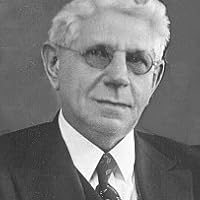
Start by following Louis Berkhof.
Showing 1-30 of 86
“Saving faith may be defined as a certain conviction, wrought in the heart by the Holy Spirit, as to the truth of the gospel, and a hearty reliance (trust) on the promises of God in Christ.”
― Systematic Theology
― Systematic Theology
“Strictly speaking, it is the Word as it is preached in the name of God and in virtue of a divine commission, that is considered as a means of grace in the technical sense of the word, alongside of the sacraments which are administered in the name of God.”
― Systematic Theology
― Systematic Theology
“the power of evil is both great and universal, is an ever present blight on life in all its manifestations, and is a matter of daily experience in the life of every man.”
― Systematic Theology
― Systematic Theology
“the Church is the guardian of the truth, the citadel of the truth, and the defender of the truth over against all the enemies of the Kingdom of God.”
― Systematic Theology
― Systematic Theology
“It is quite evident that the Being of God does not admit of any scientific definition.”
― Systematic Theology
― Systematic Theology
“The covenant of works
was contingent on the uncertain obedience of a changeable man, while the covenant of
grace rests on the obedience of Christ as Mediator, which is absolute and certain.”
― Systematic Theology
was contingent on the uncertain obedience of a changeable man, while the covenant of
grace rests on the obedience of Christ as Mediator, which is absolute and certain.”
― Systematic Theology
“Sanctification may be defined as that gracious and continuous operation of the Holy Spirit, by which He delivers the justified sinner from the pollution of sin, renews his whole nature in the image of God, and enables him to perform good works.”
― Systematic Theology
― Systematic Theology
“The sinful state and condition in which men are born is designated in theology by the name peccatum originale, which is literally translated in the English “original sin.”
― Systematic Theology
― Systematic Theology
“Subjectively, the union between Christ and believers is effected by the Holy Spirit in a mysterious and supernatural way, and for that reason is generally designated as the unio mystica or mystical union.”
― Systematic Theology
― Systematic Theology
“Dr. Warfield distinguishes the two as follows: “The one is addressed generally to all intelligent creatures, and is therefore accessible to all men; the other is addressed to a special class of sinners, to whom God would make known His salvation. The one has in view to meet and supply the natural need of creatures for knowledge of their God; the other to rescue broken and deformed sinners from their sin and its consequences.”[”
― Systematic Theology
― Systematic Theology
“The Sinaitic covenant is an interlude, covering a period in which the real character of the covenant of grace, that is, its free and gracious character, is somewhat eclipsed by all kinds of external ceremonies and forms which, in connection with the theocratic life of Israel, placed the demands of the law prominently in the foreground, cf. Gal. 3. In the covenant with Abraham, on the other hand, the promise and the faith that responds to the promise are made emphatic.”
― Systematic Theology
― Systematic Theology
“The Methodists aim at a methodical conversion that carries immediate certainty with it. They place men before the law, cause them to see their utter sinfulness and terrible guilt, and frighten them with the terrors of the Lord. And after they have thus brought them under the terrifying influence of the law, they at once introduce them to the full and free gospel of redemption, which merely calls for a willing acceptance of Christ as their Saviour. In a single moment sinners are transported on waves of emotion from the deepest sorrow into the most exalted joy. And this sudden change carries with it an immediate assurance of redemption. He who believes, is also sure that he is redeemed. This does not mean, however, that he is also certain of ultimate salvation. This is a certainty to which the consistent Methodist cannot attain since he believes in a falling away of the saints.”
― Systematic Theology
― Systematic Theology
“For us the existence of God is the great presupposition of theology.”
― Systematic Theology
― Systematic Theology
“The covenant of grace may be defined as that gracious agreement between the offended God and the offending but elect sinner, in which God promises salvation through faith in Christ, and the sinner accepts this believingly, promising a life of faith and obedience.”
― Systematic Theology
― Systematic Theology
“But God, who is rich in mercy, according to His unchangeable purpose of election, does not wholly withdraw the Holy Spirit from His own people even in their grievous falls; nor suffers them to proceed so far as to lose the grace of adoption and forfeit the state of justification, or to commit the sin unto death or against the Holy Spirit; nor does He permit them to be totally deserted, and to plunge themselves into everlasting destruction.” [V,”
― Systematic Theology
― Systematic Theology
“The law served a twofold purpose in connection with the covenant of grace: (1) to increase the consciousness of sin, Rom. 3:20; 4:15; Gal. 3:19; and (2) to be a tutor unto Christ, Gal. 3:24.”
― Systematic Theology
― Systematic Theology
“It should not be understood in a quantitative, but in a qualitative sense; it qualifies all the communicable attributes of God.”
― Systematic Theology
― Systematic Theology
“If man reacts to God’s majestic-holiness with a feeling of utter insignificance and awe, his reaction to the ethical holiness reveals itself in a sense of impurity, a consciousness of sin, Isa. 6:5.”
― Systematic Theology
― Systematic Theology
“This is also the case in the Belgic Confession. [Articles XXVII - XXIX.] We quote only the following statements from it: “We believe and profess one catholic or universal Church, which is a holy congregation of true believers, all expecting their salvation in Jesus Christ, being washed by His blood, sanctified and sealed by the Holy Spirit.” [Art. XXVII.] The marks by which the true Church is known are these: “If the pure doctrine of the Gospel is preached therein; if it maintains the pure administration of the sacraments as instituted by Christ; if Church discipline is exercised in punishing sin; in short, if all things are managed according to the pure Word of God; all things contrary thereto rejected, and Jesus Christ acknowledged as the only Head of the Church.”
― Systematic Theology
― Systematic Theology
“victoriously. This was possible for Him only because of His exalted nature. At this point we should guard against misunderstanding, however. Eternal death in the case of Christ did not consist in an abrogation of the union of the Logos with the human nature, nor in the divine nature’s being forsaken of God, nor in the withdrawal of the Father’s divine love or good pleasure from the person of the Mediator. The Logos remained united with the human nature even when the body was in the grave; the divine nature could not possibly be forsaken of God; and the person of the Mediator was and ever continued to be the object of divine favor. It revealed itself in the human consciousness of the Mediator as a feeling of Godforsakenness. This implies that the human nature for a moment missed the conscious comfort which it might derive from its union with the divine Logos, and the sense of divine love, and was painfully conscious of the fulness of the divine wrath which was bearing down upon it. Yet”
― Systematic Theology
― Systematic Theology
“Hence we read in the Second Helvetic Confession: “We acknowledge, therefore, that there be in one and the same Jesus our Lord two natures — the divine and the human nature; and we say that these are so conjoined or united that they are not swallowed up, confounded, or mingled together, but rather united or joined together in one person (the properties of each being safe and remaining still), so that we do worship one Christ, our Lord, and not two. . . . Therefore we do not think nor teach that the divine nature in Christ did suffer, or that Christ, according to His human nature, is yet in the world, and so in every place.” [Chap. XI.]”
― Systematic Theology
― Systematic Theology
“In general we may define the mediatorial kingship of Christ as His official power to rule all things in heaven and on earth, for the glory of God, and for the execution of God's purpose of salvation.”
― Systematic Theology
― Systematic Theology
“repeated sinful deeds lead to the establishment of sinful habits.”
― Systematic Theology
― Systematic Theology
“There is a constant coming of God to man in theophany, prophecy, and miracle, and this coming reaches its highest point in the incarnation of the Son of God and in the indwelling of the Holy Spirit in the Church.”
― Manual of Christian Doctrine
― Manual of Christian Doctrine
“claimed that God by virtue of His absolute power”
― Systematic Theology
― Systematic Theology
“WORKS on dogmatic or systematic theology generally begin with the doctrine of God.”
― Systematic Theology
― Systematic Theology
“Civilization without regeneration, without a supernatural change of the heart, will never bring in a millennium, an effective and glorious rule of Jesus Christ.”
― Systematic Theology
― Systematic Theology
“Ratiocination is a relatively superficial and unreal path to the deity.”
― Systematic Theology
― Systematic Theology
“The whole undivided essence of God belongs equally to each of the three persons.”
― Systematic Theology
― Systematic Theology
“The covenant of redemption may be defined as the agreement between the Father, giving the Son as Head and Redeemer of the elect, and the Son, voluntarily taking the place of those whom the Father had given Him.”
― Systematic Theology
― Systematic Theology