Goodreads helps you follow your favorite authors. Be the first to learn about new releases!
Start by following William Johnson.

Showing 1-8 of 8
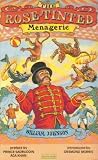
“Dolphins wearing oversized spectacles, dolphins having their teeth cleaned with a toilet brush, dolphins singing a squeaky rendition of “Happy Birthday” — this, the most ubiquitous style of dolphin dressage — probably reveals more about the ailing human spirit and its self-imposed divorce from Mother Nature, than anything about the true nature of cetaceans.”
― The Rose-Tinted Menagerie
― The Rose-Tinted Menagerie
“It is often stated in defence of circuses that they are of educational benefit to children, who might otherwise never see these animals. But what exactly do we teach our children about animals through a visit to the circus? All a child can see is the size, shape and colour of the animals. Their behaviour patterns, social interaction, intelligence, hunting instinct, maternal instinct, sibling behaviour, food gathering patterns and all the facets of animal behaviour that makes a species so unique and interesting, are not apparent in circus, animals. ~ Animal Aid”
― The Rose-Tinted Menagerie
― The Rose-Tinted Menagerie
“From chariot horses in the ancient world, to Hannibal’s merciless exploitation of elephants to cross the Alps and confront the Roman Empire, animals have played a fundamental role in the long and murky history of human warfare. But it was not until the twentieth century that the military use of animals became distinctly sinister and bizarre. During the Second World War, the American army used kamikaze “tankdogs” to blow up German panzers. In their book A 'Higher Form of Killing', Robert Harris and Jeremy Paxman describe how the dogs were taken away from their mothers as soon as they were weaned, and were only given food under the bellies of tanks. Once on the battlefield, the dogs were held on the verge of starvation, with explosives and a tall triggering antenna strapped to their backs. As the German panzers approached, the hungry animals were released. Running instinctively under the enemy tanks searching for food, the antenna would scrape along the metal belly, detonating the explosives and thus destroying both tank and dog.”
― The Rose-Tinted Menagerie
― The Rose-Tinted Menagerie
“I have met many circus people and some of them have impressed me by the concern they have shown for their animals. Not all of them are cruel, by any means. But in the end all of them are involved in presenting a spectacle that is completely outdated in its central concept. The idea that it is funny to see wild animals coerced into acting like clumsy humans, or thrilling to see powerful beasts reduced to cringing cowards by a whip-cracking trainer is primitive and medieval. It stems from the old idea that we are superior to other species and have the right to hold dominion over them. ~ DESMOND MORRIS”
― The Rose-Tinted Menagerie
― The Rose-Tinted Menagerie
“Yet not content with merely depicting itself as educational, the circus menagerie has also jumped on the conservation bandwagon, claiming that its efforts in captive breeding will ultimately help save endangered species from extinction. But like all circus illusions, this one too is both tenuous and contradictory and does not bear up to further scrutiny. Indeed, wary of potential public interest in the release of their animals into the wild, circus owners and their animal trainers are the first to admit to the impracticalities of re-introduction, partly on the grounds that their animals have lost their natural instincts — though they hasten to add that the creatures retain enough of their innate wildness to be “educational” in the ring.”
― The Rose-Tinted Menagerie
― The Rose-Tinted Menagerie
“The Marine Mammal Protection Act regulations were very easy to ‘get around’ and still are. It’s the same with the Zoo Licensing Act in the UK. So called ‘independent inspectors’ are often those with vested interests in the industry. ~ Doug Cartlidge (former whale and dolphin trainer)”
― The Rose-Tinted Menagerie
― The Rose-Tinted Menagerie
“Though Conny Gasser repeated his claim to have lost only two dolphins since 1971, even newspaper reports mention three dolphins dying at Lipperswil in 1973 alone. Also, his statement in 1985 that “I have a dolphin here who’s been with me for 14 years,” seems highly implausible since his first dolphins, imported in 1971, are both dead. Flipper’s longevity for instance actually spans at least three separate individuals — a juggling of identities intended to deceive the public. Indeed, since 1971, Gasser has owned at least 36 dolphins, of which 24 have died or cannot be accounted for. It is known that two dolphins were sold to an amusement park in Holland and another two to a dolphinarium in the Far East, that four dolphins are currently held on long-term loan at Fasano, Italy, and another four at Connyland, but this still leaves unaccounted for, Lady No. 1, 2 and 3, Flipper No. 1 and 2, Didi, an unnamed dolphin which died in Manila, Skipper which apparently managed to survive the 1973 winter in Lipperswil when three others died, Bonnie and Clyde imported from Britain in 1980, and Sonny, Blacky, Poco and Chico who were reported to be ill in the summer of 1974. There is also the uncertain fate of Gasser’s orca whale which was sold to an amusement park in Argentina.
Furthermore, according to the Klinowska Report, Gasser also obtained the following dolphins from the UK: Pebbles and Sonny Boy bought from Franklin and Holloway in 1972 — both of which are reported to have died in Switzerland in 1977 — Cleo purchased from Morecambe in 1977 (perhaps the unnamed dolphin that died in Manila?) and Baby, Speedy (No. 1) and Windy purchased from Don Robinson’s Flamingo Park in 1978. Strangely enough — though anything is possible in the dolphin industry — Klinowska speculates that the already ailing animal that Gasser purchased from Windsor in 1972 with a David Taylor health certificate, and which died a year later in Surabaya, Indonesia as Lady (No. 2), was actually a male dolphin called Flipper! Last, but not least, Klinowska cites two anonymous dolphins purchased from the UK by Gasser early in 1973 which died within two months. These are just some of the dolphins once under Gasser’s care that have simply disappeared, thus earning him the title, even in far away England and America, of “Conveyor Belt Gasser” — the dolphins would be alive at one end and dead at the other.”
― The Rose-Tinted Menagerie
Furthermore, according to the Klinowska Report, Gasser also obtained the following dolphins from the UK: Pebbles and Sonny Boy bought from Franklin and Holloway in 1972 — both of which are reported to have died in Switzerland in 1977 — Cleo purchased from Morecambe in 1977 (perhaps the unnamed dolphin that died in Manila?) and Baby, Speedy (No. 1) and Windy purchased from Don Robinson’s Flamingo Park in 1978. Strangely enough — though anything is possible in the dolphin industry — Klinowska speculates that the already ailing animal that Gasser purchased from Windsor in 1972 with a David Taylor health certificate, and which died a year later in Surabaya, Indonesia as Lady (No. 2), was actually a male dolphin called Flipper! Last, but not least, Klinowska cites two anonymous dolphins purchased from the UK by Gasser early in 1973 which died within two months. These are just some of the dolphins once under Gasser’s care that have simply disappeared, thus earning him the title, even in far away England and America, of “Conveyor Belt Gasser” — the dolphins would be alive at one end and dead at the other.”
― The Rose-Tinted Menagerie
“But are the animals trained or brainwashed to become killers? Ironically, it was the neurophysiologist and “New Age Guru” Dr John Lilly who first perfected a technique of implanting electrodes into the brains of unanaesthetised animals to stimulate the “pain and pleasure sectors” of the mind. After butchering monkeys by the dozen at the National Institute of Mental Health, Lilly concluded that judicious manipulation of these brain areas could inspire joy and well-being, or pain, anger and fear. Indeed, by using the electrodes to deliver reward or punishment stimuli the animal could be entirely subordinated to human will. The ingenious Lilly then turned his attention to dolphins, under the pretext of wishing to “communicate” with these intelligent and highly perceptive creatures. To insert electrodes into the brains of the fully-conscious animals, holes were made in the skull with a sharp instrument and a carpenter’s hammer. According to Prof. Giorgio Pilleri, “the dolphin was held down but tried to jump up at every blow — not because of the pain, but because of the unbearable noise produced by the hammering."
Indeed, many of Lilly’s dolphins suffered an agonising death. “Despite disappointment and sadness,” he announced, “we had to go on with our research: our responsibilities lie with finding the truth.” It was not until years later however that a repentant Lilly finally stumbled across that apparently elusive truth. After suffering drug addiction and a mental breakdown, he characterised his research in an entirely different light: “I was running a concentration camp for my friends.”
―
Indeed, many of Lilly’s dolphins suffered an agonising death. “Despite disappointment and sadness,” he announced, “we had to go on with our research: our responsibilities lie with finding the truth.” It was not until years later however that a repentant Lilly finally stumbled across that apparently elusive truth. After suffering drug addiction and a mental breakdown, he characterised his research in an entirely different light: “I was running a concentration camp for my friends.”
―