Goodreads helps you follow your favorite authors. Be the first to learn about new releases!
Start by following William J. Reese.

Showing 1-4 of 4
“Bruno Bettelheim, a psychologist and educator at the University of Chicago, wrote one of the most perceptive articles about education in the aftermath of Sputnik. He observed that while liberal policymakers urged racial integration they simultaneously favored intellectual segregation. Writing in Commentary in 1958, he said that northern white liberals wanted to obliterate the color line while replacing it with a hierarchical caste system based on intelligence. The movement to the suburbs was one way to ensure that their own children had a leg up on everyone. But gifted programs (and the new Advanced Placement programs in high school) promised middle- and upper-class whites (and some blacks who made it out of poverty) greater access to the highest-quality education. Despite all the Jeffersonian talk about how talented inhered in all classes, the poor were unlikely to benefit from gifted programs or the new curriculum projects. A new caste system was in the making, parodied so brilliantly in Michael Young's 1958 fantasy, The Rise of the Meritocracy. Bettelheim sarcastically asked why elite liberals were so worried. "Have these so-called gifted been winding up in the coal mines, have so few of them managed to enter Harvard, Yale, City College, or the University of Chicago?”
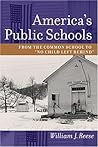
― America's Public Schools: From the Common School to "No Child Left Behind"
― America's Public Schools: From the Common School to "No Child Left Behind"
“Asking schools to even consider addressing social and political issues that divide the American people inevitably leads to conflict, as citizens conclude either that the schools have usurped the authority of parents and churches or that they have failed to keep up with the times. In one breath the public demands higher academic standards and the basics, in another attention to just about every divisive social problem.”
― America's Public Schools: From the Common School to "No Child Left Behind"
― America's Public Schools: From the Common School to "No Child Left Behind"
“At the Lab School children planted gardens and grew crops not to become farmers but to learn about food, chemistry, and geography. These students, who came from fairly affluent families in Hyde Park, acquired considerable knowledge, but they were creatively and actively involved in their education and less dependent on textbooks and traditional instruction. Children could read a textbook to learn how to boil an egg, but experimenting on their own drew upon their interests and strengthened their powers of observation. Efficiency was sacrificed, but active engagement in learning, as in democracy, required time and patience.”
― America's Public Schools: From the Common School to "No Child Left Behind"
― America's Public Schools: From the Common School to "No Child Left Behind"
“We stand too close to the most recent generation of school reform to know where the future lies. There was nothing inevitable about the creation of the public school systems in the nineteenth century, and there is nothing inevitable about their survival or transformation in the coming decades. No one could have guessed in the early twentieth century that urban schools, widely regarded by professional educators as the model for schools everywhere, would soon fall from grace. No one could have predicted that the civil rights movement and rights revolution would bring poor and disadvantaged youngsters into systems that once excluded or mistreated them. No one could have known that the old idea of the school as a melting pot would be discredited, especially in professional training programs. History can offer perspective but not identify the pathways to the future. Like the past, the future will be full of surprises.”
― America's Public Schools: From the Common School to "No Child Left Behind"
― America's Public Schools: From the Common School to "No Child Left Behind"