Goodreads helps you follow your favorite authors. Be the first to learn about new releases!
Start by following Lance Dodes.

Showing 1-30 of 77
“Addictions are an attempt to preserve control over your feelings and your life and respond assertively to helplessness.”
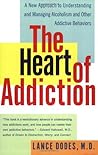
― The Heart of Addiction: A New Approach to Understanding and Managing Alcoholism and Other Addictive Behaviors
― The Heart of Addiction: A New Approach to Understanding and Managing Alcoholism and Other Addictive Behaviors
“Why understanding the purpose of addiction matters: Because it explains why people with addictions are not weaker than people without addiction: people suffering with addictions put up with helplessness just like everyone else as long as it doesn’t involve major issues for them.”
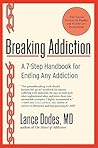
― Breaking Addiction: A 7-Step Handbook for Ending Any Addiction – An Alternative to Alcoholics Anonymous Guide to Understanding Emotional Root Causes and Lasting Recovery
― Breaking Addiction: A 7-Step Handbook for Ending Any Addiction – An Alternative to Alcoholics Anonymous Guide to Understanding Emotional Root Causes and Lasting Recovery
“Any substantive conversation about treatment in this country must reckon with the toll levied when a culture encourages one approach to the exclusion of all others, especially when that culture limits the treatment options for suffering people, ignores advances in understanding addiction, and excludes and even shames the great majority of people who fail in the sanctioned approach.”
― The Sober Truth: Debunking the Bad Science Behind 12-Step Programs and the Rehab Industry
― The Sober Truth: Debunking the Bad Science Behind 12-Step Programs and the Rehab Industry
“Addiction is not a moral defect, and to suggest that does a great disservice to people suffering with this disorder.”
― The Sober Truth: Debunking the Bad Science Behind 12-Step Programs and the Rehab Industry
― The Sober Truth: Debunking the Bad Science Behind 12-Step Programs and the Rehab Industry
“A review of all such reports between 1976 and 1989 was performed by C. D. Emrick (of the School of Medicine of the University of Colorado) and colleagues. The researchers concluded: "The effectiveness of AA as compared to other treatments for “alcoholism” has yet to be demonstrated. Reliable guidelines have not been established for predicting who among AA members will be successful. . . . Caution was raised against rigidly referring every alcohol-troubled person to AA.”
― The Sober Truth: Debunking the Bad Science Behind 12-Step Programs and the Rehab Industry
― The Sober Truth: Debunking the Bad Science Behind 12-Step Programs and the Rehab Industry
“In 2008, J. McKellar (writing as lead author, with Ilgen, Moos, and Moos as coauthors) concluded that “clinicians should focus on keeping patients engaged in AA.” This recommendation is even more dogmatic than Moos and Moos suggested in their original paper. In fact, this paper itself notes that pressuring people to attend AA is usually unhelpful: “a significant number of substance abuse patients never attend self-help groups after discharge,” that is, when no longer mandated to attend.”
― The Sober Truth: Debunking the Bad Science Behind 12-Step Programs and the Rehab Industry
― The Sober Truth: Debunking the Bad Science Behind 12-Step Programs and the Rehab Industry
“When Bill Wilson sat down to write Alcoholics Anonymous, he first prayed for guidance. The Twelve Steps themselves reportedly came to him in a single inspiration. (He identified the number twelve with the Twelve Apostles, and felt that this was a fitting number.)”
― The Sober Truth: Debunking the Bad Science Behind 12-Step Programs and the Rehab Industry
― The Sober Truth: Debunking the Bad Science Behind 12-Step Programs and the Rehab Industry
“I have met and listened to a very large number of people who have “failed” at AA and some who continue to swear by it, despite repeated recidivism.”
― The Sober Truth: Debunking the Bad Science Behind 12-Step Programs and the Rehab Industry
― The Sober Truth: Debunking the Bad Science Behind 12-Step Programs and the Rehab Industry
“When Dominic entered my office, he had accepted as empirical truth that he was a deeply flawed individual: amoral, narcissistic, and unable to turn himself over to a Higher Power. How else to explain the swath of destruction he had cut through his own life and the lives of those who loved him? His time in AA had also taught him that his deeper psychological life was immaterial to mastering his addiction. He had a disease; the solution was in the Twelve Steps. When he was ready to quit, he would. It took eight months of psychotherapy before Dominic stopped drinking for good. Although he remained in therapy for several years after that, the key that unlocked his addiction was nothing more complex or ethereal than an understanding of what his addiction really was and how it really worked.”
― The Sober Truth: Debunking the Bad Science Behind 12-Step Programs and the Rehab Industry
― The Sober Truth: Debunking the Bad Science Behind 12-Step Programs and the Rehab Industry
“Any serious treatment center would study its own outcomes to modify and improve its approach. But rehabs generally don’t do this. For example, only one of the three best-known facilities has ever published outcome studies (Hazelden); neither Betty Ford nor Sierra Tucson has checked to see if their treatment is producing any results for at least the past decade. Hazelden’s follow-up studies looked at just the first year following discharge and showed disappointing results, as we will see later. Efforts by journalists to solicit data from rehabs have also been met with resistance, making an independent audit of their results almost impossible and leading to the inevitable conclusion that the rest of the programs either don't study their own outcomes or refuse to publish what they find.”
― The Sober Truth: Debunking the Bad Science Behind 12-Step Programs and the Rehab Industry
― The Sober Truth: Debunking the Bad Science Behind 12-Step Programs and the Rehab Industry
“AA has managed to survive, in part, because members who become and remain sober speak and write about it regularly. This is no accident: AA’s twelfth step expressly tells members to proselytize for the organization: “Having had a spiritual awakening as the result of these Steps, we tried to carry this message to alcoholics, and to practice these principles in all our affairs.” Adherence to this step has created a classic sampling error: because most of us hear only from the people who succeeded in the program, it is natural to conclude that they represent the whole. In reality, these members speak for an exceptionally small percentage of addicts.”
― The Sober Truth: Debunking the Bad Science Behind 12-Step Programs and the Rehab Industry
― The Sober Truth: Debunking the Bad Science Behind 12-Step Programs and the Rehab Industry
“So devoted were AA’s early members to burnishing the reputation of their fledgling organization, in fact, that when when one member, Morgan R., secured an interview on a widely popular radio show, members kept him locked in a hotel room “for several days under 24 hour watch” out of fear that he would drink before the show. When the interview went off successfully, another early backer, Hank P., mailed twenty thousand postcards to doctors, urging them to purchase Alcoholics Anonymous.”
― The Sober Truth: Debunking the Bad Science Behind 12-Step Programs and the Rehab Industry
― The Sober Truth: Debunking the Bad Science Behind 12-Step Programs and the Rehab Industry
“One bedrock tenet of the Oxford Group, however, would influence AA for years to come: an absolute opposition to medical or psychological explanations for human failings and thus a complete prohibition on professional treatment of any kind.”
― The Sober Truth: Debunking the Bad Science Behind 12-Step Programs and the Rehab Industry
― The Sober Truth: Debunking the Bad Science Behind 12-Step Programs and the Rehab Industry
“What troubles many good scientists about research like the Fiorentine paper is that studying the people who choose to attend AA is an almost perfect recipe for generating the compliance effect error. AA members who frequently attend meetings may be demonstrating the same sort of self-care qualities that the placebo takers do. They may be, in effect, the Boy Scouts, or “eager patients,” of the addict population. Nobody who has looked at this data would dispute that people who attend AA most often and stay the longest are more likely to improve than the dropouts. The question is whether AA is driving this outcome or benefiting from a correlation instead. Is it possible that the kind of people who stay in 12-step programs are already more likely to improve? Would they be equally likely to do so in any treatment, or even no treatment at all? At heart, the dilemma facing AA research is whether people stay in AA because they’re the type of people who will stick with a program no matter what it is and who would have stuck with it even if it were of no help to them at all.”
― The Sober Truth: Debunking the Bad Science Behind 12-Step Programs and the Rehab Industry
― The Sober Truth: Debunking the Bad Science Behind 12-Step Programs and the Rehab Industry
“[He had] supplanted the notion of a Higher Power with something far more personally empowering: sophisticated self-awareness.”
― The Sober Truth: Debunking the Bad Science Behind 12-Step Programs and the Rehab Industry
― The Sober Truth: Debunking the Bad Science Behind 12-Step Programs and the Rehab Industry
“More than anything, AA offers a comforting veneer of actionable change: it is something you can do.”
― The Sober Truth: Debunking the Bad Science Behind 12-Step Programs and the Rehab Industry
― The Sober Truth: Debunking the Bad Science Behind 12-Step Programs and the Rehab Industry
“Why do we tolerate this industry? One reason may sound familiar: in rehab, one feels that one is doing something, taking on a life-changing intervention whose exorbitant expense ironically reinforces the impression that epochal changes must be just around the corner. It is marketed as the sort of cleansing experience that can herald the dawn of a new era. How many of us have not indulged this fantasy at one time or another—the daydream that if we could just put our lives “on pause” for a while and retreat somewhere pastoral and lovely, we could finally make sense of all our problems? Alas, the effect is temporary at best. Many patients begin using again soon after they emerge from rehab, often suffering repeated relapses. The discouragement that follows these failures can magnify the desperation that originally brought them to help’s door. What’s especially shocking is how the rehab industry responds to these individuals: they simply repeat their failed treatments, sometimes dozens of times. Repeat stays in rehab are very common, and readmission is almost always granted without any special consideration or review. On second and subsequent stays, the same program is offered, including lectures previously attended.”
― The Sober Truth: Debunking the Bad Science Behind 12-Step Programs and the Rehab Industry
― The Sober Truth: Debunking the Bad Science Behind 12-Step Programs and the Rehab Industry
“[Bill] Wilson wrote: “The early AA got its ideas of self-examination, acknowledgment of character defects, restitution for harm done, and working with others straight from the Oxford Group and directly from Sam Shoemaker, their former leader in America, and from nowhere else.” Although Wilson felt indebted to the Oxford Group for many things, he would eventually break from the organization.”
― The Sober Truth: Debunking the Bad Science Behind 12-Step Programs and the Rehab Industry
― The Sober Truth: Debunking the Bad Science Behind 12-Step Programs and the Rehab Industry
“Analyzing the available data about AA requires that we begin with a clear definition of success. Success, after all, can mean any number of things. Should one measure it in days of sobriety? Weeks without a binge episode? What if people who are making substantive progress slip and have one drink during an otherwise successful period of time: Should they “go back to zero,” as is the practice in many AA chapters? What if they stop drinking but acquire a gambling problem instead?”
― The Sober Truth: Debunking the Bad Science Behind 12-Step Programs and the Rehab Industry
― The Sober Truth: Debunking the Bad Science Behind 12-Step Programs and the Rehab Industry
“By devoting time to the consequences of behaviour it is also easy to overlook the fact that these consequences were not intended. We already know that addictions are a solution to an internal problem, not an attempt to create external problem for oneself or others. There is an even more fundamental problem with spending your time and effort thinking about the effects of addiction. The more time you spend on that, the less time you spending doing something truly valuable: looking at the causes of addiction”
― Breaking Addiction: A 7-Step Handbook for Ending Any Addiction – An Alternative to Alcoholics Anonymous Guide to Understanding Emotional Root Causes and Lasting Recovery
― Breaking Addiction: A 7-Step Handbook for Ending Any Addiction – An Alternative to Alcoholics Anonymous Guide to Understanding Emotional Root Causes and Lasting Recovery
“[Bill Wilson] rarely mentioned in retelling this story that he was being treated at the time by the “Belladonna Cure,” a chemical cocktail that included the known hallucinogens atropine and scopolamine. Perhaps more importantly, we should notice this story’s startling similarity to his grandfather’s. Just like the older man, Wilson claimed that he’d been transported to a mountaintop, where he experienced a nearly word-for-word reenactment of the same sensations—“uplift” and “spirit”—that his grandfather spoke about more or less continuously during Wilson’s childhood. Despite these clues that more prosaic forces may have been at work, Wilson believed for the rest of his life that he had been touched by God, and he was absolutely certain that divine experience had forever liberated him from the urge to drink.”
― The Sober Truth: Debunking the Bad Science Behind 12-Step Programs and the Rehab Industry
― The Sober Truth: Debunking the Bad Science Behind 12-Step Programs and the Rehab Industry
“Silkworth, a supporter of AA from its inception, was quoted [as saying], "We all know that the alcoholic has an urge to share his troubles. . . . But the psychoanalyst, being of human clay, is not often a big enough man for that job. The patient simply cannot generate enough confidence in him. But the patient can have enough confidence in God—once he has gone through the mystical experience of recognizing God. And upon that principle the Alcoholic Foundation rests. The medical profession, in general, accepts the principle as sound.”
― The Sober Truth: Debunking the Bad Science Behind 12-Step Programs and the Rehab Industry
― The Sober Truth: Debunking the Bad Science Behind 12-Step Programs and the Rehab Industry
“Deborah Dawson of the National Institute on Alcohol Abuse and Alcoholism, Division of Biometry and Epidemiology, once lamented the lack of credible data in the study of addiction treatment: “Few, if any, studies have assessed the impact of different types of treatment on both the probability and rapidity of recovery, i.e. on person-years of dependence averted.”5 Her principal complaint: the lack of controls in most AA studies.”
― The Sober Truth: Debunking the Bad Science Behind 12-Step Programs and the Rehab Industry
― The Sober Truth: Debunking the Bad Science Behind 12-Step Programs and the Rehab Industry
“As his biographer put it, “[Bill Wilson] was compulsive, given to emotional extremes. . . . Even after he stopped drinking, he was still a heavy consumer of cigarettes and coffee. He had a sweet tooth, a large appetite for sex, and a major enthusiasm for LSD and, later, for niacin, a B-complex vitamin.” Indeed, he was such a heavy smoker that the effects of tobacco would rob him of his mobility and, eventually, his life. One account recalls that he continued to smoke even in his old age when he needed frequent doses of oxygen just to make it through the day. Friends who arrived at the house reported seeing him struggling to decide whether he should take oxygen or smoke another cigarette. The cigarette won every time. A similar pattern arose around a different behavior: serial adultery. Wilson’s need to sleep with women outside his marriage was legendary—so much so that AA members eventually put together a “Founder’s Watch” committee designed to steer him away from any tempting young women at the numerous events he attended.”
― The Sober Truth: Debunking the Bad Science Behind 12-Step Programs and the Rehab Industry
― The Sober Truth: Debunking the Bad Science Behind 12-Step Programs and the Rehab Industry
“In a paper published in the New England Journal of Medicine, the oldest continuously published medical journal in the world and widely considered the world’s most prestigious, D. C. Walsh and his co-researchers “randomly assigned a series of 227 workers newly identified as abusing alcohol to one of three rehabilitation regimens: compulsory inpatient treatment, compulsory attendance at AA meetings, and a choice of options. The findings were notable: On seven measures of drinking and drug use . . . we found significant differences at several follow-up assessments. The hospital group fared best and that assigned to AA the least well; those allowed to choose a program had intermediate outcomes. Additional inpatient treatment was required significantly more often . . . by the AA group (63 percent) and the choice group (38 percent) than by subjects assigned to initial treatment in the hospital (23 percent). These results led the researchers to issue a warning in their final recommendations: “An initial referral to AA alone or a choice of programs, although less costly than inpatient care, involves more risk than compulsory inpatient treatment and should be accompanied by close monitoring for signs of incipient relapse.”
― The Sober Truth: Debunking the Bad Science Behind 12-Step Programs and the Rehab Industry
― The Sober Truth: Debunking the Bad Science Behind 12-Step Programs and the Rehab Industry
“In 2006, one of the most prestigious scientific research organizations in the world, the Cochrane Collaboration, conducted a review of the many studies conducted between 1966 and 2005 and reached a stunning conclusion: “No experimental studies unequivocally demonstrated the effectiveness of AA” in treating alcoholism.”
― The Sober Truth: Debunking the Bad Science Behind 12-Step Programs and the Rehab Industry
― The Sober Truth: Debunking the Bad Science Behind 12-Step Programs and the Rehab Industry
“The compliance effect has led to some famously strange epidemiological results. One long-term study showed that people who took a placebo were half as likely to die as those who did not. Was the placebo protecting them in some way the researchers had failed to anticipate? Hardly. It turned out that simply taking the placebo regularly was a signpost for a wholly different lifestyle. The pill takers were simply more actively engaged in their health across the board.”
― The Sober Truth: Debunking the Bad Science Behind 12-Step Programs and the Rehab Industry
― The Sober Truth: Debunking the Bad Science Behind 12-Step Programs and the Rehab Industry
“Every year, our state and federal governments spend over $15 billion on substance-abuse treatment for addicts, the vast majority of which are based on 12-step programs. There is only one problem: these programs almost always fail.”
― The Sober Truth: Debunking the Bad Science Behind 12-Step Programs and the Rehab Industry
― The Sober Truth: Debunking the Bad Science Behind 12-Step Programs and the Rehab Industry
“It wasn’t long before the court systems began to mandate AA attendance for drug and alcohol offenders. AA won a landmark decision in 1966 when two decisions from a federal appeals court upheld the disease concept of alcoholism and the court’s use of it, despite the fact that there was scant precedent for a US court of law to assign itself the power of medical diagnosis. Although later decisions would rule court-mandated 12-step attendance unconstitutional, judges still refer people to AA as part of sentencing or as a condition of probation. Dr. Arthur Horvath, a past president of the Division on Addictions of the American Psychological Association, summarizes the current legal status of this practice: "If you have been convicted of an offense related to addiction, it is common to be ordered to attend support groups, treatment, or both. It has also been common that you would be ordered, not just to a support group, but to Alcoholics Anonymous (AA) specifically, or to another 12-step based group. Based on recent court decisions, if you have been ordered to attend a 12-step group or 12-step based treatment by the government (the order could be coming from a court, prison officer, probation or parole officer, licensing board or licensing board diversion program, or anyone authorized to act on behalf of the government), you have the right not to attend them. However, you can still be required to attend some form of support group, and some type of treatment. These court decisions are based on the finding that AA is religious enough that being required to attend it would be similar to requiring someone to attend church. Five US Circuit Courts of Appeal (the 2nd, 3rd, 7th, 8th, and 9th) have made similar rulings. . . . The 2nd Circuit Court decision states that AA “placed a heavy emphasis on spirituality and prayer, in both conception and in practice,” that participants were told to “pray to God,” and that meetings began and adjourned with “group prayer.” The court therefore had “no doubt” that AA meetings were “intensely religious events.” Although some have suggested that AA is spiritual but not religious, the court found AA to be religious.”
― The Sober Truth: Debunking the Bad Science Behind 12-Step Programs and the Rehab Industry
― The Sober Truth: Debunking the Bad Science Behind 12-Step Programs and the Rehab Industry
“Disease is usually a binary system: either you’ve got it or you don’t. Pneumonia: got it or you don’t. HIV: got it or you don’t. Multiple sclerosis, polio, emphysema—all of these are yes-or-no propositions. But alcoholism is not, in fact, a disease: it is a behavior, or perhaps a collection of behaviors. And because nobody can say for sure whether a behavior has ever been eliminated for good without a crystal ball, we must first establish a baseline definition of what success looks like in the treatment of addiction. I’ll propose this simple definition: A treatment for alcoholism may be called successful if an individual no longer drinks in a way that is harmful in his or her life.”
― The Sober Truth: Debunking the Bad Science Behind 12-Step Programs and the Rehab Industry
― The Sober Truth: Debunking the Bad Science Behind 12-Step Programs and the Rehab Industry