Goodreads helps you follow your favorite authors. Be the first to learn about new releases!
Start by following Stephen R.C. Hicks.

Showing 1-30 of 79
“In postmodern discourse, truth is rejected explicitly and consistency can be a rare phenomenon. Consider the following pairs of claims. On the one hand, all truth is relative; on the other hand, postmodernism tells it like it really is. On the one hand, all cultures are equally deserving of respect; on the other, Western culture is uniquely destructive and bad. Values are subjective—but sexism and racism are really evil. Technology is bad and destructive—and it is unfair that some people have more technology than others. Tolerance is good and dominance is bad—but when postmodernists come to power, political correctness follows. There is a common pattern here: Subjectivism and relativism in one breath, dogmatic absolutism in the next. Postmodernists are well aware of the contradictions—especially since their opponents relish pointing them out at every opportunity. And of course a post-modernist can respond dismissingly by citing Hegel—“Those are merely Aristotelian logical contradictions”—but it is one thing to say that and quite another to sustain Hegelian contradictions psychologically.”
― Explaining Postmodernism: Skepticism and Socialism from Rousseau to Foucault
― Explaining Postmodernism: Skepticism and Socialism from Rousseau to Foucault
“why is it that that prominent segment of the Left—the same Left that traditionally defended its positions on the modernist grounds of reason, science, fairness for all, and optimism—is now voicing themes of anti-reason, anti-science, all’s-fair-in-love-and-war, and cynicism? ”
― Explaining Postmodernism: Skepticism and Socialism from Rousseau to Foucault
― Explaining Postmodernism: Skepticism and Socialism from Rousseau to Foucault
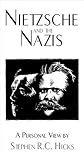
“We know that the National Socialists were thoroughly collectivistic and strongly anti-individualistic. For them the relevant groups were the Germanic Aryans—and all the others. Individuals were defined by their group identity, and individuals were seen only as vehicles through which the groups achieved their interests. The Nazis rejected the Western liberal idea that individuals are ends in themselves: to the Nazis individuals were merely servants of the groups to which they belong. The”
― Nietzsche And The Nazis
― Nietzsche And The Nazis
“In 1920, psychiatry Professor Alfred Hoche and distinguished jurist Karl Binding wrote The Permission to Destroy Life Unworthy of Life. Their book called for the destruction of “worthless” humans for the sake of protecting worthy humans. So-called worthless individuals included the mentally and physically disabled.”
― Nietzsche And The Nazis
― Nietzsche And The Nazis
“Consider three more examples, this time of clashes between postmodernist theory and historical fact. Postmodernists say that the West is deeply racist, but they know very well that the West ended slavery for the first time ever, and that it is only in places where Western ideas have made inroads that racist ideas are on the defensive. They say that the West is deeply sexist, but they know very well that Western women were the first to get the vote, contractual rights, and the opportunities that most women in the world are still without. They say that Western capitalist countries are cruel to their poorer members, subjugating them and getting rich off them, but they know very well that the poor in the West are far richer than the poor anywhere else, both in terms of material assets and the opportunities to improve their condition.”
― Explaining Postmodernism: Skepticism and Socialism from Rousseau to Foucault
― Explaining Postmodernism: Skepticism and Socialism from Rousseau to Foucault
“Therefore, it is a combination of the two factors—widespread skepticism about reason and socialism’s being in crisis—that is necessary to give rise to postmodernism.”
― Explaining Postmodernism: Skepticism and Socialism from Rousseau to Foucault
― Explaining Postmodernism: Skepticism and Socialism from Rousseau to Foucault
“It is important to emphasize that the Nazis put their program forward forthrightly and as a noble—even spiritual—ideal to achieve. They promised not merely another political platform, but a whole philosophy of life that, as they and their followers believed, promised renewal.”
― Nietzsche And The Nazis
― Nietzsche And The Nazis
“Included in the Totalitarian/Killed by Own Government cell are the 10 to 12 million human beings killed by the German National Socialists in the period 1933-1945. Subtracting that number from 138 million, along with subtracting a few million killed by miscellaneous totalitarian regimes, means that over 110 million human beings were killed by the governments of nations inspired by Left, primarily Marxist, socialism.[260]”
― Explaining Postmodernism: Skepticism and Socialism from Rousseau to Foucault
― Explaining Postmodernism: Skepticism and Socialism from Rousseau to Foucault
“National Socialism is what Marxism might have been if it could have broken its absurd and artificial ties with a democratic order.” —Adolf Hitler[173]”
― Nietzsche And The Nazis
― Nietzsche And The Nazis
“In education, postmodernism rejects the notion that the purpose of education is primarily to train a child’s cognitive capacity for reason in order to produce an adult capable of functioning independently in the world. That view of education is replaced with the view that education is to take an essentially indeterminate being and give it a social identity.[24] Education’s method of molding is linguistic, and so the language to be used is that which will create a human being sensitive to its racial, sexual, and class identity. Our current social context, however, is characterized by oppression that benefits whites, males, and the rich at the expense of everyone else. That oppression in turn leads to an educational system that reflects only or primarily the interests of those in positions of power. To counteract that bias, educational practice must be recast totally. Postmodern education should emphasize works not in the canon; it should focus on the achievements of non-whites, females, and the poor; it should highlight the historical crimes of whites, males, and the rich; and it should teach students that science’s method has no better claim to yielding truth than any other method and, accordingly, that students should be equally receptive to alternative ways of knowing.[25]”
― Explaining Postmodernism: Skepticism and Socialism from Rousseau to Foucault
― Explaining Postmodernism: Skepticism and Socialism from Rousseau to Foucault
“A new ethical standard was therefore necessary. With great fanfare, then, much of the Left changed its official ethical standard from need to equality. No longer was the primary criticism of capitalism to be that it failed to satisfy people’s needs. The primary criticism was to be that its people did not get an equal share.”
― Explaining Postmodernism: Skepticism and Socialism from Rousseau to Foucault
― Explaining Postmodernism: Skepticism and Socialism from Rousseau to Foucault
“Morally and politically, in practice every liberal capitalist country has a solid record for being humane, for by and large respecting rights and freedoms, and for making it possible for people to put together fruitful and meaningful lives. Socialist practice has time and time again proved itself more brutal than the worst dictatorships in history prior to the twentieth century. Each socialist regime has collapsed into dictatorship and begun killing people on a huge scale. Each has produced dissident writers such as Alexander Solzhenitsyn and Nien Cheng who have documented what those regimes are capable of.”
― Explaining Postmodernism: Skepticism and Socialism from Rousseau to Foucault
― Explaining Postmodernism: Skepticism and Socialism from Rousseau to Foucault
“As Nietzsche noted in Daybreak: When some men fail to accomplish what they desire to do they exclaim angrily, “May the whole world perish!” This repulsive emotion is the pinnacle of envy, whose implication is “If I cannot have something, no one can have anything, no one is to be anything!”[312]”
― Explaining Postmodernism: Skepticism and Socialism from Rousseau to Foucault
― Explaining Postmodernism: Skepticism and Socialism from Rousseau to Foucault
“As Hitler put it at the beginning of the war: “What will be destroyed in this war is a capitalist clique that was and remains willing to annihilate millions of men for the sake of their despicable personal interests.”
― Nietzsche And The Nazis
― Nietzsche And The Nazis
“From the postmodern anti-realist metaphysics and anti-reason epistemology, the postmodern social consequences follow almost directly. Once we set aside reality and reason, what are we left with to go on? We can, as the conservatives would prefer, simply turn to our group’s traditions and follow them. Or we can, as the post-modernists will prefer, turn to our feelings and follow them. If”
― Explaining Postmodernism: Skepticism and Socialism from Rousseau to Foucault
― Explaining Postmodernism: Skepticism and Socialism from Rousseau to Foucault
“Damning those he called “the money pigs of capitalist democracy,”[11] Goebbels in speeches and pamphlets regularly declaimed that “Money has made slaves of us.”[12] “Money,” he argued, “is the curse of mankind. It smothers the seed of everything great and good. Every penny is sticky with sweat and blood.”
― Nietzsche And The Nazis
― Nietzsche And The Nazis
“For the modern realists, consciousness is both cognitive and functional, and those two traits are integrated. The primary purpose of consciousness is to be aware of reality. The complementary purpose of consciousness is to use its awareness of reality as a guide to acting in that reality. For the postmodern antirealists, by contrast, consciousness is functional—but it is not cognitive, so its functionality has nothing to do with cognition. Two key concepts in the postmodern lexicon, “unmasking” and “rhetoric,” illustrate the significance of the differences.”
― Explaining Postmodernism: Skepticism and Socialism from Rousseau to Foucault
― Explaining Postmodernism: Skepticism and Socialism from Rousseau to Foucault
“The contemporary Enlightenment world prides itself on its commitment to equality and justice, its open-mindedness, its making opportunity available to all, and its achievements in science and technology. The Enlightenment world is proud, confident, and knows it is the wave of the future. This is unbearable to someone who is totally invested in an opposed and failed outlook. That pride is what such a person wants to destroy. The best target to attack is the Enlightenment’s sense of its own moral worth. Attack it as sexist and racist, intolerantly dogmatic, and cruelly exploitative. Undermine its confidence in its reason, its science and technology. The words do not even have to be true or consistent to do the necessary damage. And like Iago, postmodernism does not have to get the girl in the end. Destroying Othello is enough.[320]”
― Explaining Postmodernism: Skepticism and Socialism from Rousseau to Foucault
― Explaining Postmodernism: Skepticism and Socialism from Rousseau to Foucault
“Traditionally, Marxist socialism had supposed that providing adequately for human needs was a basic test of a social system’s morality. The achievement of wealth, accordingly, was a good thing since wealth brought with it better nutrition, housing, healthcare, and leisure time. And so capitalism was held to be evil because Marxists believed that it denied most of its population the ability to enjoy the fruits of wealth. But as it became clear that capitalism is very good at producing the wealth and delivering the fruits—and that socialism is very bad at it—two new variations on Left thought turned this argument on its head and began to condemn capitalism precisely for being so good at producing wealth.”
― Explaining Postmodernism: Skepticism and Socialism from Rousseau to Foucault
― Explaining Postmodernism: Skepticism and Socialism from Rousseau to Foucault
“Both religion and socialism thus glorify weakness and need. Both recoil from the world as it is: tough, unequal, harsh. Both flee to an imaginary future realm where they can feel safe. Both say to you: Be a nice boy. Be a good little girl. Share. Feel sorry for the little people. And both desperately seek someone to look after them—whether it be God or the State.”
― Nietzsche And The Nazis
― Nietzsche And The Nazis
“As it became impossible to believe in the morality of the Soviet Union, a shrinking contingent of true believers shifted their devotions, first to communist China under Mao. But then came revelations of even worse horrors in China in the 1960s—including 30 million deaths between 1959 and 1961. Then Cuba was the great hope, and then Vietnam, then Cambodia, then Albania for awhile in the late 1970s, and then Nicaragua in the 1980s. But the data and the disappointments piled up, all dealing a solid and devastating blow to socialism’s ability to claim a moral sanction.[259] One such set of summary data is reproduced below in the form of a table comparing liberal democratic, authoritarian, and totalitarian governments in terms of one measure of morality: the number of their own citizens those governments have killed.”
― Explaining Postmodernism: Skepticism and Socialism from Rousseau to Foucault
― Explaining Postmodernism: Skepticism and Socialism from Rousseau to Foucault
“Modern debates were over truth and reality, reason and experience, liberty and equality, justice and peace, beauty and progress. In the postmodern framework, those concepts always appear in quotation marks. Our most strident voices tell us that “Truth” is a myth. “Reason” is a white male Eurocentric construct. “Equality” is a mask for oppressions. “Peace” and “Progress” are met with cynical and weary reminders of power—or explicit ad hominem attacks. Postmodern debates thus display a paradoxical nature. Across the board, we hear, on the one hand, abstract themes of relativism and egalitarianism. Those themes come in both epistemological and ethical forms. Objectivity is a myth; there is no Truth, no Right Way to read nature or a text. All interpretations are equally valid. Values are socially subjective products. Culturally, therefore, no group’s values have special standing. All ways of life from Afghani to Zulu are legitimate. Coexisting with these relativistic and egalitarian themes, we hear, on the other hand, deep chords of cynicism. Principles of civility and procedural justice simply serve as masks for hypocrisy and oppression born of asymmetrical power relations, masks that must be ripped off by crude verbal and physical weapons: ad hominem argument, in-your-face shock tactics, and equally cynical power plays. Disagreements are met—not with argument, the benefit of the doubt, and the expectation that reason can prevail—but with assertion, animosity, and a willingness to resort to force.”
― Explaining Postmodernism: Skepticism and Socialism from Rousseau to Foucault
― Explaining Postmodernism: Skepticism and Socialism from Rousseau to Foucault
“The horse eats the grass; the lion kills the horse; the man rides the horse and kills the lion. Life is an ongoing struggle between strong and weak, predator and prey. Cooperation and trade are possible, but they are superficial interludes between more fundamental animal facts about life. As Nietzsche again puts it: “‘Life always lives at the expense of other life’—he who does not grasp this has not taken even the first step toward honesty with himself.”
― Nietzsche And The Nazis
― Nietzsche And The Nazis
“Why did the French Revolution go so horribly wrong, descending in a reign of paranoia, fratricide, and terror? Why, by contrast, did the American Revolution, in many ways fighting the same kind of battle and subject to the same desperate pressures, not go the same self-destructive route? How, a century and a half later, could the most educated nation in Europe become a Nazi dictatorship?”
― Nietzsche And The Nazis
― Nietzsche And The Nazis
“Morality, as Nietzsche puts it paradoxically, has become a bad thing; morality has become immoral: “precisely morality would be to blame if the highest power and splendor actually possible to the type man was never in fact attained? So that precisely morality was the danger of dangers?”
― Nietzsche And The Nazis
― Nietzsche And The Nazis
“The dominance of subjectivist and relativistic epistemologies in academic philosophy thus provided the academic Left with a new tactic. Confronted by harsh evidence and ruthless logic, the far Left had a reply: That is only logic and evidence; logic and evidence are subjective; you cannot really prove anything; feelings are deeper than logic; and our feelings say socialism.”
― Explaining Postmodernism: Skepticism and Socialism from Rousseau to Foucault
― Explaining Postmodernism: Skepticism and Socialism from Rousseau to Foucault
“As would be expected by the socialist part of National Socialism, the guiding principle of Nazi economics was that all property belongs to the people, the Volk, and was to be used only for the good of the people. Just as one’s body is no longer one’s private possession but rather belongs to the whole community, economic property was no longer anyone’s private possession but to be used by State permission and only for the good of the people.”
― Nietzsche And The Nazis
― Nietzsche And The Nazis
“Again there was no military response from the Allies. Instead they believed Hitler was satisfied. They still believed him when he signed the Munich Agreement promising no more expansion beyond the Sudetenland, then a key part of Czechoslovakia. As a result of that agreement, Hitler was named Time magazine’s Man of the Year for 1938.”
― Nietzsche And The Nazis
― Nietzsche And The Nazis
“In postmodernism we find metaphysical antirealism, epistemological subjectivity, the placing of feeling at the root of all value issues, the consequent relativism of both knowledge and values, and the consequent devaluing or disvaluing of the scientific enterprise.”
― Explaining Postmodernism: Skepticism and Socialism from Rousseau to Foucault
― Explaining Postmodernism: Skepticism and Socialism from Rousseau to Foucault
“So strong was the Nazi party’s commitment to socialism that in 1921 the party entered into negotiations to merge with another socialist party, the German Socialist Party. The negotiations fell though, but the economic socialism remained a consistent Nazi theme through the 1920s and 30s.”
― Nietzsche And The Nazis
― Nietzsche And The Nazis