Goodreads helps you follow your favorite authors. Be the first to learn about new releases!
Start by following Michelle DeRusha.

Showing 1-16 of 16
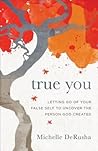
“Busyness allows us to avoid the deepest questions of our souls. It keeps us at arm's length from our truest, most authentic selves. And when we don't know our deepest, most authentic selves, we can't know what work and what role God has for us in this world. In fact, when we don't know our deepest, most authentic selves, we don't really God, because it is God who creates our innermost selves, and it's God who invites this authentic self into deep relationship with him.”
― True You: Letting Go of Your False Self to Uncover the Person God Created
― True You: Letting Go of Your False Self to Uncover the Person God Created
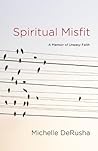
“It's tempting to get lost in the study, to turn to books and study groups and classes, to know all about God but not know God himself, to read about the Bible rather than read the Bible itself.”
― Spiritual Misfit: A Memoir of Uneasy Faith
― Spiritual Misfit: A Memoir of Uneasy Faith
“Grace does not make sense. It's not supposed to make sense. Grace cannot be calculated or formulated, earned or even rewarded for a job well done. Grace is a gift, not a salary.”
― Spiritual Misfit: A Memoir of Uneasy Faith
― Spiritual Misfit: A Memoir of Uneasy Faith
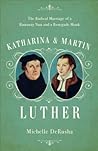
“Luther argued that freedom from sin through Christ’s grace encouraged and inspired Christians to perform good works out of immense gratitude and love for Christ: “The works themselves do not justify him [man] before God, but he does the works out of spontaneous love in obedience to God.”
― Katharina and Martin Luther: The Radical Marriage of a Runaway Nun and a Renegade Monk
― Katharina and Martin Luther: The Radical Marriage of a Runaway Nun and a Renegade Monk
“Beginning with the Psalms and continuing with Romans, Galatians, and Hebrews, Luther dug into Scripture, and it was these years of study, exegesis, writing, teaching, and preaching that formed the foundation of his theology—a theology that not only informed the Ninety-five Theses and his belief in salvation through grace alone, but also saved Luther from his own spiritual despair.”
― Katharina and Martin Luther: The Radical Marriage of a Runaway Nun and a Renegade Monk
― Katharina and Martin Luther: The Radical Marriage of a Runaway Nun and a Renegade Monk
“The key, Luther finally realized, was that God’s love and grace were not merited, but freely given and freely received through faith alone.”
― Katharina and Martin Luther: The Radical Marriage of a Runaway Nun and a Renegade Monk
― Katharina and Martin Luther: The Radical Marriage of a Runaway Nun and a Renegade Monk
“The waters are rising, but so am I. I am not going under, but over. Don’t be concerned about your dying: only go on living well, and the dying will be all right.”
― 10 Women Every Christian Should Know: Learning from Heroines of the Faith
― 10 Women Every Christian Should Know: Learning from Heroines of the Faith
“Frankly, I even worried about the fact that I was so worried. Worrying about the strength of my faith—how it stood up to others'—didn’t seem to be a healthy sign. I mean, didn't worrying about faith defeat the whole point of faith? Weren't we supposed to just "let go and let God"? I didn't "let go and let God" very well. I worried about that.”
― Spiritual Misfit: A Memoir of Uneasy Faith
― Spiritual Misfit: A Memoir of Uneasy Faith
“I had a problem with commitment. I was afraid to proclaim that I had found Jesus, been saved, boarded the boat bound for eternal life. I figured it wasn't something I could announce one week and then a month or two later admit, "Oh yeah, sorry, people. That was my Jesus phase. I'm into transcendental meditation now.”
― Spiritual Misfit: A Memoir of Uneasy Faith
― Spiritual Misfit: A Memoir of Uneasy Faith
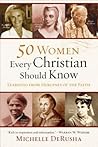
“Love to the fallen, the outcasts, even the madly sinful,” she once wrote. “Love to every human being however degraded who bears the impress of the Divine image.”
― 50 Women Every Christian Should Know: Learning from Heroines of the Faith
― 50 Women Every Christian Should Know: Learning from Heroines of the Faith
“Make the least of all that goes and the most of all that comes,”
― 10 Women Every Christian Should Know: Learning from Heroines of the Faith
― 10 Women Every Christian Should Know: Learning from Heroines of the Faith
“Communion with God precedes community with others and ministry in the world,” said Nouwen. “Once the inward journey has begun, we can move outwardly from solitude to community and ministry.”
― True You: Letting Go of Your False Self to Uncover the Person God Created
― True You: Letting Go of Your False Self to Uncover the Person God Created
“After twenty years of unbelief, doubt had become a habit. Doubting was easy, routine; it was my natural, instinctive reaction. Somewhere along the line I had stopped considering any other options. Doubt was my default. So choosing the blessing, the miracle, over coincidence had to be a conscious choice. I had to dismiss doubt as the crutch that it was, dismiss my gut instinct and embrace the more challenging alternative.”
― Spiritual Misfit: A Memoir of Uneasy Faith
― Spiritual Misfit: A Memoir of Uneasy Faith
“Love to every human being however degraded who bears the impress of the Divine image.”
― 50 Women Every Christian Should Know: Learning from Heroines of the Faith
― 50 Women Every Christian Should Know: Learning from Heroines of the Faith
“And keep looking forward. Don’t look backwards.”
― 10 Women Every Christian Should Know: Learning from Heroines of the Faith
― 10 Women Every Christian Should Know: Learning from Heroines of the Faith
“[Martin Luther's] understanding of grace-based faith versus works-based faith was more than a personal revelation; it informed his entire rebellion against the church. After all, if human beings couldn't possibly earn salvation by their good works, if human beings had no righteousness of their own and were entirely dependent on Christ for their salvation and hope, where, then, did that leave good works like pilgrimages and fasting? Where did that leave the notion of purgatory? Where did that leave the monastic vows of poverty, obedience, and chastity? Where did that leave the pope, with his sales of indulgences, and the priests, doling out penance in the confessionals? Luther came to believe that the church to which he had dedicated his life was built on sand, and each abuse, each indulgence, added an unsustainable weight to the structure. In his eyes, Romans 1:17 obliterated the very foundation of the Roman Catholic Church.”
― Katharina and Martin Luther: The Radical Marriage of a Runaway Nun and a Renegade Monk
― Katharina and Martin Luther: The Radical Marriage of a Runaway Nun and a Renegade Monk