Goodreads helps you follow your favorite authors. Be the first to learn about new releases!
Start by following Scott Carney.

Showing 1-30 of 39
“Have you ever seen a rabbit go to a pharmacy, a hospital, or a mental asylum?” he asks rhetorically. “They don’t look for medicine, they heal themselves or die. Humans aren’t so simple; they’ve let technology get in the way of who they really are.” It’s an idea that I’ve thought a lot about, and one that doesn’t always sit comfortably. Yes the modern world has its drawbacks, but nature can also be brutal. So I interrupt the budding diatribe. “But rabbits get eaten by wolves,” I say. Hof doesn’t skip a beat at my interjection. “Yes, they know fight and flight. The wolf chases them and they die. But everything dies one day. It is just that in our case we aren’t eaten by wolves. Instead, without predators, we’re being eaten by cancer, by diabetes, and our own immune systems. There’s no wolf to run from, so our bodies eat themselves.”
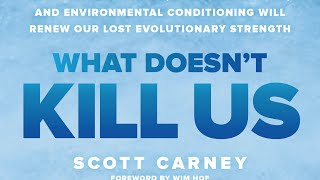
― What Doesn't Kill Us: How Freezing Water, Extreme Altitude, and Environmental Conditioning Will Renew Our Lost Evolutionary Strength
― What Doesn't Kill Us: How Freezing Water, Extreme Altitude, and Environmental Conditioning Will Renew Our Lost Evolutionary Strength
“much of the developing world—no longer suffers from diseases of deficiency. Instead we get the diseases of excess. This”
― What Doesn't Kill Us: How Freezing Water, Extreme Altitude, and Environmental Conditioning Will Renew Our Lost Evolutionary Strength
― What Doesn't Kill Us: How Freezing Water, Extreme Altitude, and Environmental Conditioning Will Renew Our Lost Evolutionary Strength
“If we want to become strong, passionate, and motivated, we have to take on seemingly impossible tasks.”
― What Doesn't Kill Us: How Freezing Water, Extreme Altitude, and Environmental Conditioning Will Renew Our Lost Evolutionary Strength
― What Doesn't Kill Us: How Freezing Water, Extreme Altitude, and Environmental Conditioning Will Renew Our Lost Evolutionary Strength
“Who you are as a person has a lot to do with who you are as meat”
― The Red Market: On the Trail of the World's Organ Brokers, Bone Thieves, Blood Farmers, and Child Traffickers
― The Red Market: On the Trail of the World's Organ Brokers, Bone Thieves, Blood Farmers, and Child Traffickers
“the muscles in your feet. Then clench your calves, then thighs. Work the contractions up your body until every part of you is tight from the bottom to the top. Clench your stomach, your chest, fingers, biceps, and jaw. Tighten the muscles behind your ears and imagine all of this pressure that you’ve built up going out the top of your head like you were rolling out pizza dough. Whenever I do this I end up making all sorts of grunting noises and squint my face into awkward contortions. It feels like I’m going to pop. But I never have. Once you finally have to breathe, take in a half lungful of air and hold it for about 10 to 15 seconds. This is the recovery breath, and it feels awesome. Now start over from the beginning. Since your lungs start near empty, it won’t be possible to hold your breath as long as with the basic breathing technique. Aim to increase the amount that you hold your breath with each repetition. When I do it I start with”
― What Doesn't Kill Us: How Freezing Water, Extreme Altitude, and Environmental Conditioning Will Renew Our Lost Evolutionary Strength
― What Doesn't Kill Us: How Freezing Water, Extreme Altitude, and Environmental Conditioning Will Renew Our Lost Evolutionary Strength
“Every human alive today lives in a cocoon of consistency: an eternal summer. “We’re overlit, overfed, and overstimulated, and in terms of how long we’ve been on Earth, that’s all new,”
― What Doesn't Kill Us: How Freezing Water, Extreme Altitude, and Environmental Conditioning Will Renew Our Lost Evolutionary Strength
― What Doesn't Kill Us: How Freezing Water, Extreme Altitude, and Environmental Conditioning Will Renew Our Lost Evolutionary Strength
“Westerners, and perhaps Americans especially, have a conflicted relationship with danger. On one hand our heroes are entrepreneurs and adventurers who risk everything. We relish stories of the businessman who spends his last hundred dollars on a suit so he can pitch a great idea that secures a wealthy investor. We admire the mountaineer who puts it all on the line for a chance to summit an unclimbable peak. But when risk takers fail in their pursuits, we cluck our tongues and nod knowingly about their hubris. Failure, and perhaps even death, may be the wrong yardstick to evaluate a person’s journey.”
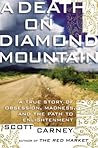
― A Death on Diamond Mountain: A True Story of Obsession, Madness, and the Path to Enlightenment
― A Death on Diamond Mountain: A True Story of Obsession, Madness, and the Path to Enlightenment
“Ten thousand or more years before that our species migrated between continents on rafts of seaweed and surmounted mountains in little more than animal skins and leather soles. Those ancestors probably didn’t think of themselves as different from the environment at all. They knew what we are learning again today. That we are all just here.”
― What Doesn't Kill Us: How Freezing Water, Extreme Altitude, and Environmental Conditioning Will Renew Our Lost Evolutionary Strength
― What Doesn't Kill Us: How Freezing Water, Extreme Altitude, and Environmental Conditioning Will Renew Our Lost Evolutionary Strength
“But there was another option. He could choose to live in the world and guide other souls to enlightenment. Staying would mean never stepping through the door to Nirvana until every other living being was enlightened. It could take all eternity. No one knows how long it took him to make his decision. But Tibetans believe that he stayed. His realization made him a buddha—an enlightened being—but his choice also made him the first Bodhisattva:”
― A Death on Diamond Mountain: A True Story of Obsession, Madness, and the Path to Enlightenment
― A Death on Diamond Mountain: A True Story of Obsession, Madness, and the Path to Enlightenment
“Most people leave Hamilton’s workouts refreshed rather than exhausted.”
― What Doesn't Kill Us: How Freezing Water, Extreme Altitude, and Environmental Conditioning Will Renew Our Lost Evolutionary Strength
― What Doesn't Kill Us: How Freezing Water, Extreme Altitude, and Environmental Conditioning Will Renew Our Lost Evolutionary Strength
“With no challenge to overcome, frontier to press, or threat to flee from, the humans of this millennium are overstuffed, overheated, and understimulated. The”
― What Doesn't Kill Us: How Freezing Water, Extreme Altitude, and Environmental Conditioning Will Renew Our Lost Evolutionary Strength
― What Doesn't Kill Us: How Freezing Water, Extreme Altitude, and Environmental Conditioning Will Renew Our Lost Evolutionary Strength
“In Tibetan Buddhism, taking a root lama creates a sort of indelible connection to a teacher that can’t be erased by any sort of worldly action. The vows of obedience work on the spiritual plane and form a connection that persists in all future rebirths. It entails total submission to the will of another person, and complete trust that they will give you the tools you need to progress spiritually. From the moment she took the vows, McNally gave away control of her own life.”
― A Death on Diamond Mountain: A True Story of Obsession, Madness, and the Path to Enlightenment
― A Death on Diamond Mountain: A True Story of Obsession, Madness, and the Path to Enlightenment
“autoimmune diseases suggests they originate from fundamental disconnect between the outside world and an understimulated biology.”
― What Doesn't Kill Us: How Freezing Water, Extreme Altitude, and Environmental Conditioning Will Renew Our Lost Evolutionary Strength
― What Doesn't Kill Us: How Freezing Water, Extreme Altitude, and Environmental Conditioning Will Renew Our Lost Evolutionary Strength
“What it means to be strong and how to stay at the top of their game in any weather.”
― What Doesn't Kill Us: How Freezing Water, Extreme Altitude, and Environmental Conditioning Will Renew Our Lost Evolutionary Strength
― What Doesn't Kill Us: How Freezing Water, Extreme Altitude, and Environmental Conditioning Will Renew Our Lost Evolutionary Strength
“Exercising the stress response just allows a person to assert a measure of control when the environment gets challenging.”
― What Doesn't Kill Us: How Freezing Water, Extreme Altitude, and Environmental Conditioning Will Renew Our Lost Evolutionary Strength
― What Doesn't Kill Us: How Freezing Water, Extreme Altitude, and Environmental Conditioning Will Renew Our Lost Evolutionary Strength
“Our 7-million-year evolutionary path was dominated by two seasonal challenges—calorie scarcity and mild cold stress. In the last 0.9 inches of our evolutionary path we solved both.” The inevitable result of losing seasonal variation is obesity and chronic disease. As proof, he doesn’t point only to the population of his home state, which ranks at #5 of the most obese states in the nation, but also to the fact that our pets are fat, too. “The only two animals in the world that suffer chronic obesity are humans and the pets we keep at home,” he says. “There’s a connection.”
― What Doesn't Kill Us: How Freezing Water, Extreme Altitude, and Environmental Conditioning Will Renew Our Lost Evolutionary Strength
― What Doesn't Kill Us: How Freezing Water, Extreme Altitude, and Environmental Conditioning Will Renew Our Lost Evolutionary Strength
“To my mind, the goal of life isn’t to live as long as possible, but rather to find our true selves as a reflection of the world that we inhabit. It’s to test our mettle and resolve as we race to make the most of the time we do have. Most”
― The Wedge: Evolution, Consciousness, Stress and the Key to Human Resilience
― The Wedge: Evolution, Consciousness, Stress and the Key to Human Resilience
“In order to prime your body to get to the gasp point earlier (and thus build a stronger wedge and activate the sympathetic nervous system), start with the basic breathing method for approximately 30 quick, deep breaths. Keep your eyes closed and breathe hard enough that you begin to feel light-headed. Now, instead of taking in a deep breath and holding it, let most of the air out of your lungs like you would at the end of a normal breath (by which I mean, don’t force it) and hold your breath with mostly empty lungs. Your body will quickly deplete the oxygen stores available in the lungs and have to rely solely on what is available in the bloodstream. When you get close to needing to gasp, you can extend your limits in two ways. The first is the same as with basic breathing, slowly letting out what is left of the air in your lungs. The second method will become critical later for controlling vasoconstriction. It consists of a rolling set of muscle contractions that you start at your feet and sequentially tighten until you reach up to your head. The process is as follows: Relax your body and clench the muscles in your feet. Then clench your calves, then thighs. Work the contractions up your body until every part of you is tight from the bottom to the top. Clench your stomach, your chest, fingers, biceps, and jaw. Tighten the muscles behind your ears and imagine all of this pressure that you’ve built up going out the top of your head like you were rolling out pizza dough. Whenever I do this I end up making all sorts of grunting noises and squint my face into awkward contortions. It feels like I’m going to pop. But I never have. Once you finally have to breathe, take in a half lungful of air and hold it for about 10 to 15 seconds. This is the recovery breath, and it feels awesome. Now start over from the beginning. Since your lungs start near empty, it won’t be possible to hold your breath as long as with the basic breathing technique. Aim to increase the amount that you hold your breath with each repetition. When I do it I start with a 1-minute hold, then 2 minutes, then 3. Even though everyone’s physiology is different, Hof says that at 3 minutes you’ve cracked into your sympathetic nervous system.”
― What Doesn't Kill Us: How Freezing Water, Extreme Altitude, and Environmental Conditioning Will Renew Our Lost Evolutionary Strength
― What Doesn't Kill Us: How Freezing Water, Extreme Altitude, and Environmental Conditioning Will Renew Our Lost Evolutionary Strength
“The basic breathing technique of holding your breath after hyperventilating acts mostly on parasympathetic nerves. The sympathetic system only starts to kick in closer to the moment when you are struggling to stop yourself from gasping, and it is often best to train with breath-out holds. Breath-in holds are better for getting to your absolute maximum number of pushups or retention duration, but are less efficient at cracking into your nervous system.”
― What Doesn't Kill Us: How Freezing Water, Extreme Altitude, and Environmental Conditioning Will Renew Our Lost Evolutionary Strength
― What Doesn't Kill Us: How Freezing Water, Extreme Altitude, and Environmental Conditioning Will Renew Our Lost Evolutionary Strength
“Despite all of our technology, our bodies are just not ready for a world so completely tamed by our desire for comfort. Without stimulation, the responses that were designed to fight environmental challenges don’t always lie dormant. Sometimes they turn inward and wreak havoc on our insides. An entire field of medical research on autoimmune diseases suggests they originate from fundamental disconnect between the outside world and an understimulated biology.”
― What Doesn't Kill Us: How Freezing Water, Extreme Altitude, and Environmental Conditioning Will Renew Our Lost Evolutionary Strength
― What Doesn't Kill Us: How Freezing Water, Extreme Altitude, and Environmental Conditioning Will Renew Our Lost Evolutionary Strength
“The secret to cracking into our inner biology is as easy as leaving our comfort zones and seeking out just enough environmental stress to make us stronger.”
― What Doesn't Kill Us: How Freezing Water, Extreme Altitude, and Environmental Conditioning Will Renew Our Lost Evolutionary Strength
― What Doesn't Kill Us: How Freezing Water, Extreme Altitude, and Environmental Conditioning Will Renew Our Lost Evolutionary Strength
“There are companies out there that literally make fortunes by selling suffering. How did pain become a luxury good? Could it be that there is a specific sort of pain that might serve a hidden evolutionary function?”
― What Doesn't Kill Us: How Freezing Water, Extreme Altitude, and Environmental Conditioning Will Renew Our Lost Evolutionary Strength
― What Doesn't Kill Us: How Freezing Water, Extreme Altitude, and Environmental Conditioning Will Renew Our Lost Evolutionary Strength
“I am tired, but not exhausted. And at least part of me still wants something more.”
― What Doesn't Kill Us: How Freezing Water, Extreme Altitude, and Environmental Conditioning Will Renew Our Lost Evolutionary Strength
― What Doesn't Kill Us: How Freezing Water, Extreme Altitude, and Environmental Conditioning Will Renew Our Lost Evolutionary Strength
“We had to be strong to survive”
― What Doesn't Kill Us: How Freezing Water, Extreme Altitude, and Environmental Conditioning Will Renew Our Lost Evolutionary Strength
― What Doesn't Kill Us: How Freezing Water, Extreme Altitude, and Environmental Conditioning Will Renew Our Lost Evolutionary Strength
“Tibetans practiced Mahayana Buddhism, which is a different form from the one that had once been popular in India in the medieval era.”
― A Death on Diamond Mountain: A True Story of Obsession, Madness, and the Path to Enlightenment
― A Death on Diamond Mountain: A True Story of Obsession, Madness, and the Path to Enlightenment
“Even so, our nervous systems can really only issue two commands: tension or release. This is the interplay between the sympathetic and parasympathetic wiring. In a moment of crisis, we can engage all of our physical and emotional powers to combat the situation we’re in, or we can relax and let the chaotic forces do with us as they will. At some point our personal powers have limits. There’s only so much that any of us can do. In the battle of man versus nature, nature always wins.”
― The Wedge: Evolution, Consciousness, Stress and the Key to Human Resilience
― The Wedge: Evolution, Consciousness, Stress and the Key to Human Resilience
“activate the sympathetic nervous system), start with the basic breathing method for approximately 30 quick, deep breaths. Keep your eyes closed and breathe hard enough that you begin to feel light-headed. Now, instead of taking in a deep breath and holding it, let most of the air out of your lungs like you would at the end of a normal breath (by which I mean, don’t force it) and hold your breath with”
― What Doesn't Kill Us: How Freezing Water, Extreme Altitude, and Environmental Conditioning Will Renew Our Lost Evolutionary Strength
― What Doesn't Kill Us: How Freezing Water, Extreme Altitude, and Environmental Conditioning Will Renew Our Lost Evolutionary Strength
“In other words, every drug has a potential for side effects. In a way, the drug approach is a little like trying to swat a mosquito with a hand grenade. Sure, a grenade will kill a mosquito, but who knows what else might get caught in the explosion”
― What Doesn't Kill Us: How Freezing Water, Extreme Altitude, and Environmental Conditioning Will Renew Our Lost Evolutionary Strength
― What Doesn't Kill Us: How Freezing Water, Extreme Altitude, and Environmental Conditioning Will Renew Our Lost Evolutionary Strength
“I have been fortunate to have a loving and supportive family throughout my career.”
― What Doesn't Kill Us: How Freezing Water, Extreme Altitude, and Environmental Conditioning Will Renew Our Lost Evolutionary Strength
― What Doesn't Kill Us: How Freezing Water, Extreme Altitude, and Environmental Conditioning Will Renew Our Lost Evolutionary Strength
“Almost since the beginning of recorded history, humans have seen themselves as separate from the natural world. We divide the planet into two categories: things influenced by human action and things that are untouched. The distinction is false. On a global scale we can see that the constant progress of industry has had a dramatic effect on the climate. The humanizing influence of our carbon footprint affects everything. The year that I’m writing this, 2016, is set to be the hottest ever recorded, expected to top the 10 record-breaking years before it. The scale of the problem indicates that humanity and the environment are intrinsically linked. But does that mean we’re making the world more human? Or does it mean that humanity has been part of nature all along? The tiny muscles around your arteries have one unambiguous answer to that question. Despite everything that we try to do to separate ourselves from the world around us, humans are still indisputably part of nature. As byproducts of evolution, the skyscrapers, plastics, and automobiles we manufacture are no less “natural” than a termite mound, a honeycomb, or a beaver dam. Yes, the actions that humans make may be significantly more destructive or ambitious or awe-inspiring or futile, but they are all part of a greater system of causes and effects. We are still animals. Just very smart ones.”
― What Doesn't Kill Us: How Freezing Water, Extreme Altitude, and Environmental Conditioning Will Renew Our Lost Evolutionary Strength
― What Doesn't Kill Us: How Freezing Water, Extreme Altitude, and Environmental Conditioning Will Renew Our Lost Evolutionary Strength