Goodreads helps you follow your favorite authors. Be the first to learn about new releases!
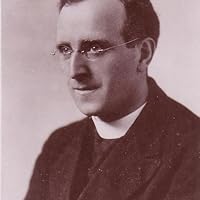
Start by following Philip Hughes.
Showing 1-6 of 6
“What kind of thing is the religion those writings describe? The first difficulty before the enquirer is that the writings do not profess to describe any religion at all, but are supplementary to the basic knowledge which they presuppose. The collection is made up of a variety of things. There are short accounts of the life and death of Jesus Christ; there is an account of the spread of His teaching in the first generation after His earthly life ended; there is a book of mysterious prophecy; and a number of letters written by His principal lieutenants explaining particular difficulties or correcting special errors in belief or practice. The New Testament can thus in no sense be regarded as a systematic exposition of the religion taught by Jesus Christ. It provides, none the less, a wealth of information about this new religion and its Founder sufficient for the historian's purpose, sufficient, that is to say, to make clear the new thing's nature.”
― A History of the Church to the Eve of the Reformation I, II, & III
― A History of the Church to the Eve of the Reformation I, II, & III
“in studying these systematic aberrations we have to remind ourselves at every turn that their bizarre extravagance covers a discussion, and an offered solution, of the most fundamental of all problems. The nature and origin of evil, of man, of God, the purpose of life and its attainment through living -- these are the problems, theoretical and practical, which the Gnostic interpretation of Christianity claimed to answer. Nor was Gnosticism a mere academic discussion. It offered itself as a religious system. It had its ritual and its observances, its regulations and its officials. It was a formidable competitor to traditional Christianity, and to Gnosticism the Church lost some of its best minds and most energetic spirits. Nor did the influence of the movement end with the second century. That century witnessed a life and death struggle between the Church and the Gnostics which ended in the Gnostics' expulsion from the Church, but the defeated theories survived outside the Church to provide, for centuries yet to come, an undercurrent of influences which never ceased to irritate and disturb the development of Catholic thought.”
― A History of the Church to the Eve of the Reformation I, II, & III
― A History of the Church to the Eve of the Reformation I, II, & III
“Nothing in this latest development of Paganism brought it nearer to the chance of giving the world what the Gospel promised to give. It was no rival gospel that the Church had to fear in the mystery religions, or in these new cults from the East. The danger was more simple -- that the mixture of charlatanry and sensuality would find so ready a response in the weakest parts of human nature that there would not even remain a beginning of natural virtue to which the super-natural could make an appeal.”
― A History of the Church to the Eve of the Reformation I, II, & III
― A History of the Church to the Eve of the Reformation I, II, & III
“The writings which make up the New Testament were none of them written to be a primary and sufficient source of information as to what the new religion was. They were all of them evidently addressed to readers already instructed, to recall what they have learnt, to supplement it, to clear up disputes which have arisen since the first instruction. Yet, though none of them profess to describe fully either the teaching or the organisation, we can extract from them valuable information on these two points. Though the facts may be few they are certain, and among these certain facts is the character of the early propaganda and of the primitive organisation.”
― A History of the Church to the Eve of the Reformation I, II, & III
― A History of the Church to the Eve of the Reformation I, II, & III
“St. Justin, faithful to the tradition, explains that there is only one God and that in God there are to be distinguished the Father, the Logos or Son, and the Holy Ghost. The Father is God as the source of divinity and is therefore the Creator who formed all things from nothing. Nevertheless, following St. John (i. 3), creation was, by the Father's will, through the Logos, and so too, through the Logos, has God chosen to reveal himself to man (St. John i. 18) and to redeem him. Creation, revelation and redemption are the work of the one only God. The Logos is truly God; not a creature, not an angel. "God of God Begotten" says Theophilus of Antioch. The Logos exists before all creation, is not himself made nor created, but begotten and therefore truly Son of God. The Logos then is really distinct from the Father. For all the distinction's reality, it does not imply any division of the indivisible divinity, any separation of Logos from the Father.”
― A History of the Church to the Eve of the Reformation I, II, & III
― A History of the Church to the Eve of the Reformation I, II, & III
“The most important achievement of Montanism was that in the first years of the third century it made a convert of one of the very greatest of all Christian writers -- Tertullian. Finally, in different parts of the Church, bishop after bishop turned to expose and denounce the sect, which thereupon showed itself a sect -- for the Montanists preferred their prophets to the bishops. It was in this, precisely, that the novelty of Montanism lay -- "its desire to impose private revelations as a supplement to the deposit of faith, and to accredit them by ecstasies and convulsions that were suspect.”
― A History of the Church to the Eve of the Reformation I, II, & III
― A History of the Church to the Eve of the Reformation I, II, & III