
Goodreads helps you follow your favorite authors. Be the first to learn about new releases!
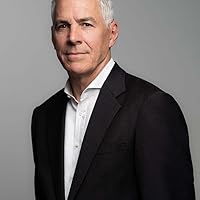
Start by following John Kenney.
Showing 1-30 of 121
“This is it, the thing we’ve been waiting for. It’s right here right now in front of us. Do it now. Whatever it is, do that thing that honors life.”
― I See You've Called in Dead
― I See You've Called in Dead
“A character in the book is asked what the greatest wonder in the world is. And he answers … He says, The greatest wonder is that every day, all around us, people die, but we act as if it couldn’t happen to us.”
― I See You've Called in Dead
― I See You've Called in Dead
“It’s a needed reminder of who you are, of what truly matters. Because it’s your life and there’s still time to write it.”
― I See You've Called in Dead
― I See You've Called in Dead
“We do not know where death awaits us: so let us wait for it everywhere. To practice death is to practice freedom.”
― I See You've Called in Dead
― I See You've Called in Dead
“What would you write if you had to write your obituary? Today, right now. What comes to mind? What memories, days, moments? What people and experiences? I realize, at first glance, that the idea of writing one’s own obituary while still alive may sound morbid. It’s not, though. I promise you. It’s a needed reminder of who you are, of what truly matters. Because it’s your life and there’s still time to write it. Before I have to.”
― I See You've Called in Dead
― I See You've Called in Dead
“There are three secrets to a happy life. Unfortunately, no one knows what they are.”
― I See You've Called in Dead
― I See You've Called in Dead
“How rude of the dead to die. How selfish. Wherever they are, no pain, in eternal darkness or wondrous afterlife. And here we are, tears streaming down our cheeks, the knotted stomach and clammy palms, a feeling akin to falling, in a dream that won’t end.”
― I See You've Called in Dead
― I See You've Called in Dead
“Maybe we’re all obituary writers. And our job is to write the best story we can now.”
― I See You've Called in Dead
― I See You've Called in Dead
“When I read the news, no,” she said. “When I see small children, yes. When I listen to talk radio, no. When I fly on a plane, yes. When I take Amtrak and go through North Philadelphia and see how people have to live, no. When I sit in my kitchen in the winter with coffee and watch the sunrise, yes. When I volunteered at Memorial Sloan Kettering in the children’s unit, no. When I see the parents who sleep next to their children for weeks at a time in that unit, yes. When I make the horrible mistake of glancing at the New York Post, no. When I see some tough-looking kid on the subway who I’ve mentally judged based on how he looks give his seat up for an elderly woman, yes.”
― I See You've Called in Dead
― I See You've Called in Dead
“Life prevails. How strange and wondrous. In the midst of death, life prevails, calls to us, begs us, says, Come, please, don’t you dare waste this precious gift.”
― I See You've Called in Dead
― I See You've Called in Dead
“God was bored with the humans, so he invented alcohol.”
― Truth in Advertising
― Truth in Advertising
“I don't understand death. The biology of it, yes, but not what remains for the living. Pain and memory and an empty place. I think to fully get it, you have to feel it so profoundly that it upsets your sense of the world. It has to make you a little crazy. But it also has to make you love this miracle of existence to the point of bursting. If it doesn't, well, then you don't get it yet.”
― I See You've Called in Dead
― I See You've Called in Dead
“He’s a … he’s a dear friend,” I continued, “who I’ve never told how much I love. And when I first started my job with him and his annoying office habits, he said to me, he said, ‘The good news is that someone died today.’ I thought he was joking. He later explained that this thing we do, the writing of these things, the celebration of someone’s life, it’s a gift, a reminder. What death dares us to do, is celebrate it. To celebrate the gift of life in its fleeting face.” I looked down at my speech, at the last line, and smiled. I took the pages, folded them in half, and put them in my jacket pocket. “Here we are, as Tim would have said, all of us, on this lovely day, alive. What are we going to do with that?”
― I See You've Called in Dead
― I See You've Called in Dead
“This … miracle that is existence. Which we layer with so much. With anxiety and fear and greed and smallness and what’s next and hurry up and I’ve got a meeting and all the … stuff … that gets in the way. I’m not saying we should all go live like a monk. I’m saying that if you haven’t lived the life you want, if you haven’t loved life, then at the end, I think a deep and very sad regret comes over you. But if you have, if you’ve lived well … friends and family and … if you’ve lived … then just as true is the peace you feel.”
― I See You've Called in Dead
― I See You've Called in Dead
“What a thing it is to live in New York City. To move here and not know a soul. A clean slate, a chance to walk away from the past and start anew...I will feign coolness. I will slowly learn the art of not showing that I am surprised or impressed or moved. I will feel the elation that comes from anonymity. I will feel the comfortable loneliness of wandering the avenues in the rush of humanity, the side streets by myself.”
― Truth in Advertising
― Truth in Advertising
“see a red cardinal from time to time, out the back window, on the old ash tree, occasionally hopping onto the back deck. They are hard not to notice. Their color, their particular beauty. I did a search online and came across an interesting story. Apparently red cardinals can be spiritual messengers. The word cardinal comes from the Latin word cardo, meaning hinge or axis. Like a door’s hinge, the cardinal is a kind of doorway between Earth and the spirit world, the story said. There are, depending upon how late you are willing to stay up and how much you want to read and how much you miss your friend, many myths around the cardinal having to do with renewal and good health. They are, say some, a visit from the other side.”
― I See You've Called in Dead
― I See You've Called in Dead
“Are we ever fully honest with someone else? I don’t mean to suggest outright lies, but do we really express those quieter, deeper feelings? Those amorphous, hazy things, core things that even we struggle to admit to ourselves. Do we share everything?”
― I See You've Called in Dead
― I See You've Called in Dead
“The loveliest place to be is with someone who has lived.”
― I See You've Called in Dead
― I See You've Called in Dead
“The world changed,” Howard said to his glass. “Broke in a way. I see things, read things, watch things, and I think … I don’t understand that. The inanity, the vulgarity, the cruelty.” He turned to look at me. “Is it just me, getting older?” “I think something has changed.” “Something fundamental, perhaps. And so we retreat. Sure, we do our jobs, provide for our families. But then we seek cover. I subscribe to a channel on YouTube called Relaxing Mowing. It’s speeded-up footage of people mowing their lawns, trimming their hedges. The world made clean and perfect. They put classical music over it. If someone described that to me five years ago, I would say that person was insane. Now, I love it. I watch these in bed at night. I watch videos of Fred Astaire and Cyd Charisse dancing. The elegance and grace. Where has that gone? Now we have twerking.”
― I See You've Called in Dead
― I See You've Called in Dead
“No one tells you about how, in the days and weeks after, when others have moved on, perhaps rarely thinking of the event, the passing, you sit there and think, How am I supposed to live?”
― I See You've Called in Dead
― I See You've Called in Dead
“So what now? After we all leave this church, leave the reception, go home, put in laundry, watch a show on Netflix, go to bed, get up tomorrow. And tomorrow. And tomorrow. This has to mean something. Something lasting. I mean, why do we do this thing, wakes and funerals? A sign of respect, of course, for the dead. A sign of respect for the family. But I wonder if it’s also for all of us. Each of us here. Surely it’s a reminder. But perhaps also a call to a state of grace, if only for a few moments. A pause to remember how fleeting our own mortality is. I had an office mate.” I was tempted to look at Tuan but couldn’t quite do it.”
― I See You've Called in Dead
― I See You've Called in Dead
“She held up her hand as if she had been badly scalded and said that my attempt to mansplain in the context of my white, cisgender privilege was repugnant to her and that she frankly wasn’t sure that even an immediate apology would erase the trauma my words had caused but that if I wrote an essay asking for forgiveness for my tone-deafness to the LGBTQ community as well as people of color, minorities, and the non-able-bodied, that might be a start.”
― I See You've Called in Dead
― I See You've Called in Dead
“What is it we remember of a life? From those 28,000 days if we are lucky enough to live that long? Those 960 months? What was Molly Donnelly remembering as she drove home that afternoon? Surely our days are measured in small things, small connections, small thoughts. It's not meetings and deals closed. It is our children. Talking of the day, of lunch, of coloring, of nonsense, the parent listening, half listening, not listening, because this is a thing we do, we daily do, morning and afternoon, the little holy rituals that make up a day, a life, drop-off and pick-up, an expected thing, a known thing, a wave to the crossing guard, to a mom friend, to Ravi and Angie and Brandon, little school friends. My, how they've grown. New lunch box? New backpack? Good day? Hold my hand, sweetheart. Listen to your mother. A shared smile with the other mothers. They know this world. Can you believe this new principal? Did you hear so-and-so got laid off? The deli charges $5 for half a gallon of milk now. Ineffable feelings. The best kind. Words overrated. Time to go home now. She puts him in the car, in his car seat, buckles him in, burying her face in his neck, a little kiss. We'll go home and have a snack and play and then dinner and a bath and bed. A story. Frog and Toad again. Fishy kisses. Super-tuck. He asks for a super-tuck. That's what he calls it. Night, Mom. See you tomorrow and tomorrow and tomorrow. We have time. Of course we have time. Please dear God.”
― I See You've Called in Dead
― I See You've Called in Dead
“See you tomorrow and tomorrow and tomorrow. We have time. Of course we have time. Please dear God.”
― I See You've Called in Dead
― I See You've Called in Dead
“He seemed to know everyone, and yet, when you were with him, you felt as if you were his best friend.”
― I See You've Called in Dead
― I See You've Called in Dead
“I wonder why there isn’t a rule that says that you cannot watch your mother die.”
― I See You've Called in Dead
― I See You've Called in Dead
“Words matter.”
― Truth in Advertising
― Truth in Advertising
“He paused and looked down. “Do you honestly think, on days like today, that I’m not angry with God, that I’m not compelled to doubt, to swear and scream as I put these garments on? I am. And may God forgive me. Until I see her family’s faces. Know that she lives on through them. That she wills us, urges us, to live. Right now. Because this is it. The thing we’ve been waiting for? It’s right here, right now, in front of us. Do it now. Whatever it is. Do that thing that honors life.”
― I See You've Called in Dead
― I See You've Called in Dead
“character in the book is asked what the greatest wonder in the world is. And he answers … He says, The greatest wonder is that every day, all around us, people die, but we act as if it couldn’t happen to us. And yet … living is hard. What’s the point? Why are we even here? How can we know all this … stuff about how to live, about how there is literally a one-in-four-hundred-trillion chance of ever being born and yet, in the next moment, when some jackass cuts me off on the Belt Parkway and then gives”
― I See You've Called in Dead
― I See You've Called in Dead
“I mean, why do we do this thing, wakes and funerals? A sign of respect, of course, for the dead. A sign of respect for the family. But I wonder if it’s also for all of us. Each of us here. Surely it’s a reminder. But perhaps also a call to a state of grace, if only for a few moments. A pause to remember how fleeting our own mortality is.”
― I See You've Called in Dead
― I See You've Called in Dead


