Goodreads helps you follow your favorite authors. Be the first to learn about new releases!
Start by following Stuart Vyse.

Showing 1-6 of 6
“Although, as the saying goes, 'It is difficult to make predictions, especially about the future, science is likely to be the standard for all natural phenomena for the foreseeable future. There will always be some people who—like creationists—look to religious texts rather than science for their understanding of the natural world, but the evidence suggests that science not religion-provides our clearest understanding of the universe. As a result, today the word superstition means 'bad science', rather than bad religion.”
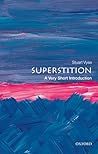
― Superstition: A Very Short Introduction
― Superstition: A Very Short Introduction
“The concept of superstition has been with us for millennia, and yet today it has no agreed-upon meaning. . . . If it carries a single enduring connotation, it is one of disapproval.”
― Superstition: A Very Short Introduction
― Superstition: A Very Short Introduction
“Being superstitious is not the kind of thing people brag about, but if you look around, there is quite a bit of it out there.”
― Superstition: A Very Short Introduction
― Superstition: A Very Short Introduction
“The concept of superstition began as the Greek word deisdaimonia (δεισιδαιμονία), which in the 4th century BCE had the positive meaning 'scrupulous in religious matters'; but a century later it had acquired a more negative meaning, inching it closer to our modern understanding of superstition.”
― Superstition: A Very Short Introduction
― Superstition: A Very Short Introduction
“The origin of the concept [of superstition] is found in ancient Greece, at least as far back as the 4th century BCE, and for the next 2,000 years superstition stood in contrast to the religious practices recommended by the elites. The word has often been levelled at practices that, even today, we would consider magical or paranormal, and yet versions of most of these practices are still with us.”
― Superstition: A Very Short Introduction
― Superstition: A Very Short Introduction
“The idea that people act freely upon the world has been part of our common understanding for a very long time. In Book III of his Nichomachian Ethics, Aristotle provides a lengthy analysis of the differences between actions that are “counter-voluntary,” voluntary, or made “by decision.” 6 According to Aristotle, counter-voluntary action happens by force or ignorance and evokes sympathy or pity in the observer. If a gangster kidnapped your family and
threatened to kill them unless you steal money from your employer, complying would be a counter-voluntary action by force. Counter-voluntary action by ignorance is something you do voluntarily but produces a regrettable effect, such as attacking your son because you mistake him for an intruder. Similarly, in Aristotle’s view, acts done in anger are counter-voluntary.
In contrast, voluntary behavior has its origin within the person and is neither ignorant nor driven by strong emotion. In Aristotle’s view, animals and children are capable of voluntary action, but not decision. Furthermore, impulsive action is voluntary but does not involve decision in Aristotle’s sense. Only mature adults who act after reasoned deliberation are capable of voluntary action with decision.”
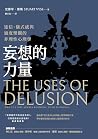
― The Power of Delusion: The Irrational Psychology of Superstition, Ritualism, and Overoptimism
threatened to kill them unless you steal money from your employer, complying would be a counter-voluntary action by force. Counter-voluntary action by ignorance is something you do voluntarily but produces a regrettable effect, such as attacking your son because you mistake him for an intruder. Similarly, in Aristotle’s view, acts done in anger are counter-voluntary.
In contrast, voluntary behavior has its origin within the person and is neither ignorant nor driven by strong emotion. In Aristotle’s view, animals and children are capable of voluntary action, but not decision. Furthermore, impulsive action is voluntary but does not involve decision in Aristotle’s sense. Only mature adults who act after reasoned deliberation are capable of voluntary action with decision.”
― The Power of Delusion: The Irrational Psychology of Superstition, Ritualism, and Overoptimism