Goodreads helps you follow your favorite authors. Be the first to learn about new releases!
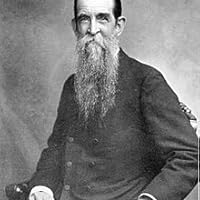
Start by following Henry Clay Trumbull.
Showing 1-2 of 2
“Character gains through its expression, and loses through its repression. Love grows through its expression. Sympathy grows through its expression. Knowledge grows through its expression. The artistic sense grows through its expression. The religious sentiment grows through its expression. The capacity for instruction, for administration, for command, grows through its expression. The more a man does in any line of wise endeavor, the more he can do in that line, and the more of a man he is in that line. And the refraining from the free expression of love, or of sympathy, or of knowledge, or of the artistic sense, or of the religious sentiment, or of the power of instruction, of administration, or of command, both limits and lessens that which is thus repressed.
To possess and to exhibit an admirable personal character is a duty incumbent on every one. In order to possess such a character, its exhibit by its expression is a necessity. He who does not endeavor to express those traits and qualities which are the exhibit of an admirable personal character, cannot hope to retain such a character, even if it were his by nature; and he who does endeavor to express them, can hope to gain the character which they represent, even though he lacked it before.”
―
To possess and to exhibit an admirable personal character is a duty incumbent on every one. In order to possess such a character, its exhibit by its expression is a necessity. He who does not endeavor to express those traits and qualities which are the exhibit of an admirable personal character, cannot hope to retain such a character, even if it were his by nature; and he who does endeavor to express them, can hope to gain the character which they represent, even though he lacked it before.”
―
“Sooner or later the average child comes to feel that, the fewer questions he asks, the more of a man he will be; and so he represses his impulse to inquire into the nature and purpose and meaning of that which newly interests him until, perhaps, he is no longer curious concerning that which he does not understand, or is hopeless of any satisfaction being given to him concerning the many problems which perplex his wondering mind. By the time he has reached young manhood, he who was full of questions in order that he might have knowledge, seems to be willing to live and die in ignorance, rather than to make a spectacle of himself by multiplying questions that may be an annoyance to others, or that may be deemed a source of discredit to himself.”
― Hints on Child Training
― Hints on Child Training