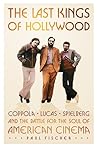
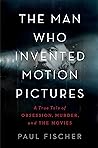
Goodreads helps you follow your favorite authors. Be the first to learn about new releases!
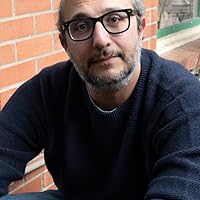
Start by following Paul Fischer.
Showing 1-30 of 37
“Censorship became so stringent that even a scene in which a character complained too strongly about the weather could be considered “antisocial” and ordered removed.”
― A Kim Jong-Il Production: The Extraordinary True Story of a Kidnapped Filmmaker, His Star Actress, and a Young Dictator's Rise to Power
― A Kim Jong-Il Production: The Extraordinary True Story of a Kidnapped Filmmaker, His Star Actress, and a Young Dictator's Rise to Power
“when Shin needed special-effects scale models to achieve a shot of an exploding train for the climax of Runaway, he asked, tongue-in-cheek, whether Kim wouldn’t just give him instead a real train to blow up. To his surprise, an actual, functioning train was delivered to the set, loaded to the brim with explosives. Shin had only one take to get it right, but that was a lovely problem to have. Runaway’s final train explosion became one of North Korean cinema’s iconic images.”
― A Kim Jong-Il Production: The Extraordinary True Story of a Kidnapped Filmmaker, His Star Actress, and a Young Dictator's Rise to Power
― A Kim Jong-Il Production: The Extraordinary True Story of a Kidnapped Filmmaker, His Star Actress, and a Young Dictator's Rise to Power
“Shrimp among whales we may be, but some of us refuse to accept the whales as the masters of our own fate. Looking at Choi Eun-Hee, there is a lot to be said for that.”
― A Kim Jong-Il Production: The Extraordinary True Story of a Kidnapped Filmmaker, His Star Actress, and a Young Dictator's Rise to Power
― A Kim Jong-Il Production: The Extraordinary True Story of a Kidnapped Filmmaker, His Star Actress, and a Young Dictator's Rise to Power
“It’s the trajectory of every revolution, you know. As Eric Hoffer said, every great idea starts as a movement, becomes a business, and winds up as a racket. That’s just nature. That’s what happens. It’s like the life and death of any organism. All you can do is delay the curve.”
― The Last Kings of Hollywood: Coppola, Lucas, Spielberg—and the Battle for the Soul of American Cinema
― The Last Kings of Hollywood: Coppola, Lucas, Spielberg—and the Battle for the Soul of American Cinema
“The Great Leader loved museums. He had so many built that North Korea even has a Museum of the Construction of the Museum of the Construction of the Metro.”
― A Kim Jong-Il Production: The Extraordinary True Story of a Kidnapped Filmmaker, His Star Actress, and a Young Dictator's Rise to Power
― A Kim Jong-Il Production: The Extraordinary True Story of a Kidnapped Filmmaker, His Star Actress, and a Young Dictator's Rise to Power
“a film’s budget, he said, was like par on a golf course, an ideal number to aim for, and handicapping par for a “course” like Jaws was as difficult as playing golf “with new clubs on a strange course with an exploding ball”—”
― The Last Kings of Hollywood: Coppola, Lucas, Spielberg—and the Battle for the Soul of American Cinema
― The Last Kings of Hollywood: Coppola, Lucas, Spielberg—and the Battle for the Soul of American Cinema
“He read and reread his chosen chapters. He covered them in notes and scribbles”
― The Last Kings of Hollywood: Coppola, Lucas, Spielberg—and the Battle for the Soul of American Cinema
― The Last Kings of Hollywood: Coppola, Lucas, Spielberg—and the Battle for the Soul of American Cinema
“his mother. A little like Laurence Olivier, who always felt he was acting for his beloved”
― A Kim Jong-Il Production: The Extraordinary True Story of a Kidnapped Filmmaker, His Star Actress, and a Young Dictator's Rise to Power
― A Kim Jong-Il Production: The Extraordinary True Story of a Kidnapped Filmmaker, His Star Actress, and a Young Dictator's Rise to Power
“Oligarchies are the death of innovation.”
― The Last Kings of Hollywood: Coppola, Lucas, Spielberg—and the Battle for the Soul of American Cinema
― The Last Kings of Hollywood: Coppola, Lucas, Spielberg—and the Battle for the Soul of American Cinema
“Jong-Il’s elite team of bodyguards was one of the most sinister, intriguing aspects of his way of life. He kept 120 of them and preferred them to be orphans; once hired they were not permitted to visit home or to ever leave the Leader’s side. If they wanted to marry, they were only allowed to marry a typist or secretary from a specific unit of the Party, and the matchmaking procedure itself was bizarre. A bodyguard had to apply to his supervisor for marriage, and if the application was approved—likely this decision was Jong-Il’s—the bodyguard would be called to his supervisor’s office on the Third Floor. Twenty photographs were placed on the supervisor’s desk, facedown. Blindly the bodyguard would pick a picture, which the supervisor would then flip over. The woman in the photograph would be the man’s wife. If the bodyguard refused to marry the stranger, he would have to wait another two years before being able to reapply—and this time he would have to marry the girl whose photograph he had blindly drawn, whether he liked the look of her or not, at risk of being dismissed.”
― A Kim Jong-Il Production: The Extraordinary True Story of a Kidnapped Filmmaker, His Star Actress, and a Young Dictator's Rise to Power
― A Kim Jong-Il Production: The Extraordinary True Story of a Kidnapped Filmmaker, His Star Actress, and a Young Dictator's Rise to Power
“Francis and Puzo wrote a similar idea into The Godfather. A sort of motto, a capitalist self-justification that worked as a counterpoint to “I believe in America.” A line we hear from several characters, but which Michael Corleone only utters when he finally joins in the killing: “It’s not personal. It’s strictly business.” That was what America told you, as far as Francis saw it. That it was only business as, literally or metaphorically—firing you after decades in a job, say, or taking your films and your company away from you because it had done the math and you weren’t worth the money—America blew your brains all over its nice Ivy League suit.”
― The Last Kings of Hollywood: Coppola, Lucas, Spielberg—and the Battle for the Soul of American Cinema
― The Last Kings of Hollywood: Coppola, Lucas, Spielberg—and the Battle for the Soul of American Cinema
“Over tasteless room service breakfast”
― The Last Kings of Hollywood: Coppola, Lucas, Spielberg—and the Battle for the Soul of American Cinema
― The Last Kings of Hollywood: Coppola, Lucas, Spielberg—and the Battle for the Soul of American Cinema
“He had been the leader of his country for forty-six years. He had outlived Mao by nearly twenty years and Stalin by forty; his reign had seen off nine U.S. presidents, twenty-one Japanese prime ministers, and six South Korean presidents. And he had succeeded in passing the reins of power to his son. *”
― A Kim Jong-Il Production: The Extraordinary True Story of a Kidnapped Filmmaker, His Star Actress, and a Young Dictator's Rise to Power
― A Kim Jong-Il Production: The Extraordinary True Story of a Kidnapped Filmmaker, His Star Actress, and a Young Dictator's Rise to Power
“(“My favorite quote of Michelangelo’s,” Pacino once said: “Free me of myself, Lord, that I may please you.”)”
― The Last Kings of Hollywood: Coppola, Lucas, Spielberg—and the Battle for the Soul of American Cinema
― The Last Kings of Hollywood: Coppola, Lucas, Spielberg—and the Battle for the Soul of American Cinema
“He wanted Zoetrope to lead the way into the new era. He’d produce one film a month”
― The Last Kings of Hollywood: Coppola, Lucas, Spielberg—and the Battle for the Soul of American Cinema
― The Last Kings of Hollywood: Coppola, Lucas, Spielberg—and the Battle for the Soul of American Cinema
“The people are still required, under pain of imprisonment, to thank Kim Il-Sung and Kim Jong-Il every morning for their food, even though Kim Il-Sung is dead and they have no food.”
― A Kim Jong-Il Production: The Extraordinary True Story of a Kidnapped Filmmaker, His Star Actress, and a Young Dictator's Rise to Power
― A Kim Jong-Il Production: The Extraordinary True Story of a Kidnapped Filmmaker, His Star Actress, and a Young Dictator's Rise to Power
“Jong-Il understood that his father would not choose as his successor the man who promised to be best for North Korea or for the people. His father would choose the man who promised to be best for Kim Il-Sung, even after Kim Il-Sung himself was dead.”
― A Kim Jong-Il Production: The Extraordinary True Story of a Kidnapped Filmmaker, His Star Actress, and a Young Dictator's Rise to Power
― A Kim Jong-Il Production: The Extraordinary True Story of a Kidnapped Filmmaker, His Star Actress, and a Young Dictator's Rise to Power
“They came out of the diner to find a long line of people queuing outside of Mann’s Chinese Theatre. When George enquired”
― The Last Kings of Hollywood: Coppola, Lucas, Spielberg—and the Battle for the Soul of American Cinema
― The Last Kings of Hollywood: Coppola, Lucas, Spielberg—and the Battle for the Soul of American Cinema
“The country’s entire frog population was eaten to extinction within a year.”
― A Kim Jong-Il Production: The Extraordinary True Story of a Kidnapped Filmmaker, His Star Actress, and a Young Dictator's Rise to Power
― A Kim Jong-Il Production: The Extraordinary True Story of a Kidnapped Filmmaker, His Star Actress, and a Young Dictator's Rise to Power
“Sometimes the police would shut down the electricity early, knowing that tapes and DVDs couldn’t be ejected without power, then raid every home in the neighborhood, arresting anyone found with a foreign movie still in their player. DVD smugglers and salespeople were arrested and executed.”
― A Kim Jong-Il Production: The Extraordinary True Story of a Kidnapped Filmmaker, His Star Actress, and a Young Dictator's Rise to Power
― A Kim Jong-Il Production: The Extraordinary True Story of a Kidnapped Filmmaker, His Star Actress, and a Young Dictator's Rise to Power
“The North Korean news followed up with a documentary about a greedy man whose stomach burst from eating too much food, suggesting that starving was actually good for you. There is no record of how that tactic was received.”
― A Kim Jong-Il Production: The Extraordinary True Story of a Kidnapped Filmmaker, His Star Actress, and a Young Dictator's Rise to Power
― A Kim Jong-Il Production: The Extraordinary True Story of a Kidnapped Filmmaker, His Star Actress, and a Young Dictator's Rise to Power
“Rather than a state of equal brotherhood and sisterhood, Kim had introduced an elaborate social order in which the eleven million ordinary North Korean citizens were classified according to their perceived political reliability. The songbun system, as it was known, ruthlessly reorganized the entire social system of North Korea into a communistic pseudofeudal system, with every individual put through eight separate background checks, their family history taken into account as far back as their grandparents and second cousins. Your final rating, or songbun, put you in one of fifty-one grades, divided into three broad categories, from top to bottom: the core class, the wavering class, and the hostile class. The hostile class included vast swathes of society, from the politically suspect (“people from families of wealthy farmers, merchants, industrialists, landowners; pro-Japan and pro-U.S. people; reactionary bureaucrats; defectors from the South; Buddhists, Catholics, expelled public officials”) to kiaesaeng (the Korean equivalent of geishas) and mudang (rural shamans). Although North Koreans weren’t informed of their new classification, it quickly became clear to most people what class they had been assigned. North Koreans of the hostile class were banned from living in Pyongyang or in the most fertile areas of the countryside, and they were excluded from any good jobs. There was virtually no upward mobility—once hostile, forever hostile—but plenty downward. If you were found to be doing anything that was illegal or frowned upon by the regime, you and your family’s songbun would suffer. Personal files were kept locked away in local offices, and were backed up in the offices of the Ministry for the Protection of State Security and in a blast-resistant vault in the mountains of Yanggang province. There was no way to tamper with your status, and no way to escape it. The most cunning part of it all was that Kim Il-Sung came up with a way for his subjects to enforce their own oppression by organizing the people into inminban (“people’s groups”), cooperatives of twenty or so families per neighborhood whose duty it was to keep tabs on one another and to inform on any potentially criminal or subversive behavior. These were complemented by kyuch’aldae, mobile police units on constant lookout for infringers, who had the authority to burst into your home or office at any time of day or night. Offenses included using more than your allocated quota of electricity, wearing blue jeans, wearing clothes bearing Roman writing (a “capitalist indulgence”) and allowing your hair to grow longer than the authorized length. Worse still, Kim decreed that any one person’s guilt also made that person’s family, three generations of it, guilty of the same crime. Opposing the regime meant risking your grandparents, your wife, your children—no matter how young—being imprisoned and tortured with you. Historically, Koreans had been subject to a caste system similar to India’s and equally as rigid. In the early years of the DPRK, the North Korean people felt this was just a modernized revitalization of that traditional social structure. By the time they realized something was awfully wrong, that a pyramid had been built, and that at the top of it, on the very narrow peak, sat Kim Il-Sung, alone, perched on the people’s broken backs, on their murdered families and friends, on their destroyed lives—by the time they paused and dared to contemplate that their liberator, their savior, was betraying them—in fact, had always betrayed them—it was already much, much too late.”
― A Kim Jong-Il Production: The Extraordinary True Story of a Kidnapped Filmmaker, His Star Actress, and a Young Dictator's Rise to Power
― A Kim Jong-Il Production: The Extraordinary True Story of a Kidnapped Filmmaker, His Star Actress, and a Young Dictator's Rise to Power
“Pacino later wrote in his memoir, Sonny Boy. “It stuck with me for a long time. Life’s on the wire, man. That’s my acting, my life. When I work, I’m on the wire. When I’m going for it. When I’m taking chances. I want to take chances. I want to fly and fail … It’s what’s kept me alive.”
― The Last Kings of Hollywood: Coppola, Lucas, Spielberg—and the Battle for the Soul of American Cinema
― The Last Kings of Hollywood: Coppola, Lucas, Spielberg—and the Battle for the Soul of American Cinema
“The crew on Temple of Doom were shipping the footage shot every day back to London”
― The Last Kings of Hollywood: Coppola, Lucas, Spielberg—and the Battle for the Soul of American Cinema
― The Last Kings of Hollywood: Coppola, Lucas, Spielberg—and the Battle for the Soul of American Cinema
“Film is power,” Francis told Milius. “If you have enough film”
― The Last Kings of Hollywood: Coppola, Lucas, Spielberg—and the Battle for the Soul of American Cinema
― The Last Kings of Hollywood: Coppola, Lucas, Spielberg—and the Battle for the Soul of American Cinema
“You just have to make something beautiful,” Francis said, “you can’t worry about if anybody will see it. You can distribute it. Success is a drug. It’s like a woman: if you chase it, you won’t get it.”
― The Last Kings of Hollywood: Coppola, Lucas, Spielberg—and the Battle for the Soul of American Cinema
― The Last Kings of Hollywood: Coppola, Lucas, Spielberg—and the Battle for the Soul of American Cinema
“Fast, good, cheap: pick two”
― The Last Kings of Hollywood: Coppola, Lucas, Spielberg—and the Battle for the Soul of American Cinema
― The Last Kings of Hollywood: Coppola, Lucas, Spielberg—and the Battle for the Soul of American Cinema
“George would put down his camera and start writing”
― The Last Kings of Hollywood: Coppola, Lucas, Spielberg—and the Battle for the Soul of American Cinema
― The Last Kings of Hollywood: Coppola, Lucas, Spielberg—and the Battle for the Soul of American Cinema
“(Later in 1978, the Chinese premier Deng Xiaoping visited Pyongyang and, upon seeing the shining gold idol, expressed concern over how Beijing’s money was being spent. The gold covering was stripped and replaced by an equally shiny copper.) She”
― A Kim Jong-Il Production: The Extraordinary True Story of a Kidnapped Filmmaker, His Star Actress, and a Young Dictator's Rise to Power
― A Kim Jong-Il Production: The Extraordinary True Story of a Kidnapped Filmmaker, His Star Actress, and a Young Dictator's Rise to Power
“Nobody expects one mega-hit”
― The Last Kings of Hollywood: Coppola, Lucas, Spielberg—and the Battle for the Soul of American Cinema
― The Last Kings of Hollywood: Coppola, Lucas, Spielberg—and the Battle for the Soul of American Cinema