Goodreads helps you follow your favorite authors. Be the first to learn about new releases!
Start by following Anthony Heilbut.

Showing 1-18 of 18
“personal animosity resonated throughout essays written as if music, the most subjective of aesthetic forms, had been elevated to the objectivity of scientific principles.”
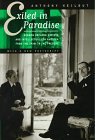
― Exiled in Paradise: German Refugee Artists and Intellectuals in America from the 1930s to the Present
― Exiled in Paradise: German Refugee Artists and Intellectuals in America from the 1930s to the Present
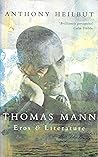
“It was as if Heinrich too were beckoning an old age of despair, not of premature death but of a lingering death-in-life.”
― Thomas Mann: Eros and Literature
― Thomas Mann: Eros and Literature
“Although they spent too much time condemning one another, the real focus of their self-hatred was the German in them. Whether Jew or radical or simple patriot, they had all been devotees of German culture. Now that devotion inspired contempt. “They are a shitty people,” Brecht declared, lamenting that “everything bad in me” had a German origin. Nevertheless, he continued to write in German. In America, Klaus Mann was more abrupt in divorcing himself from the language of his youth. “Why remain loyal to your mother”
― Exiled in Paradise: German Refugee Artists and Intellectuals in America from the 1930s to the Present
― Exiled in Paradise: German Refugee Artists and Intellectuals in America from the 1930s to the Present
“Having lost his worldly goods, the refugee had become a fabulous collector, lugging around the portable property of memory and quotation.”
― Exiled in Paradise: German Refugee Artists and Intellectuals in America from the 1930s to the Present
― Exiled in Paradise: German Refugee Artists and Intellectuals in America from the 1930s to the Present
“No doubt even more unforeseen denouements lie in somebody's archive, though few remain to care about them.”
―
―
“Their confidence in President Roosevelt was excessive. After the war, it became clear how little he had protected émigré interests: he did not publicize the existence of the death camps and he waited until January 22, 1944, to establish the War Refugee Board, long after it could have assisted in any organized rescue attempt. Perhaps the émigrés’ initial distrust had not been”
― Exiled in Paradise: German Refugee Artists and Intellectuals in America from the 1930s to the Present
― Exiled in Paradise: German Refugee Artists and Intellectuals in America from the 1930s to the Present
“in French camps the habit of quoting became “virtually epidemic.” In part, this was a legacy of Prussian education, with its rote exercises. It was also an attempt to combat the murderers of German culture.”
― Exiled in Paradise: German Refugee Artists and Intellectuals in America from the 1930s to the Present
― Exiled in Paradise: German Refugee Artists and Intellectuals in America from the 1930s to the Present
“Adorno treated popular culture as a ghastly trick played by capitalism on the masses.”
― Exiled in Paradise: German Refugee Artists and Intellectuals in America from the 1930s to the Present
― Exiled in Paradise: German Refugee Artists and Intellectuals in America from the 1930s to the Present
“Yet others hummed snatches of German music: one émigré wrote that the melodies of Schubert or Beethoven seemed to reconstitute his dead father.”
― Exiled in Paradise: German Refugee Artists and Intellectuals in America from the 1930s to the Present
― Exiled in Paradise: German Refugee Artists and Intellectuals in America from the 1930s to the Present
“I don’t write lovely music.” He was willing, however, to compose the score for the MGM production of The Good Earth. His demands were appropriate but unacceptable. He wanted fifty thousand dollars, and complete control of the soundtrack; the actors were to speak in the same pitch and key he composed in (as if Paul Muni and Luise Rainer didn’t have enough difficulty playing Chinese peasants!).”
― Exiled in Paradise: German Refugee Artists and Intellectuals in America from the 1930s to the Present
― Exiled in Paradise: German Refugee Artists and Intellectuals in America from the 1930s to the Present
“when Arnold Schoenberg replied to a student who had dreamed of composing a “soaring melody,” that the proper word, surely, was “snoring.” Such puns could be funny, cruel, and tone-deaf (in seven nations and twelve tones), comments of exasperation as often as they were attempts at endearment.”
― Exiled in Paradise: German Refugee Artists and Intellectuals in America from the 1930s to the Present
― Exiled in Paradise: German Refugee Artists and Intellectuals in America from the 1930s to the Present
“The easy lilt of a military anthem, the sexual glamour of uniforms, the evangelical fervor of a demagogue — the Berliners recognized the dangers because they had become susceptible themselves.”
― Exiled in Paradise: German Refugee Artists and Intellectuals in America from the 1930s to the Present
― Exiled in Paradise: German Refugee Artists and Intellectuals in America from the 1930s to the Present
“Feuchtwanger’s more dubious actions — e.g., he threw away cables that contained information pertaining to the prisoners but addressed to him personally, without informing the other prisoners of the cables’ contents. When they learned of his callousness, the inmates were out for blood, but Schoenberner protected Feuchtwanger with the condescending defense that “by his own dim lights” he was “quite innocent.”
― Exiled in Paradise: German Refugee Artists and Intellectuals in America from the 1930s to the Present
― Exiled in Paradise: German Refugee Artists and Intellectuals in America from the 1930s to the Present
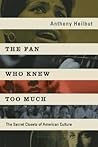
“1963 March on Washington. Mahalia Jackson sang a triumphant “How I Got Over,” recalling the storefront singer of her youth and not the officious matriarch of national television. But she did more than set the crowd up for Dr. Martin Luther King’s speech. When Dr. King’s first paragraphs didn’t excite, the showman in Mahalia instructed her to go with the hits. “Martin, tell them about the dream,” she kept repeating until he got the message. Without her insistence, America would not have heard his most famous words.”
― The Fan Who Knew Too Much: Aretha Franklin, the Rise of the Soap Opera, Children of the Gospel Church, and Other Meditations
― The Fan Who Knew Too Much: Aretha Franklin, the Rise of the Soap Opera, Children of the Gospel Church, and Other Meditations
“another cultural hero, the German Jew Heinrich Heine. Carrying these poets with them out of Germany, still using them as they would have wished to be used, refugees saw themselves as the last protectors of the real humanist legacy, and they refused to yield it to the Nazis.”
― Exiled in Paradise: German Refugee Artists and Intellectuals in America from the 1930s to the Present
― Exiled in Paradise: German Refugee Artists and Intellectuals in America from the 1930s to the Present
“Thus another émigré, the Nobel Prize winner Elias Canetti, wrote, “If, despite everything, I should survive, then I owe it to Goethe.”
― Exiled in Paradise: German Refugee Artists and Intellectuals in America from the 1930s to the Present
― Exiled in Paradise: German Refugee Artists and Intellectuals in America from the 1930s to the Present
“Just as Schoenberg, in Adorno’s phrase, liberated color as a compositional element in music (Schoenberg was himself a painter),”
― Exiled in Paradise: German Refugee Artists and Intellectuals in America from the 1930s to the Present
― Exiled in Paradise: German Refugee Artists and Intellectuals in America from the 1930s to the Present