Goodreads helps you follow your favorite authors. Be the first to learn about new releases!
Start by following Lucy Mangan.

Showing 1-30 of 54
“Each book is a world entire. You're going to have to take more than one pass at it.”
― Bookworm: A Memoir of Childhood Reading
― Bookworm: A Memoir of Childhood Reading
“Adults tend to forget – or perhaps never appreciated in the first place if lifelong non-readers themselves – what a vital part of the process rereading is for children. As adults, rereading seems like backtracking at best, self-indulgence at worst. Free time is such a scarce resource that we feel we should be using it only on new things. But for children, rereading is absolutely necessary. The act of reading is itself still new. A lot of energy is still going into (not so) simple decoding of words and the assimilation of meaning. Only then do you get to enjoy the plot – to begin to get lost in the story. And only after you are familiar with the plot are you free to enjoy, mull over, break down and digest all the rest. The beauty of a book is that it remains the same for as long as you need it. It’s like being able to ask a teacher or parent to repeat again and again some piece of information or point of fact you haven’t understood with the absolute security of knowing that he/she will do so infinitely. You can’t wear out a book’s patience. And for a child there is so much information in a book, so much work to be done within and without. You can identify with the main or peripheral character (or parts of them all). You can enjoy the vicarious satisfaction of their adventures and rewards. You also have a role to play as interested onlooker, able to observe and evaluate participants’ reactions to events and to each other with a greater detachment, and consequent clarity sometimes, than they can. You are learning about people, about relationships, about the variety of responses available to them and in many more situations and circumstances (and at a much faster clip) than one single real life permits. Each book is a world entire. You’re going to have to take more than one pass at it.”
― Bookworm: A Memoir of Childhood Reading
― Bookworm: A Memoir of Childhood Reading
“The philosopher and psychologist Riccardo Manzotti describes the process of reading and rereading as creating both locks and keys with which to open them; it shows you an area of life you didn't even know was there and, almost simultaneously, starts to give you the tools with which to decipher it.”
― Bookworm: A Memoir of Childhood Reading
― Bookworm: A Memoir of Childhood Reading
“When I later discovered that she (illustrator Faith Jaques) was a compulsive reader who loved to be alone and kept cats because they are the only pets that allow you to be both, my adoration of Jaques and her work could only increase.”
―
―
“How much more would I have longed for and needed to see myself in my books if I’d been disabled, gay, black, non-Christian or something else outside the mainstream message? By this time – the mid-1980s – writers’ and publishers’ consciousnesses of matters of sex, race and representation had started to be raised. The first wave of concern had come in the 1960s and 70s, mainly – or perhaps just most successfully – over the matter of heroines. There were some. But not many. And certainly not enough of the right – feisty, non-domestic, un-Meg Marchish – sort. Efforts needed to be made to overcome the teeny imbalance caused by 300 years of unreflecting patriarchal history. It’s this memory that convinces me of the importance of role models and the rightness of including (or as critics of the practice call it, ‘crowbarring in’) a wide variety of characters with different backgrounds, orientations and everything else into children’s books. If it seems – hell, even if it IS – slightly effortful at times, I suspect that the benefits (even though by their very nature as explosions of inward delight, wordless recognition, relief, succour, sustenance, those benefits are largely hidden) vastly outweigh the alleged cons. And I’m never quite sure what the cons are supposed to be anyway. Criticisms usually boil down to some variant of ‘I am used to A! B makes me uncomfortable! O, take the nasty B away!’ Which really isn’t good enough.”
― Bookworm: A Memoir of Childhood Reading
― Bookworm: A Memoir of Childhood Reading
“But for children, rereading is absolutely necessary. The act of reading is itself still new. A lot of energy is still going into (not so) simple decoding of words and the assimilation of meaning. Only then do you get to enjoy the plot – to begin to get lost in the story. And only after you are familiar with the plot are you free to enjoy, mull over, break down and digest all the rest. The beauty of a book is that it remains the same for as long as you need it.”
― Bookworm: A Memoir of Childhood Reading
― Bookworm: A Memoir of Childhood Reading
“The intensity of childhod reading, the instant and complete absorption in a book - a good book, a bad book, in any kind of book - is something I would give much to recapture”
― Bookworm: A Memoir of Childhood Reading
― Bookworm: A Memoir of Childhood Reading
“We are rare and we are weird…there is nothing you can do to change us…Really, don’t try. We are so happy, in our own way…Be glad of all the benefits it will bring, rather than lamenting all the fresh air avoided, the friendships not made, the exercise not taken, the body of rewarding and potentially lucrative activities, hobbies, and skills not developed. Leave us be. We’re fine. More than fine. Reading’s our thing.”
― Bookworm: A Memoir of Childhood Reading
― Bookworm: A Memoir of Childhood Reading
“When wise old rat Nicodemus is talking to Mrs Frisby about how they live compared to humans, he says: ‘A rat civilisation would probably never have built skyscrapers, since rats prefer to live underground. But think of the endless subways-below-subways-below-subways they would have had.’ I read that huddled in the story corner of Mrs Pugh’s class, and it felt like fireworks going off in my head. It wasn’t just watermelons but the whole world that could be different. It wasn’t preordained, or immutable or, indeed, even anything special. Just ours. Built and organised for us, by us, developed to serve our needs. I closed the book gently, almost reverently, almost as awed by its power to provide me with such new, previously unthinkable thoughts as I was by the thought itself.”
― Bookworm: A Memoir of Childhood Reading
― Bookworm: A Memoir of Childhood Reading
“(Top tip: if reincarnation is a thing, you really should try and get reborn as a white, male Christian in the vicinity of 1950s Oxford. Nothing will go far wrong for you after that.)”
― Bookworm: A Memoir of Childhood Reading
― Bookworm: A Memoir of Childhood Reading
“This book is written for all those who loved Charlie and the Chocolate Factory when they were young, and those who love it now. It's for anyone who wants to know a bit more about how it came to be, how it managed to permeate readers' worlds and the world at large, and how it has endured so happily for fifty years - and counting.”
― Inside Charlie's Chocolate Factory: The Complete Story of Willy Wonka, the Golden Ticket, and Roald Dahl's Most Famous Creation.
― Inside Charlie's Chocolate Factory: The Complete Story of Willy Wonka, the Golden Ticket, and Roald Dahl's Most Famous Creation.
“This is an important step in the evolution of the bookworm. Until then, you've just been a soft larval mass of love for books and reading. Now, through repeated exposure to Other People you begin to aquire a carapace that will both protect and alienate you from them”
―
―
“. . . the bookworm’s prime directive: any book is better than no book. Always. You don’t necessarily have to enjoy the book — though obviously that’s the ideal, and most books ARE enjoyable — as long as the space inside you that can only be filled by reading is receiving the steady stream of words for which it constantly hungers.”
― Bookworm: A Memoir of Childhood Reading
― Bookworm: A Memoir of Childhood Reading
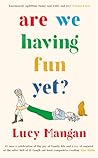
“Do you become conscious of the picture you make if you look like that I wonder, or do you make yourself look like that because you’re conscious of the picture you make? All of a sudden I’m fourteen again. I didn’t even enjoy it the first time round, and I was thin then.”
― Are We Having Fun Yet?
― Are We Having Fun Yet?
“Wilder's Wonka is, as in the book, the embellishment and excitement round the edges - his batty, barmy, nutty, screwy, dippy, dotty, daffy, goofy, beany, buggy, wacky, loony nature dazzling and drawing our attention but, narratively speaking, remaining decoration.”
― Inside Charlie's Chocolate Factory: The Complete Story of Willy Wonka, the Golden Ticket, and Roald Dahl's Most Famous Creation.
― Inside Charlie's Chocolate Factory: The Complete Story of Willy Wonka, the Golden Ticket, and Roald Dahl's Most Famous Creation.
“I feel similarly about short stories now. If you’ve got a good idea and a plot, give me more! Give me all of it!”
― Bookworm: A Memoir of Childhood Reading
― Bookworm: A Memoir of Childhood Reading
“And if you read without self-consciousness or snobbery”
― Bookish: How Reading Shapes Our Lives
― Bookish: How Reading Shapes Our Lives
“Nuestros ojos, como nuestro corazón, tienen sus odios y sus ternuras, de los que con frecuencia no nos informan, y que imponen secreta, furtivamente, a nuestro temperamento.”
― Cuentos de buenas noches para adultos estresados
― Cuentos de buenas noches para adultos estresados
“No estamos diseñados para experimentar la vida como una serie aleatoria de acontecimientos aislados que actúan sobre nosotros.”
― Cuentos de buenas noches para adultos estresados
― Cuentos de buenas noches para adultos estresados
“A good children's book teaches the uses of words, the joy of playing with language. Above all, it helps children learn not to be frightened of books. Once they get through a book and enjoy it, they realize that books are something they can cope with. If my books can help children become readers, then I feel I have accomplished something important.”
― Inside Charlie's Chocolate Factory: The Complete Story of Willy Wonka, the Golden Ticket, and Roald Dahl's Most Famous Creation.
― Inside Charlie's Chocolate Factory: The Complete Story of Willy Wonka, the Golden Ticket, and Roald Dahl's Most Famous Creation.
“My twelve-year-old boss is not missing a chance to note my every perceived professional failing (she recently graduated from business school, majoring in Entitled Bullshit, and is planning to overhaul the entire charity sector by the time she’s old enough to vote).”
― Are We Having Fun Yet?
― Are We Having Fun Yet?
“When wise old rat Nicodemus is talking to Mrs Frisby about how they live compared to humans, he says: ‘A rat civilisation would probably never have built skyscrapers, since rats prefer to live underground. But think of the endless subways-below-subways-below-subways they would have had.’ I read that huddled in the story corner of Mrs Pugh’s class, and it felt like fireworks going off in my head. It wasn’t just watermelons but the whole world that could be different. It wasn’t preordained, or immutable or, indeed, even anything special. Just ours. Built and organised for us, by us, developed to serve our needs. I closed the book gently, almost reverently, almost as awed by its power to provide me with such new, previously unthinkable thoughts as I was by the thought itself. Nicodemus, his subways and his skyscrapers are the reason this is still the book I hold up during the periodic rows that break out among adults of a certain stripe about the worthlessness of certain children’s books (and I write this in the full knowledge that I will be coming out, and coming out hard, against Gossip Girl and Stephenie Meyer, but, believe me, I would be going a lot further were it not for Mrs Frisby’s gently restraining paw on my psyche) and assure them that you simply never know what a child is going to find in a book (or a graphic novel, or a comic, or whatever) – what tiny, throwaway line might be the spark that lights the fuse that sets off an explosion in understanding whose force echoes down years. And it enables me to keep, at bottom, the faith that children should be allowed to read anything at any time. They will take out of it whatever they are ready for. And just occasionally, it will ready them for something else.”
― Bookworm: A Memoir of Childhood Reading
― Bookworm: A Memoir of Childhood Reading
“Au for an au pair!’ Richard – who dismisses Céline’s experiences as a run of simple bad luck – cries every time, labouring as he does under the profound misapprehension that the law of diminishing returns does not apply to his jokes.”
― Are We Having Fun Yet?
― Are We Having Fun Yet?
“Well, I’m my idea of a feminist. I doubt whether I’m yours.”
― The Feminism Book: Big Ideas Simply Explained
― The Feminism Book: Big Ideas Simply Explained
“EVIE: (over the sound of pillows being plumped) I’m more related to Mummy than I am to you.
RICHARD: How so?
EVIE: She gave birth to me! From her tummy! (Ruminative pause.) What does the man do to help anyway?
RICHARD: He catches the baby when it comes out, so it doesn’t get all mucky on the floor.”
― Are We Having Fun Yet?
RICHARD: How so?
EVIE: She gave birth to me! From her tummy! (Ruminative pause.) What does the man do to help anyway?
RICHARD: He catches the baby when it comes out, so it doesn’t get all mucky on the floor.”
― Are We Having Fun Yet?
“As 30 Rock’s Liz Lemon would say, ‘I want to go to there.”
― Inside Charlie's Chocolate Factory: The Complete Story of Willy Wonka, the Golden Ticket, and Roald Dahl's Most Famous Creation.
― Inside Charlie's Chocolate Factory: The Complete Story of Willy Wonka, the Golden Ticket, and Roald Dahl's Most Famous Creation.
“But let us relive . . . a little of those glorious days when reading was the thing and life was only a minor inconvenience.”
― Bookworm: A Memoir of Childhood Reading
― Bookworm: A Memoir of Childhood Reading
“Their normal children generally play on the scrubby bit of grass in front of the playground fence, falling over each other like a mass of puppies in racing-green sweatshirts. Evie regards them with disdain, Thomas with envy and fear. He has inherited a double dose of physical ineptitude from his parents and knows he would be killed if he joined in.”
― Are We Having Fun Yet?
― Are We Having Fun Yet?
“Perhaps it is only someone who has experienced first-hand what family can and should mean who can be so ruthless when they write about those who fall short of producing the ideal for their offspring.”
― Inside Charlie's Chocolate Factory: The Complete Story of Willy Wonka, the Golden Ticket, and Roald Dahl's Most Famous Creation.
― Inside Charlie's Chocolate Factory: The Complete Story of Willy Wonka, the Golden Ticket, and Roald Dahl's Most Famous Creation.
“I swear quietly and violently. Leaving my waffle feels like parting from a lover too soon. Our relationship has barely begun.”
― Are We Having Fun Yet?
― Are We Having Fun Yet?