Goodreads helps you follow your favorite authors. Be the first to learn about new releases!
Start by following Joshua Ryan Butler.

Showing 1-30 of 91
“Do we get a second chance? The question often arises: “Can I reject God now but change my mind on the threshold of his kingdom?” To ask the question this way, however, is misleading: it reveals that we probably don’t actually want the kingdom. If we prefer freedom from God now, what makes us think we’ll change our mind when his kingdom comes? If we harden our hearts toward his presence today, why would we expect tomorrow to be different?”
― The Skeletons in God's Closet: The Mercy of Hell, the Surprise of Judgment, the Hope of Holy War
― The Skeletons in God's Closet: The Mercy of Hell, the Surprise of Judgment, the Hope of Holy War
“God’s purpose is not to get us out of earth and into heaven; it’s to reconcile heaven and earth.”
― The Skeletons in God's Closet: The Mercy of Hell, the Surprise of Judgment, the Hope of Holy War
― The Skeletons in God's Closet: The Mercy of Hell, the Surprise of Judgment, the Hope of Holy War
“Where I live, being considered “good” has little to nothing to do with institutional religion. The social benchmarks for moral applause have more to do with whether one eats organic, rides his or her bike to work, and supports a humanitarian initiative in Africa. Things like these—even if good things that contribute to the flourishing of our world, in a manner similar to many traditional religious works—comprise our contemporary bars of righteousness by which one’s social capital is improved. In corporate culture, these bars may have more to do with how much money we’ve made or the size of our portfolio. In political culture, how much power we’ve attained or the heights up the ladder we’ve climbed. In popular culture, how much sex we’ve had or the number of Twitter followers who are interested in what we have to say. The cultural decline of institutional religion has simply meant the relocation, not the destruction, of social norms through which we pursue personal justification and social acceptance for our existence.”
― The Skeletons in God's Closet: The Mercy of Hell, the Surprise of Judgment, the Hope of Holy War
― The Skeletons in God's Closet: The Mercy of Hell, the Surprise of Judgment, the Hope of Holy War
“As Solzhenitsyn famously observed, the line separating good and evil passes not between countries, nor between classes, nor between political parties, but right through the middle of every human heart.”
― The Skeletons in God's Closet: The Mercy of Hell, the Surprise of Judgment, the Hope of Holy War
― The Skeletons in God's Closet: The Mercy of Hell, the Surprise of Judgment, the Hope of Holy War
“Hell begins to look like a place God creates alongside heaven for the primary purpose of torturing sinners for eternity. But this is the wrong story. In the gospel story, heaven and earth are currently torn by sin. Our world is being ravaged by the destructive power of hell. Sin has unleashed it into God’s good world, and God is on a mission to get it out, to reconcile heaven and earth from hell’s evil influence to himself through the reconciling life of Christ. The time is coming when God’s heavenly kingdom will come down to reign on earth forever, when Jesus will cast out the corrosive powers of sin, death, and hell that have tormented his world for so long.”
― The Skeletons in God's Closet: The Mercy of Hell, the Surprise of Judgment, the Hope of Holy War
― The Skeletons in God's Closet: The Mercy of Hell, the Surprise of Judgment, the Hope of Holy War
“The question we’re faced with before the risen Christ is not whether we’ve done a good enough job going out to find God. The question is whether we’re willing to stop running and be found.”
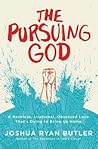
― The Pursuing God: A Reckless, Irrational, Obsessed Love That's Dying to Bring Us Home
― The Pursuing God: A Reckless, Irrational, Obsessed Love That's Dying to Bring Us Home
“To ask God to redeem Jerusalem but not cast sin outside the city walls is like asking a doctor to heal your body without excising the disease. Like asking the light to arise without casting out the darkness. Like asking for restoration to come and destruction to remain. It is to ask for a contradiction. God excludes sin from his kingdom because of his goodness, not in opposition to or in spite of it.”
― The Skeletons in God's Closet: The Mercy of Hell, the Surprise of Judgment, the Hope of Holy War
― The Skeletons in God's Closet: The Mercy of Hell, the Surprise of Judgment, the Hope of Holy War
“Suddenly, I had a problem. Jesus wants to get rid of sex trafficking too, only he takes it a lot more seriously than I do. I want to get rid of sex trafficking; Jesus wants to get rid of lust. I want to prune back the wicked tree; he wants to dig out the root. And that wicked root is in me. I may not be a sex trafficker, a pedophile tourist, or a greedy madam—but I have lust. I can be one lusty animal. Jesus says if you even look lustfully at one of God’s daughters, demeaningly commodifying her as an object for your own self-centered gratification, then the power of hell has its roots in you, and when God arrives to establish his kingdom, you are in danger of being cast outside the kingdom with it.”
― The Skeletons in God's Closet: The Mercy of Hell, the Surprise of Judgment, the Hope of Holy War
― The Skeletons in God's Closet: The Mercy of Hell, the Surprise of Judgment, the Hope of Holy War
“Good behavior is often a means of keeping God at bay. Obedience and obligation can erect as much a barrier to life with God as lawless rebellion and wanton destruction. Duty and debauchery have more in common than we might expect. Selfishness and self-righteousness just might be twins separated at birth. Both good and evil hang from the tree of knowledge of good and evil; the problem is that they are on the wrong tree.”
― The Skeletons in God's Closet: The Mercy of Hell, the Surprise of Judgment, the Hope of Holy War
― The Skeletons in God's Closet: The Mercy of Hell, the Surprise of Judgment, the Hope of Holy War
“Then I read the sermon. The shocker hit when I realized that Edwards’s audience was the church! He spoke not from the street corner but from the pulpit. Not to the passersby outside but to the parishioners inside. The sinners in the hands of an angry God were the people who bore his name! This was judgment for God’s people, directed at a church filled with idolatry, apathy, and sin. I began to realize that God’s coming judgment is not so much an evangelistic tool used to frighten outsiders into the kingdom as it is a housecleaning tool used to weed out hypocrisy and call insiders back to the faith they proclaim. It starts at home. I love Edwards’s sermon now. There are a few parts I disagree with, that conflict with aspects of the biblical story we’ve observed in this book (though brilliant as all get out, he couldn’t be right all the time).4 But in the bigger picture, Edwards’s sermon is a reminder to me that I cannot slide by on the coattails of calling myself a Christian.”
― The Skeletons in God's Closet: The Mercy of Hell, the Surprise of Judgment, the Hope of Holy War
― The Skeletons in God's Closet: The Mercy of Hell, the Surprise of Judgment, the Hope of Holy War
“God wants people in his city: he tears down the walls to let everyone inside. But God’s very presence is a fire that protects the city. Like a father protecting his children from the bullies on the prowl. Like a chief protecting his village from hostile invasion. Like a husband protecting his wife from a would-be rapist. God protects his kingdom from the tyrannous onslaught that wants inside. God fights “fire with fire.” He does not need cannons or jets or armies to protect his city: it is protected by the very strength of his presence, indwelling in glory with all who would receive him. God’s holy love is experienced inside the city as redemptive glory. But to those ill-intentioned powers that want to invade, God’s holy love is experienced as protective fire.”
― The Skeletons in God's Closet: The Mercy of Hell, the Surprise of Judgment, the Hope of Holy War
― The Skeletons in God's Closet: The Mercy of Hell, the Surprise of Judgment, the Hope of Holy War
“The cultural decline of institutional religion has simply meant the relocation, not the destruction, of social norms through which we pursue personal justification and social acceptance for our existence.”
―
―
“This confronts our popular cartoons, where little red devils poke you with pitchforks and laugh at you on into eternity. Jesus tells us this is not a place where Satan reigns; it is a place where he meets his destruction. Where his agenda is contained. Where sin’s wildfire is bound with the arsonist who first lit the match.”
― The Skeletons in God's Closet: The Mercy of Hell, the Surprise of Judgment, the Hope of Holy War
― The Skeletons in God's Closet: The Mercy of Hell, the Surprise of Judgment, the Hope of Holy War
“Hell is the absence of God, found in the presence of our own autonomy.”
― The Skeletons in God's Closet: The Mercy of Hell, the Surprise of Judgment, the Hope of Holy War
― The Skeletons in God's Closet: The Mercy of Hell, the Surprise of Judgment, the Hope of Holy War
“Jesus comes looking not for our trophies, but our scars.”
― The Pursuing God: A Reckless, Irrational, Obsessed Love That's Dying to Bring Us Home
― The Pursuing God: A Reckless, Irrational, Obsessed Love That's Dying to Bring Us Home
“Faith is not a work that gives us mastery over Jesus. Faith is that work in which we are mastered by Jesus. There is nothing we can use to lay claim upon God except his claim upon us. God accepts us in Christ; our obstacle is found in our rejection of God’s acceptance in Christ. Faith levels the playing field, because it is no longer our righteousness as upstanding citizens that makes us worthy of the kingdom, and it is no longer our lawlessness as criminals that makes us unworthy. It is Jesus’ grace that makes both worthy—if we are willing to receive it.”
― The Skeletons in God's Closet: The Mercy of Hell, the Surprise of Judgment, the Hope of Holy War
― The Skeletons in God's Closet: The Mercy of Hell, the Surprise of Judgment, the Hope of Holy War
“If your roots are in Jesus, your fruit will be love. Fruit takes time to grow; it doesn’t appear overnight. We don’t have to beat ourselves up for not being perfect Jesus-followers the day after we’ve started walking in his dust. It took the disciples a long time too. But the longer we’re planted in God’s garden, the deeper our roots grow in his goodness, and the more generosity, joy, and selflessness begin to spring forth from our branches.”
― The Skeletons in God's Closet: The Mercy of Hell, the Surprise of Judgment, the Hope of Holy War
― The Skeletons in God's Closet: The Mercy of Hell, the Surprise of Judgment, the Hope of Holy War
“What sin does, in essence, is pull our gaze from God and others and turns it in upon ourselves, so that we become “curved inward,” valuing ourselves over and against God, first and foremost, and the others God has given us to love.”
― The Skeletons in God's Closet: The Mercy of Hell, the Surprise of Judgment, the Hope of Holy War
― The Skeletons in God's Closet: The Mercy of Hell, the Surprise of Judgment, the Hope of Holy War
“Hell is cruel. Yet to blame the cruelty of hell on God is like an alcoholic blaming sobriety for the pain of his addiction. Sobriety is the cure the alcoholic needs, not the disease that afflicts him. His enslavement arises not from sobriety but from those forces that exist outside sobriety's realm. His problem is rooted in the fact that he ultimately craves sobriety's absence more than its presence; the cruelty is in the craving and its consequence.”
― The Skeletons in God's Closet: The Mercy of Hell, the Surprise of Judgment, the Hope of Holy War
― The Skeletons in God's Closet: The Mercy of Hell, the Surprise of Judgment, the Hope of Holy War
“God is not the author of evil; we are. G. K. Chesterton was invited by a London paper in the early 1900s to submit an essay in response to the question, “What’s wrong with the world?” He humorously, and wisely, responded with a simple four-word essay: “Dear sirs, I am.”10 One of the problems with the ways we tend to talk about the power of hell is that we shift the blame for the cruelty that is ours in the world away from ourselves and toward the heart of the God who is good. Our problem is not that we are good and God is evil. The gospel flips this illusion on its head: God is good and we are evil. Our healing begins with our repentant acknowledgment of this fact; then we can fall into the arms of mercy that are waiting to receive us. But what if we will not repentantly acknowledge this truth? What if we will not fall into mercy? What if we will not receive and be healed?”
― The Skeletons in God's Closet: The Mercy of Hell, the Surprise of Judgment, the Hope of Holy War
― The Skeletons in God's Closet: The Mercy of Hell, the Surprise of Judgment, the Hope of Holy War
“Evil is a parasite that wants to tear creation apart from the inside out. In the same way that a healthy body does not require cancer to exist, God’s creation does not require evil to exist. But the inverse is not true. Cancer does require a living, breathing body to sustain its existence, and evil similarly requires God’s good creation to sustain its own existence.”
― The Skeletons in God's Closet: The Mercy of Hell, the Surprise of Judgment, the Hope of Holy War
― The Skeletons in God's Closet: The Mercy of Hell, the Surprise of Judgment, the Hope of Holy War
“I have come to believe that our culture’s popular understanding of these difficult doctrines is often a caricature of what the Bible actually teaches and what mature Christian theology has historically proclaimed. To Laugh At, To Live By What do I mean by a caricature? A caricature is a cartoonlike drawing of a real person, place, or thing. You’ve probably seen them at street fairs, drawings of popular figures like President Obama, Marilyn Monroe, or your aunt Cindy. Caricatures exaggerate some features, distort some features, and oversimplify some features. The result is a humorous cartoon. In one sense, a caricature bears a striking resemblance to the real thing. That picture really does look like President Obama, Marilyn Monroe, or your aunt Cindy. Features unique to the real person are included and even emphasized, so you can tell it’s a cartoon of that person and not someone else. But in another sense, the caricature looks nothing like the real thing. Salient features have been distorted, oversimplified, or blown way out of proportion. President Obama’s ears are way too big. Aunt Cindy’s grin is way too wide. And Marilyn Monroe . . . well, you get the picture. A caricature would never pass for a photograph. If you were to take your driver’s license, remove the photo, and replace it with a caricature, the police officer pulling you over would either laugh . . . or arrest you. Placed next to a photograph, a caricature looks like a humorous, or even hideous, distortion of the real thing. Similarly, our popular caricatures of these tough doctrines do include features of the original. One doesn’t have to look too far in the biblical story to find that hell has flames, holy war has fighting, and judgment brings us face-to-face with God. But in the caricatures, these features are severely exaggerated, distorted, and oversimplified, resulting in a not-so-humorous cartoon that looks nothing like the original. All we have to do is start asking questions: Where do the flames come from, and what are they doing? Who is doing the fighting, and how are they winning? Why does God judge the world, and what basis does he use for judgment? Questions like these help us quickly realize that our popular caricatures of tough biblical doctrines are like cartoons: good for us to laugh at, but not to live by. But the caricature does help us with something important: it draws our attention to parts of God’s story where our understanding is off. If the caricature makes God look like a sadistic torturer, a coldhearted judge, or a greedy génocidaire, it probably means there are details we need to take a closer look at. The caricatures can alert us to parts of the picture where our vision is distorted.”
― The Skeletons in God's Closet: The Mercy of Hell, the Surprise of Judgment, the Hope of Holy War
― The Skeletons in God's Closet: The Mercy of Hell, the Surprise of Judgment, the Hope of Holy War
“The Ten Commandments are not “how to get God to like you”; they’re “how to live together because God likes you.” The Creator wants to undo what was done at Eden, to restore a people into union with him, who will turn around and offer that restoration to the world.”
― The Pursuing God: A Reckless, Irrational, Obsessed Love That's Dying to Bring Us Home
― The Pursuing God: A Reckless, Irrational, Obsessed Love That's Dying to Bring Us Home
“sin attacks and degrades our humanity. It makes us less human, not more.2 By not sinning, Jesus is more human than we are. He’s less like an athlete using steroids, and more like an athlete who never ate Twinkies. Less like an adult competing against kindergartners, and more like an adult who actually trained because she enjoys the sport—while we sat around all year, watching TV, eating potato chips, and didn’t even bother to show up to the race. Jesus doesn’t use a superhuman advantage to win; he refuses the inhumanity we all participate in.”
― The Pursuing God: A Reckless, Irrational, Obsessed Love That's Dying to Bring Us Home
― The Pursuing God: A Reckless, Irrational, Obsessed Love That's Dying to Bring Us Home
“Pol Pot (the architect of the Cambodian genocide) and my sweet grandmother (who wouldn’t hurt a fly) stand together before the Great Physician, and his question is not, “Which one of you was better?” but rather, “Will you let me heal you?” In leveling the playing field, Jesus makes way for grace.”
― The Skeletons in God's Closet: The Mercy of Hell, the Surprise of Judgment, the Hope of Holy War
― The Skeletons in God's Closet: The Mercy of Hell, the Surprise of Judgment, the Hope of Holy War
“Our problem is not that we’re reaching out for God and he’s refusing to be found. It’s the opposite: God’s reaching out for us, and we’re scattering in other directions. God loves us, but we love darkness. God moves toward us. But sin can’t stand the presence of God.”
― The Pursuing God: A Reckless, Irrational, Obsessed Love That's Dying to Bring Us Home
― The Pursuing God: A Reckless, Irrational, Obsessed Love That's Dying to Bring Us Home
“Jesus contrasts who blesses and curses. The sheep are blessed “by my Father.” We might assume, then, that the goats are inversely cursed by the Father; but no such thing is said. Jesus simply says they are cursed. Like the rich man clutching his greed in the rubble of his riches while heaven calls him “son.” Like the wedding crasher refusing wedding clothes while the King calls him “friend.” Like the older brother weeping and gnashing his teeth in the backyard while the Father invites him inside to join the prodigal’s party. God blesses; we curse. The Father is good; we want to be left alone. The Light shines brightly; we prefer darkness. Ultimately, we are judged not for our failure to successfully wrap our hands around God’s arm, but rather for our stubborn refusal to be grasped by him, our incessant prying of his fingers from our recalcitrant hearts. God redeems his world; our destructive power is cast outside. God’s kingdom is established; the wildfire is banished. God brings an end to the bondage of creation.”
― The Skeletons in God's Closet: The Mercy of Hell, the Surprise of Judgment, the Hope of Holy War
― The Skeletons in God's Closet: The Mercy of Hell, the Surprise of Judgment, the Hope of Holy War
“God’s will is not currently done on earth as in heaven, implying a distance in heaven and earth’s relationship. The earth exists in a state of exile and alienation from its intended home with God.”
― The Skeletons in God's Closet: The Mercy of Hell, the Surprise of Judgment, the Hope of Holy War
― The Skeletons in God's Closet: The Mercy of Hell, the Surprise of Judgment, the Hope of Holy War
“This book is divided into three parts: “The Mercy of Hell,” “The Surprise of Judgment,” and “The Hope of Holy War.” Mercy, surprise, and hope”
― The Skeletons in God's Closet: The Mercy of Hell, the Surprise of Judgment, the Hope of Holy War
― The Skeletons in God's Closet: The Mercy of Hell, the Surprise of Judgment, the Hope of Holy War
“God’s goal is not to pluck us out of humanity. It is to heal humanity.”
― The Skeletons in God's Closet: The Mercy of Hell, the Surprise of Judgment, the Hope of Holy War
― The Skeletons in God's Closet: The Mercy of Hell, the Surprise of Judgment, the Hope of Holy War