Goodreads helps you follow your favorite authors. Be the first to learn about new releases!
Start by following Michael Hardin.

Showing 1-30 of 43
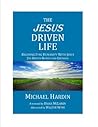
“It is easy to follow a generic God because you can fill the term God with any presupposition you please; it is difficult to follow Jesus, because then you have to take seriously his teachings on discipleship, on what exactly following him entails.”
― The Jesus Driven Life: Reconnecting Humanity with Jesus
― The Jesus Driven Life: Reconnecting Humanity with Jesus
“Life is not about hoarding wealth but about spreading it around. God can act to see to it that the creation is nourished, but he uses us humans to see to it that our fellow humans have their needs met. We live in a world where the poor are daily reminders that we too have an obligation to meet, not only to ourselves but also to one another. In order to do this we, like Jesus, need to eschew three things: comfort, safety and security.”
― The Jesus Driven Life: Reconnecting Humanity With Jesus
― The Jesus Driven Life: Reconnecting Humanity With Jesus
“The reality is that love of God is expressed fully as love of both friend and enemy. It recognizes in everyone the image of God. Love is all-inclusive. Love knows no boundaries or limits. Love God, love your neighbor, love your enemy, this is the Greatest Commandment.”
― The Jesus Driven Life: Reconnecting Humanity with Jesus
― The Jesus Driven Life: Reconnecting Humanity with Jesus
“There is a way of living life, a mode of being religious that causes destruction wherever it appears. It is the misinterpretation of the concept of holiness. It was certainly an issue in Jesus’ day. The variety of the ‘Judaisms’ of Jesus’ day, the various schools or parties, the rabbinic schools of Hillel and Shammai . . . the Essenes . . . apocalyptic sects, mainstream elite like the Sadducees and marginalized Samaritans alike all held to some kind of holiness code, that behavior which made the people right before God.
The Temple itself reflected gradations or strata of holiness, from the outer Court of the Gentiles to the Holy of Holies. This meta-map of the Temple was overlaid on Jewish society as well. Just as there were degrees of holy space in the Temple, so also in society various persons had various degrees of holiness . . . It was a hierarchical model, lived out by every group or party except one, that of Jesus.
Yet, oddly enough we do not find this holiness language in Jesus’ teaching. Unlike the constant refrain of holiness in the Dead Sea Scrolls or the later Mishnah, Jesus has another set of lyrics using the same melody. Instead of “Be holy as I am holy” Jesus taught “Be merciful as your Father in heaven is merciful” (Luke 6:36). Mercy was for Jesus what holiness was to many of his contemporaries. Notice the same form is used but the substance has changed. Why is this? Because for Jesus, holiness was not a solution but a problem. Holiness caused ostracizing and exclusion; mercy brought reconciliation and re-socialization. Holiness depended on gradation and hierarchy; mercy broke through all barriers. Holiness differentiated persons based upon honor, wealth, family tree, religious affiliation; mercy recognized that God honors all, loves all and blesses all.”
― The Jesus Driven Life: Reconnecting Humanity with Jesus
The Temple itself reflected gradations or strata of holiness, from the outer Court of the Gentiles to the Holy of Holies. This meta-map of the Temple was overlaid on Jewish society as well. Just as there were degrees of holy space in the Temple, so also in society various persons had various degrees of holiness . . . It was a hierarchical model, lived out by every group or party except one, that of Jesus.
Yet, oddly enough we do not find this holiness language in Jesus’ teaching. Unlike the constant refrain of holiness in the Dead Sea Scrolls or the later Mishnah, Jesus has another set of lyrics using the same melody. Instead of “Be holy as I am holy” Jesus taught “Be merciful as your Father in heaven is merciful” (Luke 6:36). Mercy was for Jesus what holiness was to many of his contemporaries. Notice the same form is used but the substance has changed. Why is this? Because for Jesus, holiness was not a solution but a problem. Holiness caused ostracizing and exclusion; mercy brought reconciliation and re-socialization. Holiness depended on gradation and hierarchy; mercy broke through all barriers. Holiness differentiated persons based upon honor, wealth, family tree, religious affiliation; mercy recognized that God honors all, loves all and blesses all.”
― The Jesus Driven Life: Reconnecting Humanity with Jesus
“The eschatological is all about the power of God to change everything, and that change begins with the way we see things, it means a change in the way we look at the world and a change in what it means in the way we describe God. This “intellectual” change will empower us to the life-change we undergo as we are daily transformed into the image of Jesus. It is a paradigm shift, a change in worldviews, it is a change at the most basic level (it is an epistemic event), and it is like personally experiencing the apocalypse.”
― What The Facebook?
― What The Facebook?
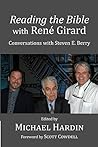
“But why choose animals? Because the more violent we become, the more we want to do away with violence. Sacrifice works. Sacrifice diminishes the violence in the community. Sacrifice is inventive. See, why not animals that would look like a human? We know very well that many sacrificial societies establish animals within the community before sacrificing them. They want to make them more human. They want to diminish the distance between man and animal because it would be better, probably, to sacrifice a man, but let's sacrifice an animal so we don't kill a human victim and let's make that victim as human as possible. Let's have that victim within the community. One of the greatest human institutions, that played a tremendous role in the development of culture, is the domestication of animals. I think the domestication of animals is a fruit of sacrifice.”
― Reading the Bible with Rene Girard: Conversations with Steven E. Berry
― Reading the Bible with Rene Girard: Conversations with Steven E. Berry
“Nothing irks some folks more than losing a God who is wrathful, angry, retributive and punishing. ”
― The Jesus Driven Life: Reconnecting Humanity with Jesus
― The Jesus Driven Life: Reconnecting Humanity with Jesus
“Just as Hebrews 10:5-8 (Appendix A) says, this coming was not to be a sacrifice but was the opposite, it was anti-sacrificial. Jesus did not come to fulfill the logic of the sacrificial system (either Jewish or pagan) but to expose it and put an end to its reign in our lives.”
― The Jesus Driven Life: Reconnecting Humanity with Jesus
― The Jesus Driven Life: Reconnecting Humanity with Jesus
“Dostoyevsky is the one novelist I studied that is the closest to the type of world we live in. I still feel that way now that terrorism is an even bigger presence in our world than it was at the time I wrote Deceit, Desire and the Novel. Much of my theory of human relations is already there in my first book. At the same time this history is the history of what happens to the Christian world, which becomes less and less Christian over time, which is a history of modern individualism, which in turn is a rebellion against religion. SB:”
― Reading the Bible with Rene Girard: Conversations with Steven E. Berry
― Reading the Bible with Rene Girard: Conversations with Steven E. Berry
“Sacrifice is violence and it's obviously an effort to prevent violence in the community by finding the right escape hatch through some kind of innocuous violence. This they didn't see. They couldn't see it because, influenced by Enlightenment presuppositions, they believed in the innocence of humanity, the basic goodness of man. Why should humanity need that violence? The only possible answer is that humanity needed that violence to avoid another kind of violence: people’s own violence against one another.”
― Reading the Bible with Rene Girard: Conversations with Steven E. Berry
― Reading the Bible with Rene Girard: Conversations with Steven E. Berry
“The question we must ask today is “Do we get Jesus?” or have we substituted false portraits of him in our theology?”
― The Jesus Driven Life: Reconnecting Humanity with Jesus
― The Jesus Driven Life: Reconnecting Humanity with Jesus
“Persons are encouraged to tell a personal salvation story when they attend church. No longer does the salvation wrought by God in Jesus have corporate dimensions, no longer is it the salvation of the world. The way we tell the story of salvation is frankly narcissistic.”
― The Jesus Driven Life: Reconnecting Humanity With Jesus
― The Jesus Driven Life: Reconnecting Humanity With Jesus
“The reality is that love of God is expressed fully as love of both friend and enemy. It”
― The Jesus Driven Life: Reconnecting Humanity with Jesus
― The Jesus Driven Life: Reconnecting Humanity with Jesus
“Fourth, Michael realizes that in the twenty-first century, Christianity - along with all world religions - must develop a more mature, robust, and ethically responsible theology of violence and peacemaking. It was one thing for our ancestors to use God’s name to legitimize violence inflicted with swords and spears; it was another thing when more recent ancestors sought to justify violence with guns and artillery. But for us and our children, living in a world of nuclear bombs, biological and chemical weapons, and as-yet unimagined terrorist adaptations of these weapons of mass destruction; the issue of God and violence takes on unprecedented importance.”
― The Jesus Driven Life: Reconnecting Humanity with Jesus
― The Jesus Driven Life: Reconnecting Humanity with Jesus
“Sacrifice is repeating the event that has saved the community from its own violence, which is killing a victim.”
― Reading the Bible with Rene Girard: Conversations with Steven E. Berry
― Reading the Bible with Rene Girard: Conversations with Steven E. Berry
“Yes, it was our sin that killed Jesus. Not as some transaction where God takes our sin and somehow transfers it onto Jesus; but as the actual rejection of his life and message.”
― The Jesus Driven Life: Reconnecting Humanity With Jesus
― The Jesus Driven Life: Reconnecting Humanity With Jesus
“We had a great department there; we were something. We were pretty much at the top of the university. So we were treated well by the administration. In 1966 we held a symposium. We were the first to bring the deconstructionists like Jacques Derrida and others to the United States. Many of my colleagues were hostile to that. They felt it was very bad. Two years later they were all converted to deconstruction. That left me somewhat disconcerted, and I left for Buffalo. SB: Why did that bother you? RG: Well it bothered me because deconstruction is against reality. They say everything is language. I think, as I said before when talking about my study of ritual, the way I read a theorist like Frazer is that you can choose either to say everything is language or everything is a fluid reality of violence that takes various shapes and can be named in different ways. That’s my way. Out of the sight of reality but not against language. I say it can be named different ways, but behind the solid stuff are human relations and the violence that creates a false peace. What they say is that everything is about language; everything is play, futility. There is no reality. You don’t have to worry about anything. Ultimately it becomes dull and stupefying, this doing away with reality. I think that day is finished. Ultimately”
― Reading the Bible with Rene Girard: Conversations with Steven E. Berry
― Reading the Bible with Rene Girard: Conversations with Steven E. Berry
“So if you absorb his or her flesh, you become them, just as if you absorb the flesh of Christ, you should become a little bit nonviolent, more than you were before. If you understand this text, you also perceive that it cannot have been put there by people who want to fool us. We can discover in these sayings tremendous aspects that no one has yet discovered that fit the Christian meaning. Like the stone that the builders rejected. So therefore faith is highly linked to the text; that must be something a little bit Protestant in me. It is Christ himself who assumes the responsibility of quoting that psalm[35], saying "explain it to me, explain the relationship with me.” We haven't deciphered it yet. It should be enough for everybody to understand that Christianity is not a text like others where part of its truth is still hidden but decipherable. This is the sort of thing that can restore the damaged faith of our time. We’re talking about two types of religion. One fundamentally deifies scapegoating. Therefore, it ultimately deifies violence itself. When I called my second book Violence and the Sacred, it really meant that the sacred is nothing but violence; it's only insofar as you don't see this that violence is the sacred. The real sacred – or let us say the holy, let's not use the same word – is love, divine love: not human love, which is a miserable imitation of divine love, but real divine love. Mysteriously, God is using human violence to bring the human animal to the level where we will try to teach it love. Humanity is therefore going through a violent phase, which is archaic religion. There is the animal at the bottom, there are the violent religions, and then there is the religion of love. Are we going to understand it or not? In some ways, I say only in some ways, the symbolism of violence, the sacred, looks more like God’s love to us, in our weakness, in our violence, than anything else. We don't reach that total violence in a way that we represent in our archaic religions. But in some ways archaic religion has features, real features of divinity, since it reconciles in a certain context. Oh, this sounds dreadful, but we don't want to worship violence. Christ teaches us that we have to worship only love, but we have to understand that worship of violence is a series of steps towards love. This is why I say revelation takes into account the whole history of human religion. SB:”
― Reading the Bible with Rene Girard: Conversations with Steven E. Berry
― Reading the Bible with Rene Girard: Conversations with Steven E. Berry
“What Jewish tradition refers to as the yetzer ha-ra. [15]”
― Reading the Bible with Rene Girard: Conversations with Steven E. Berry
― Reading the Bible with Rene Girard: Conversations with Steven E. Berry
“lie of scapegoating, this unconsciousness of scapegoating (to have a scapegoat is not to be aware that one has a scapegoat), therefore means that a text that openly mentions scapegoating cannot be a scapegoat text. I have confidence that this will be done and is already being done by interpreters of the Bible who use mimetic theory.”
― Reading the Bible with Rene Girard: Conversations with Steven E. Berry
― Reading the Bible with Rene Girard: Conversations with Steven E. Berry
“When we look at the Gospel of Mark this comes home in an even clearer fashion. In Mark 12:34, the response of the man causes Jesus to say to him, and only to him, “you are not far from the kingdom of God.” The man’s response was to recognize that love of God and neighbor was “more important than all burnt offerings and sacrifices.” The man articulated a view of God apart from religion, sacrificially oriented religion. Jesus, I’m sure, was delighted. Here was someone who saw things the same way he did; well, almost. ”
― The Jesus Driven Life: Reconnecting Humanity with Jesus
― The Jesus Driven Life: Reconnecting Humanity with Jesus
“Now that I've killed my brother, everybody will kill me”? Who is "everybody"? Is it Adam and Eve? Is it two old parents? That makes no sense. Therefore, you have to say that we are in a fluid situation where we are dealing with a community and the founding of the community. It's no longer chaos. It's a community that is run by the rule against murder because there has been a murder. So I say the founding murder, which is a collective murder, is like that. There is something in the first epistle of John that is a reading of Cain and Abel.[15] Satan was a murderer from the beginning. The “from the beginning” is very important because it means what I just said to you: for the Gospel, Cain and Abel are part of original sin. Cain and Abel are part of the first definition of mankind. That's very important. We are dealing with the biblical interpretation of the founding of human communities as a result of original sin, which is the law against murder in the first Cainite community. After that they invent all sorts of things because they have ritual, because they have some form of sacrifice. So it's really very close to what we said previously. What I'm doing now is interpreting the beginning of the Bible in terms of the anthropological theory that we are discussing.[16] SB:”
― Reading the Bible with Rene Girard: Conversations with Steven E. Berry
― Reading the Bible with Rene Girard: Conversations with Steven E. Berry
“The highest way for us to express our humanity is by learning Jesus’ story and by the grace of the Spirit, participating in that story as much as possible. ”
― The Jesus Driven Life: Reconnecting Humanity with Jesus
― The Jesus Driven Life: Reconnecting Humanity with Jesus
“Sacrifice, in my view, is the center of human culture; the original center, of course, is the death of the victim that reconciles the community. This is why human societies have a religious center; human societies are all built around religion. There is no natural human society in the same way that there is a natural animal society; but in a way there is a similarity between the fights and rivalries of animals. However, in the case of humans, the rivalry resolves itself only when a scapegoat is selected.”
― Reading the Bible with Rene Girard: Conversations with Steven E. Berry
― Reading the Bible with Rene Girard: Conversations with Steven E. Berry
“Archaic religion believes in the scapegoat business, and when you believe in the scapegoat business you don’t talk about it in terms of scapegoating. Only the Gospels can do that: because they don’t believe in it, they tell you that Jesus is a scapegoat. When you say that someone is a scapegoat, he is not your scapegoat. To have a scapegoat is to be unaware that you have a scapegoat, to think he really is guilty. It's so simple that people don’t understand it. Scapegoating is effective only if it is nonconscious. Then you do not call it scapegoating; you call it justice. That's”
― Reading the Bible with Rene Girard: Conversations with Steven E. Berry
― Reading the Bible with Rene Girard: Conversations with Steven E. Berry
“ How then do we know Jesus? We know Him in worship together, in study together, in reflection together and in reasoning together.”
― The Jesus Driven Life: Reconnecting Humanity with Jesus
― The Jesus Driven Life: Reconnecting Humanity with Jesus
“philological history of the term “scapegoat” in English can be found in David Dawson, Flesh Becomes Word: A Lexicography of the Scapegoat (East Lansing: Michigan State University Press, 2012). [18]”
― Reading the Bible with Rene Girard: Conversations with Steven E. Berry
― Reading the Bible with Rene Girard: Conversations with Steven E. Berry
“This analogy can also be found in Jon Pahl, Empire of Sacrifice (New York: New York University Press, 2010), 20. [19]”
― Reading the Bible with Rene Girard: Conversations with Steven E. Berry
― Reading the Bible with Rene Girard: Conversations with Steven E. Berry
“One’s Christology determines one’s ethics; an ethic not congruent with the life, teaching and example of Jesus cannot be called a Christian ethic no matter how many Bible verses one racks up.”
― What The Facebook?
― What The Facebook?
“As a matter of fact, it's the main event; it’s the story of the founding murder. Now, you will immediately observe that it's not a collective murder but, if you look at the text closely, you will see that it can be interpreted as a collective murder. Cain says, “Now that I have killed my brother, everybody will kill me.” In other words, the law against murder, the implicit law against murder, has been broken. Now everybody can kill me. So I will make a law against murder. The first consequence of the murder of the brother is also the law against murder. Therefore, it's a foundation of the human community. It has, in a way, “good” consequences. We can put “good” between quotation marks here, because everything is founded on evil violence. But it makes it less bad if you know that murder is forbidden from now on. To say that murder is forbidden is to say that we have a human society. We are no longer in the wildness of Cain’s murder of Abel. Therefore, we are told that Cain is the founder of the first community. We are never told how he does it, but it's obvious. The only thing he does before this society is founded is to kill his brother. This murder can easily be interpreted as collective if, after he has killed his brother, Cain is threatened with murder all over the place. “Everybody is going to kill me,” he says. In other words, people will kill each other. Therefore, Cain is the symbol of a tribe at first, but doesn't necessarily have to be regarded as a mere individual.”
― Reading the Bible with Rene Girard: Conversations with Steven E. Berry
― Reading the Bible with Rene Girard: Conversations with Steven E. Berry