Goodreads helps you follow your favorite authors. Be the first to learn about new releases!
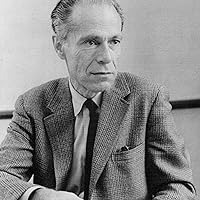
Start by following Albert O. Hirschman.
Showing 1-16 of 16
“Creativity always comes a surprise to us; therefore we can never count on it and we dare not believe in it until it has happened. In other words, we would not consciously engage upon tasks whose success clearly requires that creativity be forthcoming. Hence, the only way in which we can bring our creative resources fully into play is by misjudging the nature of the task, by presenting it to ourselves as more routine, simple, undemanding of genuine creativity that it will turn out to be”
―
―
“Creativity always comes as a surprise to us; therefore we can never count on it and we dare not believe in it until it has happened. In other words, we would not consciously engage upon tasks whose success clearly requires that creativity be forthcoming. Hence, the only way in which we can bring our creative resources fully into play is by misjudging the nature of the task, by presenting it to ourselves as more routine, simple, undemanding of genuine creativity than it will turn out to be. Or, put differently: since we necessarily underestimate our creativity, it is desirable that we underestimate to a roughly similar extent the difficulties of the tasks we face so as to be tricked by these two offsetting underestimates into undertaking tasks that we can, but otherwise would not dare, tackle. The principle is important enough to deserve a name: since we are apparently on the trail here of some sort of invisible or hidden hand that beneficially hides difficulties from us, I propose the Hiding Hand.”
― Development Projects Observed
― Development Projects Observed
“History is nothing if not far-fetched.”
―
―
“people undertake some new task not because of a challenge, but because of the assumed absence of a challenge because the task looks easy…and then, once they are stuck with it, they have willy-nilly to overcome the unsuspected difficulties—and sometimes they even succeed.”
― Development Projects Observed
― Development Projects Observed
“far more appealing and convincing defense of the occasional need for exaggeration of prospective benefits appears in an essay by Kolakowski, the Polish philosopher: The simplest improvements in social conditions require so huge an effort on the part of society that full awareness of this disproportion would be most discouraging and would thereby make any social progress impossible. The effort must be prodigally great if the result is to be at all visible…. It is not at all peculiar then that this terrible disproportion must be quite weakly reflected in human consciousness if society is to generate the energy required to effect changes in social and human relations. For this purpose, one exaggerates the prospective results into a myth so as to make them take on dimensions which correspond a bit more to the immediately felt effort…. [The myth acts like] a Fata Morgana which makes beautiful lands arise before the eyes of the members of a caravan and thus increases their efforts to the point where, in spite of all their sufferings, they reach the next tiny waterhole. Had such tempting mirages not appeared, the exhausted caravan would inevitably have perished in the sandstorm, bereft of hope.”
― Development Projects Observed
― Development Projects Observed
“Going further than Hobbes, who relied on the general convergence of interests between the Many and the One who rules, some of the Physiocrats invented institutional arrangements specifically designed to make the despot truly “legal.” On the one hand, they elaborated a system of judicial control that would see to it that the laws issued by the sovereign and his council are not contrary to the “natural order” that is to be reflected in the fundamental constitution of the state.43 But an even more important safeguard was the idea that the sovereign should be given a real stake in the prosperity of his commonwealth. This was the purpose of the institution of co-property that Le Mercier de la Rivière proposed in his Ordre naturel et essentiel des sociétés politiques (1767).44 According to his plan, the sovereign would be co-owner, in a set and unchangeable proportion, of all the productive resources and of the produit net: as a result, any conflict of interests between him and the country at large would be inconceivable, and the Hobbesian identity of interests would be transparent even to the most obtuse and wicked despot.”
― The Passions and the Interests: Political Arguments for Capitalism before Its Triumph
― The Passions and the Interests: Political Arguments for Capitalism before Its Triumph
“Ha egy nemzet nem kíván többet a kormányzatától, mint hogy fenntartsa a rendet, a szíve mélyén már rabszolga: tulajdon jólétének rabja, s csak a személy hiányzik, aki láncra veri."
(Alexis de Tocqueville)”
― The Passions and the Interests
(Alexis de Tocqueville)”
― The Passions and the Interests
“A taste is defined as a preference about which you do not argue. A taste about which you argue, with others or yourself, ceases ipso facto being a taste - it turns into a value.”
―
―
“The secret of creativity is then to place yourself in situations where you've got to be creative, but this is done only when one doesn't know in advance that one will have to be creative. This, in turn, is so because we underestimate our creative resources; quite properly, we cannot believe in our creativity until we experience it; and since we thus necessarily underestimate our creative resources we do not consciously engage upon tasks which we know require such resources; hence the only way in which we can bring our creative resources into play is by similarly underestimating the difficulty of a task.”
― Development Projects Observed
― Development Projects Observed
“In real-life situations, however, risks frequently increase without any corresponding increase in the payoff:”
― Development Projects Observed
― Development Projects Observed
“In countries vulnerable for brain drain, loyalty or patriotism is often the only thing that can make people stay or draw them back”
― 50 Economics Classics: Your shortcut to the most important ideas on capitalism, finance, and the global economy
― 50 Economics Classics: Your shortcut to the most important ideas on capitalism, finance, and the global economy
“in certain societies there is a systematic underestimate of one's own creativity”
― Development Projects Observed
― Development Projects Observed
“Creativity always comes as a surprise to us; therefore we can never count on it and we dare not believe in it until it has happened... Hence, the only way in which we can bring our creative resources fully into play is by misjudging the nature of the task, by presenting it to ourselves as more routine, simple, undemanding of genuine creativity than it will turn out to be... We are apparently on the trail here of some sort of invisible or hidden hand that beneficially hides difficulties from us.”
―
―
“Ennél többet aligha kívánhatunk a történelemtől, hát még az eszmék történetétől: nem eldönteni kell a vitát, hanem magasabb szintre emelni.”
―
―
“The initiatory role of capital is usually belittled by those who stress the importance of entrepreneurship and of technical and managerial knowledge.”
― The Strategy Of Economic Development
― The Strategy Of Economic Development
“To be acceptable, it seems, a project must often be billed as a pure replica of a successful venture in an advanced country.”
― Development Projects Observed
― Development Projects Observed