Goodreads helps you follow your favorite authors. Be the first to learn about new releases!
Start by following Alan Levinovitz.

Showing 1-30 of 37
“However appealing it may be in theory, the benevolent design of Nature rarely works out in practice, requiring intellectual acrobatics on the part of those who invoke it. [Adam] Smith recognizes that a healthy economic circulatory system depends on some government interference. Complete freedom leads to monopolies, giving manufacturers outsize power over prices and politicians, which works to the detriment of the body politic. How to account for monopolies while maintaining an ideal of naturalness? Just call them unnatural. Monopolists, writes Smith, are guilty of selling their commodities "much above the natural price." To regulate them is to force them into accordance with nature—even though monopolies themselves naturally emerge in unregulated economies.”
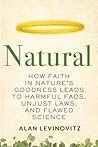
― Natural: How Faith in Nature's Goodness Leads to Harmful Fads, Unjust Laws, and Flawed Science
― Natural: How Faith in Nature's Goodness Leads to Harmful Fads, Unjust Laws, and Flawed Science
“We have the right to know what’s actually going on with our bodies, and we shouldn’t have to abandon our favorite foods if there’s nothing wrong with them.”
― The Gluten Lie: And Other Myths About What You Eat
― The Gluten Lie: And Other Myths About What You Eat
“To begin eating a forbidden food means becoming a member of the group you once defined as inferior and unclean.”
― The Gluten Lie: And Other Myths About What You Eat
― The Gluten Lie: And Other Myths About What You Eat
“in science, exaggeration is a flat-out lie.”
― The Gluten Lie: And Other Myths About What You Eat
― The Gluten Lie: And Other Myths About What You Eat
“Most beliefs about gluten, fat, sugar, and salt have little basis in fact and everything to do with a powerful set of myths, superstitions, and lies, which, despite modern scientific progress, have remained unchanged for centuries.”
― The Gluten Lie: And Other Myths About What You Eat
― The Gluten Lie: And Other Myths About What You Eat
“One courageous person raising awareness is Amy Kubal, “the Paleo Dietitian,” a licensed dietitian who has worked in the Paleo community for more than a decade. In February 2014, Amy came out on a prominent Paleo website as anorexic. “In my case,” she wrote, “Paleo was a convenient way to justify restriction. I entered the eating disorder world with an intense fear of fat, a fear that didn’t go away with Paleo—it let up a little but it also villainized many of the foods that were once ‘safe’ to me. Now carbs, dairy, beans, grains, and fat were evil and my list kept getting longer.” Amy spoke candidly with me about her own experience and her impression of the Paleo community in general. “You know, it works for some people,” she says. “But for 60 to 70 percent, it turns into a religion. Following this is like their commandment—does that have gluten? Does this? Their lives revolve around it, thinking constantly about what foods are at the places they’re going to be. I have more and more clients who bring their own food to restaurants and family gatherings.”
― The Gluten Lie: And Other Myths About What You Eat
― The Gluten Lie: And Other Myths About What You Eat
“There are easily ten times more yearly deaths from eating disorders in the United States than from all food allergies combined.”
― The Gluten Lie: And Other Myths About What You Eat
― The Gluten Lie: And Other Myths About What You Eat
“Ironically, anxiety about what you eat can produce precisely the same symptoms linked to gluten sensitivity.”
― The Gluten Lie: And Other Myths About What You Eat
― The Gluten Lie: And Other Myths About What You Eat
“Skepticism doesn’t generate clear rules. There’s no such thing as a sarcastic food pyramid.”
― The Gluten Lie: And Other Myths About What You Eat
― The Gluten Lie: And Other Myths About What You Eat
“The circle of salt’s potential victims grew at an alarming rate. Part of Dahl’s research into the evils of salt involved breeding a strain of salt-sensitive rats, in which he induced hypertension by feeding them commercially prepared baby food that contained added sodium. In April 1970, newspapers ran an Associated Press report about Dahl’s findings under scary headlines like “Baby Food Salt May Be Harmful, Researcher Says.” The report quoted Dahl calling salted baby food “a needless kind of risk.”
― The Gluten Lie: And Other Myths About What You Eat
― The Gluten Lie: And Other Myths About What You Eat
“Let’s start with “leaner.” Legions of Atkins and Paleo dieters—as well as obesity experts—fiercely contest the superiority of a plant-based diet for making you “leaner.” Like all nutrition science, the science of weight loss is complicated and uncertain. The relative effectiveness of moderate exercise, long thought a key component in reducing obesity rates, is now under scrutiny. (A recent editorial in the International Journal of Epidemiology is titled “Physical activity does not influence obesity risk: time to clarify the public health message.”) Even the wisdom of gradual weight loss is questionable, in light of a new study that suggests crash dieters don’t gain back weight any more than dieters who drop pounds gradually.”
― The Gluten Lie: And Other Myths About What You Eat
― The Gluten Lie: And Other Myths About What You Eat
“If you buy into food myths, this is the kind of life you can end up living: Scared that your coffee, along with the rest of your food, is filled with toxins. Seeking refuge from the modern world in the reassuring illusion of Paleolithic living. Hopeful that some biohacking savior will tell you how to make genuine cave-brewed java, the kind of java that Java Man would have made for himself—the coffee we are evolved to drink! Shelling out money for something called Brain Octane®.”
― The Gluten Lie: And Other Myths About What You Eat
― The Gluten Lie: And Other Myths About What You Eat
“The birth of my son, which posed a greater risk to my health than I anticipated when I became pregnant, gave me a new appreciation for the idea that there are some risks worth taking.”
― Natural: How Faith in Nature's Goodness Leads to Harmful Fads, Unjust Laws, and Flawed Science
― Natural: How Faith in Nature's Goodness Leads to Harmful Fads, Unjust Laws, and Flawed Science
“Sometimes my patients will say, ‘Is it because when I was forty-five, I did X?,’” Vinay Prasad, a hematologist-oncologist, told me. “In those moments, people have intense fear and regret, and when you say it’s not that, it removes something they’re really worried about.”
― Natural: How Faith in Nature's Goodness Leads to Harmful Fads, Unjust Laws, and Flawed Science
― Natural: How Faith in Nature's Goodness Leads to Harmful Fads, Unjust Laws, and Flawed Science
“Put simply: in some cases, eliminating gluten is just a proxy for cooking at home and cutting down on junk food. No one wants to cut down on foods they like. But when weight loss in itself is insufficient motivation, thinking that your favorite foods cause autism, foggy brain, and Alzheimer’s can provide the boost you need to make good on your diet.”
― The Gluten Lie: And Other Myths About What You Eat
― The Gluten Lie: And Other Myths About What You Eat
“That’s because then, as now, the appeal of dietary fads had to do with myths, not facts. In the case of the Daoists, grain prohibition represented rejection of modern culture and the promise of return to a mythic natural paradise. Suffering, disease, and death were ineradicable aspects of the present, so monks explained their dietary practices with an appealing fiction about a preagricultural paradise past.”
― The Gluten Lie: And Other Myths About What You Eat
― The Gluten Lie: And Other Myths About What You Eat
“As Davis puts it in a characteristic sentence from Wheat Belly: “Increased estrogen, breast cancer, man boobs . . . all from the bag of bagels shared at the office.”
― The Gluten Lie: And Other Myths About What You Eat
― The Gluten Lie: And Other Myths About What You Eat
“«Es mucho más probable algo que he observado numerosas veces, incluso con los miembros de una familia», dijo. «Ellos decidieron que comer mucha comida para llevar y comida rápida no era comer bien. Leyeron estas cosas sobre lo libre de gluten, y entonces están comprando vegetales, cocinando bien y comiendo mucho mejor. Culpar al gluten es fácil, pero se podrían señalar cientos de cosas que están haciendo mejor». Dicho de la manera más sencilla: en algunos casos, eliminar el gluten es sólo el pretexto para cocinar en casa y abandonar la comida chatarra. Nadie quiere abandonar las comidas que le gustan. Pero cuando la pérdida de peso en sí misma no es suficiente motivación, pensar que tus comidas favoritas causan autismo, cerebro nebuloso y Alzheimer, puede ser el impulso que necesitas”
― La mentira del gluten (Fuera de colección)
― La mentira del gluten (Fuera de colección)
“People said the researchers in Australia have changed their minds,” Gibson complains to me. “They don’t understand what science is. We didn’t change our minds. We just produced more data. You don’t come into research as an evangelist—otherwise you start to misinterpret your own data. We’re just looking for the truth, and the truth right now is that we’ve just scratched the surface.”
― The Gluten Lie: And Other Myths About What You Eat
― The Gluten Lie: And Other Myths About What You Eat
“Science is a way of understanding reality that relies on observation and experiment instead of moral judgments and intuition. But science is practiced by humans, and humans can never fully bracket their irrational motivations. Researchers and doctors fear death and disease just like everyone else.”
― The Gluten Lie: And Other Myths About What You Eat
― The Gluten Lie: And Other Myths About What You Eat
“Too often, “established facts” like the dangers of saturated fat are not facts at all, but intuitively plausible conjectures that attract disproportionate amounts of attention and research. And their plausibility, in large part, comes from an unacknowledged appeal to myths and magical thinking.”
― The Gluten Lie: And Other Myths About What You Eat
― The Gluten Lie: And Other Myths About What You Eat
“John Fire Lame Deer, a Lakota medicine man, wrote gut-wrenchingly about what the bison meant for his people, and what happened when they were destroyed: The buffalo gave us everything we needed. Without it we were nothing. Our tipis were made of his skin. His hide was our bed, our blanket, our winter coat. It was our drum, throbbing through the night, alive, holy. Out of his skin we made our water bags. His flesh strengthened us, became flesh of our flesh. Not the smallest part of it was wasted. His stomach, a red-hot stone dropped in to it, became our soup kettle. His horns were our spoons, the bones our knives, our women’s awls and needles. Out of his sinews we made our bowstrings and thread. His ribs were fashioned into sleds for our children, his hoofs became rattles. His mighty skull, with the pipe leaning against it, was our sacred altar. The name of the greatest of all Sioux was Tatanka Iyotake—Sitting Bull. When you killed off the buffalo you also killed the Indian—the real, natural, “wild” Indian.”
― Natural: How Faith in Nature's Goodness Leads to Harmful Fads, Unjust Laws, and Flawed Science
― Natural: How Faith in Nature's Goodness Leads to Harmful Fads, Unjust Laws, and Flawed Science
“While his thesis about what causes weight gain remains highly controversial—Taubes himself admits it requires further evidence—his case against the demonization of saturated fats was right on target.”
― The Gluten Lie: And Other Myths About What You Eat
― The Gluten Lie: And Other Myths About What You Eat
“both the Canadian study and the IOM study concluded that eating too little sodium—the amount recommended by the CDC and the AHA—could in fact increase risk of cardiovascular problems! (Americans consume, on average, 3,400 mg, toward the lower end of the safe spectrum, and well below the global average of 3,950 mg.)”
― The Gluten Lie: And Other Myths About What You Eat
― The Gluten Lie: And Other Myths About What You Eat
“I often speak at churches,” explained Hyman when asked about his culinary philosophy. “I say, ‘It’s really easy. Just ask yourself, Did God make this or did man make this? Did God make a Twinkie? No. Did God make an avocado? Yes.’ It’s pretty simple.”
― Natural: How Faith in Nature's Goodness Leads to Harmful Fads, Unjust Laws, and Flawed Science
― Natural: How Faith in Nature's Goodness Leads to Harmful Fads, Unjust Laws, and Flawed Science
“Learn to ignore these arguments: they are the stock-in-trade of snake oil salesmen. When you don’t have real evidence, it’s easy to find a version of your pet theory in some old book. Chinese sages with long beards, wise old women prescribing natural folk remedies—these are characters from fairy tales, not trustworthy sources of medical information.”
― The Gluten Lie: And Other Myths About What You Eat
― The Gluten Lie: And Other Myths About What You Eat
“Don’t depend on an unapproved diagnostic tool, like the opinion of a naturopathic doctor or the popular Cyrex Array tests recommended by Dr. Perlmutter. Why not? Just ask Dr. Alessio Fasano: When you develop a new drug or test, there are these rules created by the American Medical Association that [we are asked] to obey. We don’t take this lightly since we are dealing with health and therefore the well-being of human beings, so we want to make sure that we do this right. If somebody will develop a new tool, a new biomarker, a new test—first and foremost, it needs to be validated. The tests that are offered for gluten sensitivity didn’t go through this vigorous validation process.”
― The Gluten Lie: And Other Myths About What You Eat
― The Gluten Lie: And Other Myths About What You Eat
“Or did our hunter-gatherer ancestors have it better? Yes and no.”
― Natural: How Faith in Nature's Goodness Leads to Harmful Fads, Unjust Laws, and Flawed Science
― Natural: How Faith in Nature's Goodness Leads to Harmful Fads, Unjust Laws, and Flawed Science
“Doctors should not engage in an intellectual lobotomy that equates statistical significance with biological, physiological, or quantitative importance.”
― The Gluten Lie: And Other Myths About What You Eat
― The Gluten Lie: And Other Myths About What You Eat
“As one French nobleman wrote in 1703, “I envy the state of a poor Savage. . . . I wish I could spend the rest of my life in his Hutt.”
― Natural: How Faith in Nature's Goodness Leads to Harmful Fads, Unjust Laws, and Flawed Science
― Natural: How Faith in Nature's Goodness Leads to Harmful Fads, Unjust Laws, and Flawed Science