Goodreads helps you follow your favorite authors. Be the first to learn about new releases!
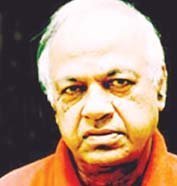
Start by following B. Raman.
Showing 1-6 of 6
“In those days, whatever roads were there in the Kachin State and the Burma Naga Hills had been blown up by the anti-Rangoon insurgents. The only way of moving about and carrying goods from one place to another was on the back of mules. North Burma had a large Chinese population of Yunanese origin. Many of them earned their living as muleteers.
In the year before the 1962 war, the IB’s trans-border sources in the North-East were repeatedly reporting about a tremendous increase in the number of mules and Chinese muleteers in the Kachin State and the Burma Naga Hills.
The then officers of the IB had sent out a wake-up call by drawing the attention of the policy-makers to the national security implications of this development in the areas adjoining the Indian border in Nagaland and Arunachal Pradesh. But they were ridiculed and accused of nursing imaginary fears.
It was realised only belatedly that these muleteers were actually Chinese Army and intelligence officers based in Yunnan, who had taken up position across our border in Burmese territory in the months before the invasion. After the war was over, there was a steep drop in the number of mules and Chinese muleteers in North Burma.”
― The Kaoboys of R&AW: Down Memory Lane
In the year before the 1962 war, the IB’s trans-border sources in the North-East were repeatedly reporting about a tremendous increase in the number of mules and Chinese muleteers in the Kachin State and the Burma Naga Hills.
The then officers of the IB had sent out a wake-up call by drawing the attention of the policy-makers to the national security implications of this development in the areas adjoining the Indian border in Nagaland and Arunachal Pradesh. But they were ridiculed and accused of nursing imaginary fears.
It was realised only belatedly that these muleteers were actually Chinese Army and intelligence officers based in Yunnan, who had taken up position across our border in Burmese territory in the months before the invasion. After the war was over, there was a steep drop in the number of mules and Chinese muleteers in North Burma.”
― The Kaoboys of R&AW: Down Memory Lane
“There is less chance of people taking to violence if they are able to let out steam. Generally, only people who keep boiling inside take to violence.”
― The Kaoboys of R&AW: Down Memory Lane
― The Kaoboys of R&AW: Down Memory Lane
“Dr. Jagjit Singh Chauhan, a Sikh leader of Punjab with not much following, went to the UK, took over the leadership of the Sikh Home Rule movement and re-named it the Khalistan movement. The Yahya regime invited him to Pakistan, lionized him as the leader of the Sikh people and handed over him some Sikh holy relics kept in Pakistan. He took them with him to the UK and tried to use them in a bid to win a following in the Sikh diaspora in the UK. At a press conference at London in September, 1971, he gave a call for the creation of an independent Khalistan.
He also went to New York, met officials of the United Nations and some American journalists and voiced allegations of the violation of the human rights of the Sikhs by the Indira Gandhi Government. These meetings were discreetly organized by officials of the US National Security Council Secretariat then headed by Kissinger.
With American and Pakistani encouragement, the activities of Chauhan continued till 1977. After the defeat of Indira Gandhi in the elections of 1977 and the coming into power of a Government headed by Morarji Desai, Chauhan abruptly called off his so-called Khalistan movement and returned to India.
After Indira Gandhi came back to power in the elections of 1980, the US suspected that India supported the presence of the Soviet troops in Afghanistan and that the Indian intelligence was collaborating with its Afghan counterpart. Chauhan went back to the UK and resumed the Khalistan movement.”
― The Kaoboys of R&AW: Down Memory Lane
He also went to New York, met officials of the United Nations and some American journalists and voiced allegations of the violation of the human rights of the Sikhs by the Indira Gandhi Government. These meetings were discreetly organized by officials of the US National Security Council Secretariat then headed by Kissinger.
With American and Pakistani encouragement, the activities of Chauhan continued till 1977. After the defeat of Indira Gandhi in the elections of 1977 and the coming into power of a Government headed by Morarji Desai, Chauhan abruptly called off his so-called Khalistan movement and returned to India.
After Indira Gandhi came back to power in the elections of 1980, the US suspected that India supported the presence of the Soviet troops in Afghanistan and that the Indian intelligence was collaborating with its Afghan counterpart. Chauhan went back to the UK and resumed the Khalistan movement.”
― The Kaoboys of R&AW: Down Memory Lane
“There was a delay in the commencement of the training by the Chinese. This was because the Chinese imposed a condition that the training syllabus would include classes in Marxism and Mao’s Thoughts. The gangs were accompanied by Naga pastors for holding the Sunday prayers and for conducting Bible classes. The Chinese were opposed to this and insisted that the pastors should go back to Nagaland. They seized from the hostiles all the copies of the Bible held by them. The Naga hostiles were reluctant to accept these conditions. This stalemate lasted several weeks. While Isaac Swu and Muivah were inclined to accept the Chinese conditions, the other leaders were not. Some of the leaders were taken to Beijing for talks with senior officials of the Chinese intelligence. Ultimately, it was the Chinese who gave in and dropped their conditions. The training started.”
― The Kaoboys of R&AW: Down Memory Lane
― The Kaoboys of R&AW: Down Memory Lane
“Indira Gandhi’s dramatic decision to ban all Pakistani flights over India to East Pakistan in retaliation for the hijacking of an Indian Airlines flight by two members of the Jammu and Kashmir Liberation Front (JKLF) to Lahore in January, 1971, paved the way for the ultimate victory in East Pakistan. When the Pakistani aircraft tried to fly round India over the sea by availing of re-fuelling facilities in Sri Lanka, Indira Gandhi pressurized the Government of Sri Lanka to stop providing the re-fuelling facilities. This greatly weakened the ability of the headquarters of the Pakistani Armed Forces in West Pakistan to send reinforcements to East Pakistan and to keep their garrisons in East Pakistan supplied.”
― The Kaoboys of R&AW: Down Memory Lane by B. Raman
― The Kaoboys of R&AW: Down Memory Lane by B. Raman
“In India, one tends to think that Pakistan’s use of terrorism against India started in 1989 in Jammu and Kashmir (J&K). It is not so. It started in 1956 in Nagaland. The ISI trained the followers of Phizo, the Naga hostile leader, in training camps set up in the Chittagong Hill Tracts (CHT) of East Pakistan. It also provided them with safe sanctuaries in the CHT from which they could operate in the Indian territory through northern Myanmar.”
― The Kaoboys of R&AW: Down Memory Lane
― The Kaoboys of R&AW: Down Memory Lane