Goodreads helps you follow your favorite authors. Be the first to learn about new releases!
Start by following Vigen Guroian.

Showing 1-30 of 47
“Mere instruction in morality is not sufficient to nurture the virtues. It might even backfire, especially when the presentation is heavily exhortative and the pupil's will is coerced. Instead a compelling vision of the goodness of goodness itself needs to be presented in a way that is attractive and stirs the imagination.”
― Tending the Heart of Virtue: How Classic Stories Awaken a Child's Moral Imagination
― Tending the Heart of Virtue: How Classic Stories Awaken a Child's Moral Imagination
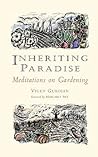
“I think if we all gardened more, they and all of the other birds that fly in the air above and light in my garden below would be better off. I know that God values them no less than I do. So when I plant in spring I also hope to taste of God in fruit of summer sun and sight of feathered friends.”
― Inheriting Paradise: Meditations on Gardening
― Inheriting Paradise: Meditations on Gardening
“A true gardener would never pretend that gardening is all pleasure, or that it always prompts reflection.
But she might claim that in the garden she has tasted Paradise.”
― The Fragrance of God
But she might claim that in the garden she has tasted Paradise.”
― The Fragrance of God
“If one scratches just beneath the surface of the moral outlook of many Americans, one bumps into the rather naively but also often vehemently held assumption that the individual is the architect of his or her own morality built out of value “blocks” that the individual independently picks and stacks. We suddenly run into the ghost of Friedrich Nietzsche. There are real and very important differences between what we now call values and the virtues as they had traditionally been understood.”
― Tending the Heart of Virtue: How Classic Stories Awaken a Childs Moral Imagination
― Tending the Heart of Virtue: How Classic Stories Awaken a Childs Moral Imagination
“Oh”
― The Fragrance of God
― The Fragrance of God
“The fruit of the garden is not restricted to what we eat. Every garden lends something more to the imagination - beauty.”
― Inheriting Paradise: Meditations on Gardening
― Inheriting Paradise: Meditations on Gardening
“The deep truths of a good story, especially fairy tales, cannot be revealed through discursive analysis—otherwise, why tell the story?”
― Tending the Heart of Virtue: How Classic Stories Awaken a Childs Moral Imagination
― Tending the Heart of Virtue: How Classic Stories Awaken a Childs Moral Imagination
“The virtues define the character of a person, his enduring relationship to the world, and what will be his end. Whereas values, according to their common usage, are the instruments or components of moral living that the self chooses for itself and that the self may disregard without necessarily jeopardizing its identity.”
― Tending the Heart of Virtue: How Classic Stories Awaken a Childs Moral Imagination
― Tending the Heart of Virtue: How Classic Stories Awaken a Childs Moral Imagination
“Virtue is the “magic” of moral life for it often appears in the most unexpected persons and places and with surprising results.”
― Tending the Heart of Virtue: How Classic Stories Awaken a Childs Moral Imagination
― Tending the Heart of Virtue: How Classic Stories Awaken a Childs Moral Imagination
“Henry Mitchell, in his book One Man's Garden, observes that "it is not important for a garden to be beautiful" in everyone's eyes. But "it is extremely important for the gardener to think it is a fair substitute for Eden." Perhaps this is an overstatement, or perhaps it is a theological truth.”
― Inheriting Paradise: Meditations on Gardening
― Inheriting Paradise: Meditations on Gardening
“The contemporary moral philosopher Alasdair MacIntyre has summed this up eloquently: It is through hearing about wicked stepmothers, lost children, good but misguided kings, wolves that suckle twin boys, youngest sons who receive no inheritance but must make their own way in the world and eldest sons who waste their inheritance … that children learn or mislearn what a child and what a parent is, what the cast of characters may be in the drama into which they have been born and what the ways of the world are. Deprive children of stories and you leave them unscripted, anxious stutterers in their actions as in their words.2”
― Tending the Heart of Virtue: How Classic Stories Awaken a Childs Moral Imagination
― Tending the Heart of Virtue: How Classic Stories Awaken a Childs Moral Imagination
“the best sources in the Western tradition have argued that morality is much more than, indeed qualitatively different from, the sum of the values that an essentially autonomous self chooses for itself. Classical, Jewish, and Christian sources, such as Plato, Aristotle, and Cicero, or Augustine, John Chrysostom, Maimonides, Thomas Aquinas, and John Calvin, insist that morality is neither plural nor subjective.”
― Tending the Heart of Virtue: How Classic Stories Awaken a Childs Moral Imagination
― Tending the Heart of Virtue: How Classic Stories Awaken a Childs Moral Imagination
“My son Rafi is enchanted with cyberspace. But we are not disembodied mind or spirit, we are our bodies - cruising the Internet won't teach us that. It may even trick us into thinking that having a body and a place is not important. Gardening teaches us differently. I do not mean industrial mechanized farming, I mean the kind of gardening that any one of us can do with his hands and feet and the simplest tools.”
― Inheriting Paradise: Meditations on Gardening
― Inheriting Paradise: Meditations on Gardening
“Beauty and the Beast” embraces one last important moral truth: a person’s decisions in life will define what kind of person she becomes. In this sense also our destinies are not fated: we decide our own destinies.”
― Tending the Heart of Virtue: How Classic Stories Awaken a Childs Moral Imagination
― Tending the Heart of Virtue: How Classic Stories Awaken a Childs Moral Imagination
“Sailors need to know when to use ballast or throw down the anchor, lest the ship sink and they drown. In like manner, the virtues enable us to respond correctly to those moments of life that are the moral equivalents to such conditions at sea.”
― Tending the Heart of Virtue: How Classic Stories Awaken a Childs Moral Imagination
― Tending the Heart of Virtue: How Classic Stories Awaken a Childs Moral Imagination
“Gardening symbolizes our race's primordial acceptance of a responsibility and role in rectifying the harm done to the creation through sin.”
― Inheriting Paradise: Meditations on Gardening
― Inheriting Paradise: Meditations on Gardening
“The modern abridgments and retellings of Pinocchio, of which Disney’s only the most well known, soften the violence of death in Collodi’s original tale and as a result sweeten and sentimentalize the love that grows within Pinocchio. Thus they also fail to capture the gritty nature of the puppet’s courage and endurance. Pinocchio’s close calls with death, whether when dangling over the showman’s fire, hanging from a tree, or being plunged into the dark depths of the sea, are also the hard lessons he learns about the true value of life, the reality of reciprocal love, and the necessity of self-expending love in the face of evil and danger.”
― Tending the Heart of Virtue: How Classic Stories Awaken a Child's Moral Imagination
― Tending the Heart of Virtue: How Classic Stories Awaken a Child's Moral Imagination
“Uma criança balança as pernas ritmicamente por excesso de vida, não por sua ausência. Por terem vitalidade abundante, por serem espiritualmente impetuosas e livres, as crianças querem que as coisas sejam repetidas e inalteradas. Sempre dizem ‘de novo’” porque há prazer nessa coisa ou atividade. “Pode ser”, conclui Chesterton, “que Deus crie todas as margaridas separadamente, mas nunca tenha se cansado de criá-las. Pode ser que Ele tenha o eterno apetite da infância, pois pecamos e envelhecemos, e nosso Pai é mais jovem que nós. A repetição na Natureza pode não ser uma mera recorrência; pode ser um encore teatral”.”
― Cultivando um Coração de Virtudes
― Cultivando um Coração de Virtudes
“Yet our society embraces an anti-human trinity of utilitarianism, subjectivism, and relativism that denies the existence of a moral sense or moral law.”
― Tending the Heart of Virtue: How Classic Stories Awaken a Child's Moral Imagination
― Tending the Heart of Virtue: How Classic Stories Awaken a Child's Moral Imagination
“A Bela e a Fera” ensina a lição simples, mas importante de que as aparências podem enganar e aquilo que é visto nem sempre é o que parece ser.”
― Cultivando um Coração de Virtudes
― Cultivando um Coração de Virtudes
“So long as self-deception is at the source of a person’s perception of things he or she cannot mature into the fullness of being human or lead a successful course through life. In Pinocchio, the physiological metaphor of hunger represents the many other passions and desires that lead children astray. Like all small children, Pinocchio is often driven by uncontrollable hunger. This gets him into much of his early trouble, while undisciplined passions and wanderlust eventually land him in the false paradise of Playand. But Pinocchio’s longing to be a real boy with a mother and father lies deeper still and is the source of his eventual salvation.”
― Tending the Heart of Virtue: How Classic Stories Awaken a Child's Moral Imagination
― Tending the Heart of Virtue: How Classic Stories Awaken a Child's Moral Imagination
“Children are vitally concerned with distinguishing good from evil and truth from falsehood. This need to make moral distinctions is a gift, a grace, that human beings are given at the start of their lives.”
― Tending the Heart of Virtue: How Classic Stories Awaken a Childs Moral Imagination
― Tending the Heart of Virtue: How Classic Stories Awaken a Childs Moral Imagination
“We are living in a culture in which metaphor is discarded for these so-called facts. We train minds to detect these facts much as one breaks in a baseball glove. Meanwhile, the imagination is neglected and is left unguarded and untrained. W”
― Tending the Heart of Virtue: How Classic Stories Awaken a Childs Moral Imagination
― Tending the Heart of Virtue: How Classic Stories Awaken a Childs Moral Imagination
“Pinocchio’s transformation into a real boy is accomplished not thorugh some final magical action, as Disney has it, but by the inner working of a grace that converts the heart and moves the self toward acts of geniuine love.”
― Tending the Heart of Virtue: How Classic Stories Awaken a Child's Moral Imagination
― Tending the Heart of Virtue: How Classic Stories Awaken a Child's Moral Imagination
“Crianças precisam de orientação e roteiros morais, beneficiando-se imensamente com o exemplo de adultos que falam a verdade e agem com força moral.”
― Cultivando um Coração de Virtudes
― Cultivando um Coração de Virtudes
“valores certamente não são a resposta para o relativismo moral. Muito pelo contrário, a mera discussão sobre valores já favorece o relativismo moral.”
― Cultivando um Coração de Virtudes
― Cultivando um Coração de Virtudes
“A person has to grow as a moral self in order to transcend this childlike subjectivity and primitive narcissism.”
― Tending the Heart of Virtue: How Classic Stories Awaken a Child's Moral Imagination
― Tending the Heart of Virtue: How Classic Stories Awaken a Child's Moral Imagination
“Thus, evil takes a foothold in Edmund’s will and imagination. much like the rot that attacks the soft spot of a fruit and spreads through the entire flesh.”
― Tending the Heart of Virtue
― Tending the Heart of Virtue
“I do not think that the current debate over values lends much promise of clarifying what we believe in or what morality we should be teaching our children. Values certainly are not the answer to moral relativism. Quite the contrary, values talk is entirely amenable to moral relativism. In”
― Tending the Heart of Virtue: How Classic Stories Awaken a Childs Moral Imagination
― Tending the Heart of Virtue: How Classic Stories Awaken a Childs Moral Imagination
“religious and philosophical ethicists have not reflected much on children as moral learners or written much on the virtues as taught and communicated in children’s stories. Perhaps this is because, like so many others, ethicists too subscribe to the falsehood that childhood is more about socialization than moral formation.”
― Tending the Heart of Virtue: How Classic Stories Awaken a Childs Moral Imagination
― Tending the Heart of Virtue: How Classic Stories Awaken a Childs Moral Imagination