Goodreads helps you follow your favorite authors. Be the first to learn about new releases!
Start by following Bill Carter.

Showing 1-18 of 18
“Grief produces an abundant energy that must find a way to burn itself up. And that is the fundamental problem, one that can take a lifetime to exhaust.”
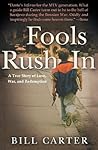
― Fools Rush In: A True Story of War and Redemption
― Fools Rush In: A True Story of War and Redemption
“It's my experience that people want to do something, but become confused by an overwhelming sense of hopelessness, not knowing what to do, and in the end do the only thing they believe they possibly can: nothing.”
― Fools Rush In: A True Story of War and Redemption
― Fools Rush In: A True Story of War and Redemption
“If there was a bad guy we could appeal to the people because, like it or not, we, the huddled masses, want our public figures to be good or bad but rarely allow them to mix the two. Not good an bad. We place people in these categories, which then creates a smooth story-line but also a dichotomy. It's why we like our male movie stars to be either bad boys or heroes, our leading ladies sluts or soccer moms. We like our politicians to be tough guys or saints. What we don't like are any signs of actual humanity, a mixture of the two. So we are left with the question: who is the bad guy? And is the bad guy in control of all that is bad?”
― Fools Rush In: A True Story of War and Redemption
― Fools Rush In: A True Story of War and Redemption
“It was not our war, but it would be our disgrace, our shame. The West was filling to declare a war over the price of oil, but when it came to the wholesale slaughter of human beings we folded our hands across our chests and tapped our heels, with great anticipation that Sunday's sporting events would be wonderfully entertaining”
― Fools Rush In: A True Story of War and Redemption
― Fools Rush In: A True Story of War and Redemption
“Surely, when looking back, our lives can, for the most part, be accounted for in our interactions with others. That is where memories are stored, in one another. And yet each person is unique enough in his or her own thoughts that no two people are going to remember the same experience in the same way.”
― Fools Rush In: A True Story of War and Redemption
― Fools Rush In: A True Story of War and Redemption
“Expats of any country are quick to lose their sense of humour, beaten down by a lifetime of defending the land they no longer live in.”
― Fools Rush In: A True Story of War and Redemption
― Fools Rush In: A True Story of War and Redemption
“War is always more complex. Economics, history, religion all have a role, but not for the ones dodging the bullets. They just get blown around like seeds in the wind until the city folk with calculators and Swiss bank accounts stop talking rot from a bunker under a mountain.”
― Fools Rush In: A True Story of War and Redemption
― Fools Rush In: A True Story of War and Redemption
“That week we tried everything to bury our heads in the sand. But the problem remains the same world over; the sand is never quite deep enough.”
― Fools Rush In: A True Story of War and Redemption
― Fools Rush In: A True Story of War and Redemption
“Religion didn't matter to the city drunks but they knew it mattered to the village people. What the city people wanted was land. Power. But because that all sounds rather greedy and a bit crass, they made it religious and ethnic.”
― Fools Rush In: A True Story of War and Redemption
― Fools Rush In: A True Story of War and Redemption
“I watched the refugee kids swim. They are easy to spot. They are the ones whose mothers stand on the shore watching the horizon instead of their child.”
―
―
“Someone who spoke English had been listening to his speeches of promised freedom and would have realized they were the drunken lies of men who have titles of power but no authority to exercise it.”
― Fools Rush In: A True Story of War and Redemption
― Fools Rush In: A True Story of War and Redemption
“In this journey we call life, we are all ultimately alone.”
― Fools Rush In: A True Story of War and Redemption
― Fools Rush In: A True Story of War and Redemption
“To allow the situation to get caught up in “They misled me” or “I was lied to” or “They did the wrong thing and I’m doing the right thing” had the effect of turning it toxic.”
― The War for Late Night: When Leno Went Early and Television Went Crazy
― The War for Late Night: When Leno Went Early and Television Went Crazy
“Or, said another way, Native Americans, unlike the people of more modern cultures, don't believe talking is the same thing as thinking.”
― Red Summer: The Danger, Madness, and Exaltation of Salmon Fishing in a Remote Alaskan Village
― Red Summer: The Danger, Madness, and Exaltation of Salmon Fishing in a Remote Alaskan Village
“What Jay knew from his own
endless stand-up gigs was that if lights were shining on an audience, they tended to become selfconscious—and a lot less likely to laugh”
― The War for Late Night: When Leno Went Early and Television Went Crazy
endless stand-up gigs was that if lights were shining on an audience, they tended to become selfconscious—and a lot less likely to laugh”
― The War for Late Night: When Leno Went Early and Television Went Crazy
“Two years outside the country, and not much had changed. Still, more people watched the Super Bowl than voted; budgets for defense outweighed education, medicine, and everything else combined....”
― Red Summer: The Danger, Madness, and Exaltation of Salmon Fishing in a Remote Alaskan Village
― Red Summer: The Danger, Madness, and Exaltation of Salmon Fishing in a Remote Alaskan Village
“Critics—as well as the network and his own producers—often cited Jay Leno’s apparent lack of interest in the stories guests on the show told. Certainly most of the staff knew that Jay devoted little time preparing to speak to guests. Worse, was a habit Jay adopted later in his Tonight Show run. As described by one A-level movie star guest, an appearance with Jay could be thoroughly disconcerting...
― The Late Shift: Letterman, Leno & the Network Battle for the Night
'I’m sitting there telling him a story about some damn thing that happened and I realize he’s not looking at me at all,” the star said. 'His eyes are going straight past me. The audience can’t see this because he’s still looking vaguely in my direction, but his eyes are not on me at all. When he went to commercial I took a look over my shoulder. There was a guy with cue cards standing off to the side behind him. Jay was just reading the questions off the cards. Not paying attention to me at all. The whole thing was so artificial; I was totally put off by it.'”
― The Late Shift: Letterman, Leno & the Network Battle for the Night
“In mid-1986, Letterman got an unexpected call from Dave Tebet, the Carson Productions executive who worked with “Late Night.” Tebet said that he and Henry Bushkin, Johnny Carson’s extremely powerful attorney, business partner, and author of his 2013 tell-all, wanted to meet with Letterman—by himself, totally confidentially. Letterman was stunned when he heard what they had come to propose: They were offering him the “Tonight ” show; they wanted him to take Johnny Carson’s job. Bushkin, in his role as head of Carson Productions, said that the company intended to maintain ownership of the “Tonight ” show after Johnny stepped down, and now was the time to line up Letterman to slip into Johnny’s chair. The details were vague, and to Letterman they sounded deliberately so. He said he was flattered, he listened politely, but his radar was signaling a warning. Neither man told Letterman how or when this ascension would be accomplished, a problem that started sounding even worse when Bushkin advised Letterman that no one at NBC or anywhere else knew of the plan yet—not even Carson.
Letterman, already nervous, now started to feel as if he were getting close to a fire he didn’t want to be in the same campground with. They asked Letterman not to tell anyone, not even his management. They would get back to him.
The more Letterman thought about it, the more it sounded like a palace coup. His immediate instinct was to stay out of this, because there was going to be warfare of some sort. He feared Carson would interpret this maneuver as plotting and he guessed what might happen next: Johnny’s best friend Bushkin wouldn’t take the fall. Nor would his old crony, Tebet. It would be the punk who got blamed for engineering this.
Letterman broke his promise and called Peter Lassally, Carson’s producer. Lassally was shocked by what he heard. He suspected that Bushkin was involved in all sorts of machinations that never benefited Carson. He thought about telling Johnny, but other attempts to alert the star to questionable activities by Bushkin had been harshly rebuffed. Lassally decided to see what developed and advised Dave to keep Bushkin and Tebet at a distance.
Letterman had a couple of more phone calls from Bushkin and Tebet about the deal; they discussed it with Ron Ellberger, the Indianapolis attorney that Letterman still employed. Tebet blamed the lawyer for muddying up the deal, and eventually said that Carson knew of the plan and had approved of the idea of lining up Letterman for the future.
But Tebet was lying; Carson had never heard a word about it, and when he did—long after the approach had taken place and Bushkin and Tebet were both long gone—Carson exploded with rage at the thought that this plotting had gone on behind his back. He knew exactly what he would have done if he had learned of it at the time: He would have fired Bushkin and Tebet before another day elapsed. Letterman had guessed right in steering clear of the coup. When he learned that Carson hadn’t known what was going on, Letterman was deeply thankful for his cautious instincts.
When the offer from Bushkin melted away, Letterman tried not to give it any second thoughts. Only for the briefest time did he think that he might have walked away from an offer to host the “Tonight” show. The next time, it would not be nearly so easy to take.”
― The Late Shift: Letterman, Leno & the Network Battle for the Night
Letterman, already nervous, now started to feel as if he were getting close to a fire he didn’t want to be in the same campground with. They asked Letterman not to tell anyone, not even his management. They would get back to him.
The more Letterman thought about it, the more it sounded like a palace coup. His immediate instinct was to stay out of this, because there was going to be warfare of some sort. He feared Carson would interpret this maneuver as plotting and he guessed what might happen next: Johnny’s best friend Bushkin wouldn’t take the fall. Nor would his old crony, Tebet. It would be the punk who got blamed for engineering this.
Letterman broke his promise and called Peter Lassally, Carson’s producer. Lassally was shocked by what he heard. He suspected that Bushkin was involved in all sorts of machinations that never benefited Carson. He thought about telling Johnny, but other attempts to alert the star to questionable activities by Bushkin had been harshly rebuffed. Lassally decided to see what developed and advised Dave to keep Bushkin and Tebet at a distance.
Letterman had a couple of more phone calls from Bushkin and Tebet about the deal; they discussed it with Ron Ellberger, the Indianapolis attorney that Letterman still employed. Tebet blamed the lawyer for muddying up the deal, and eventually said that Carson knew of the plan and had approved of the idea of lining up Letterman for the future.
But Tebet was lying; Carson had never heard a word about it, and when he did—long after the approach had taken place and Bushkin and Tebet were both long gone—Carson exploded with rage at the thought that this plotting had gone on behind his back. He knew exactly what he would have done if he had learned of it at the time: He would have fired Bushkin and Tebet before another day elapsed. Letterman had guessed right in steering clear of the coup. When he learned that Carson hadn’t known what was going on, Letterman was deeply thankful for his cautious instincts.
When the offer from Bushkin melted away, Letterman tried not to give it any second thoughts. Only for the briefest time did he think that he might have walked away from an offer to host the “Tonight” show. The next time, it would not be nearly so easy to take.”
― The Late Shift: Letterman, Leno & the Network Battle for the Night