Goodreads helps you follow your favorite authors. Be the first to learn about new releases!
Start by following David Laskin.

Showing 1-16 of 16
“It was the age of confidence. Arrogance was epidemic.”
― The Children's Blizzard
― The Children's Blizzard
“Gro Rollag was no beauty, but she was a strong capable young woman with a long face, prominent cheekbones, high forehead, and a kindly intelligent look in her rather narrow eyes. According to family lore, she was not the most conscientious housekeeper because she preferred reading to housework. A love of books and reading ran in the family. Of all the possessions they were forced to sell or leave behind in Norway, what the Rollags remembered with deepest regret was the library they inherited from an eighteenth-century ancestor - lovely old books sold to pay for their passage to America.”
― The Children's Blizzard
― The Children's Blizzard
“Despite Lowell's determination to be 'surrounded by Catholics,' the couple instantly got swept up into the fast, loud current of atheist-Jewish-Marxist-hard-drinking-fast-talking literary New York. Philip Rahv and Nathalie Swan took a shine to Lowell and Stafford, and soon they were getting invited to the Rahv's combative, whiskey-soaked parties.”
― Partisans: Marriage, Politics, and Betrayal Among the New York Intellectuals
― Partisans: Marriage, Politics, and Betrayal Among the New York Intellectuals
“hot and dry early that year, and by the Fourth of July the grass was parched and brown and stubby. The young Teddy Roosevelt, traveling through the north part of Dakota Territory on the way to his ranches near Medora, told a newspaper reporter in mid-July that “Between the drouth, the”
― The Children's Blizzard
― The Children's Blizzard
“They pulled up to 195 Madison Street - a tall narrow six-story redbrick and limestone-trimmed tenement house indistinguishable from all the tenement houses on all the other streets of tenements. The bars and ladders of a fire escape ran up the left side of the building; sooty stone scrolls, shields, and flowers framed the second- and third-story windows. This was the place where they had to live? Two blocks from the commercial madness of East Broadway; two blocks from the filthy snout of the East River, smelling of fish, ships, and garbage; three blocks from the brain-rattling racket of the elevated train; three blocks from the playground of the Henry Street Settlement; practically in the shadow of the construction side of the twin-towered Manhattan Bridge. Every three blocks they passed more people than the entire population of Rakov. Half a million Jews packed the one and a half square miles of the Lower East Side in 1909; 702 people per acre in the densest acres. It was one of the most crowded places on earth, and all of them seemed to be swarming outdoors on the June afternoon that Gishe Sore and her family arrived. Aside from the crisscross steel girders of the Manhattan Bridge at the end of the street, it was all tenement houses as far as she could see. Tenements and bodies. In every room of every building, bodies fought for a ray of light and a sip of air. Bodies slept four to a bed and on two chairs pushed together; bodies sat hunched over sewing machines in parlors and sunless back bedrooms and at kitchen tables heaped with cloth and thread; bodies ate, slept, woke, and cleared out for the next shift of bodies to cycle through. Toilets in the hall or in courtyard outhouses; windows opening, if they opened at all, onto fetid air shafts; no privacy; no escape from the racket and smell of neighbors; no relief from summer heat or blasting winter furnaces. This was the place her American children had brought them to live?”
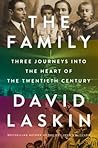
― The Family: Three Journeys into the Heart of the Twentieth Century
― The Family: Three Journeys into the Heart of the Twentieth Century
“My grandfather, great-grandfather, great-great-grandfather, and great-great-great-grandfather were Torah scribes - and for all I know the tradition goes back to the days before the Diaspora. The texts I compose and redact are not sacred, but I am a kind of scribe as well. I count myself proudly among the people of the book. I commit to paper the stories of those who came before me. What we have done, what we have lost, what remains, what we can pass on - this is the scope of my work. The family work, as I now understand.
Though I have ceased to attend synagogue and don't claim my ancestors' knowledge or share their faith, I have come to love and revere the Judaism that sustained my family through the generations. The more I learn about them, the more amazed I am by the breadth and originality of their lives. Their daring, their drive, their inventiveness and ambition and confidence and secret melancholy strike me now like something out of Dos Passos or Isaac Bashevis Singer. They were giants; wittingly or not, they enacted epics. They gave me so much, these fierce, passionate immigrants - my life, my freedom and privileges, my education, my identity, my country. The least I can do is give their stories back to them.”
― The Family: Three Journeys into the Heart of the Twentieth Century
Though I have ceased to attend synagogue and don't claim my ancestors' knowledge or share their faith, I have come to love and revere the Judaism that sustained my family through the generations. The more I learn about them, the more amazed I am by the breadth and originality of their lives. Their daring, their drive, their inventiveness and ambition and confidence and secret melancholy strike me now like something out of Dos Passos or Isaac Bashevis Singer. They were giants; wittingly or not, they enacted epics. They gave me so much, these fierce, passionate immigrants - my life, my freedom and privileges, my education, my identity, my country. The least I can do is give their stories back to them.”
― The Family: Three Journeys into the Heart of the Twentieth Century
“percent; in Detroit it reached 50 percent. There”
― The Family: Three Journeys into the Heart of the Twentieth Century
― The Family: Three Journeys into the Heart of the Twentieth Century
“Shimon turned sixteen on February 5, 1944. Three years earlier he had stood beneath the golden hands - the hands of the Kohanim - that adorned the ark of the Torah at Temple Taharat Hakodesh and chanted his Bible portion in Hebrew. A bar mitzvah boy. His mother and grandmother wept with pride. Did Shimon remember it was his birthday? Did he still believe in God? Occasionally the slaves sang Hebrew songs - songs 'filled with nostalgia, hope, and desire for life.' Did Shimon join in?”
― The Family: Three Journeys into the Heart of the Twentieth Century
― The Family: Three Journeys into the Heart of the Twentieth Century
“I told Benny that I had plans to go to Belarus and Lithuania t see the places where our European relatives had lived and died. Halfway through the week, Benny decided to join me on what he called the 'roots trip,' and by the end of the week Shimon and his oldest son, Amir, and Benny's son Rotem had signed on too. I enlisted my daughter Emily, who speaks Russian. In the middle of May 2011, the six of us met at a small wooden inn deep in the lush green Belarusian countryside. Together we visited Rakov and Volozhin; we walked through the crumbling hall of the Volozhin yeshiva, which has survived two world wars and the death of its students and teachers; we scouted out the street near Rakov's brick Catholic church where Sonia, Doba, and Etl grew up. We traveled to Vilna - now Vilnius, the capital of Lithuania - and searched out the two apartment buildings where Doba and Shepseleh lived and raised their sons. We drove out to Ponar to say kaddish at the cratered pit where Shepseleh and tens of thousands of Lithuanian Jews lay buried. We walked to a hillside at the edge of Volozhin and said kaddish over the pit where Chaim's brother Yishayahu may have been shot. We said kaddish in the small grassy clearing where the Rakov synagogue burned with Etl and her children inside.”
― The Family: Three Journeys into the Heart of the Twentieth Century
― The Family: Three Journeys into the Heart of the Twentieth Century
“Or should one condemn an economic system that gave some families mansions on Summit Avenue and left others so poor that they would risk their children and their own lives for the sake of a single cow? They called it “The School Children’s Blizzard” because so many of the victims were so young—but in a way the entire pioneer period was a kind of children’s disaster. Children were the unpaid workforce of the prairie, the hands that did the work no one else had time for or stomach for.”
― The Children's Blizzard
― The Children's Blizzard
“It all started, like so many family stories, with a plausible fiction - honest mistake, faulty memory, bit of embroidered imagination that got repeated so many times it became family truth.”
― The Family: Three Journeys into the Heart of the Twentieth Century
― The Family: Three Journeys into the Heart of the Twentieth Century
“The ambitious and restless, the poor and desperate, the gullible, the land hungry, the exile from oppression, the start-over dreamer, the Go West! hothead, the get-rich-quick drifter--all were spellbound by the mystique of Dakota in the 1880s.”
― The Children's Blizzard
― The Children's Blizzard
“He had ceased to be Shimonkeh when they took his mother. He ceased to be Shimon when they took his clothes and half his hair. He was prisoner #641, a slave belonging to Albert Speer.”
― The Family: Three Journeys into the Heart of the Twentieth Century
― The Family: Three Journeys into the Heart of the Twentieth Century
“The pulse of history beats in every family. All of our lives are engraved with epics of love and death. What my family gained and lost in the twentieth century, though extreme, was not unique. War has touched all of us. Fate and chance and character make and break every generation. The Shoah was not the only genocide. America is not the first land of opportunity nor will it be the last. Warring peoples have fought over the Holy Land for thousands of years, all of them claiming to have God on their side. In a family history written by Palestinian Arabs, Chaim and Sonia and their fellow Zionists would be oppressors; the Koran, not the Torah, would be the holy book; Jerusalem would be a besieged, stolen city. Open the book of your family and you will be amazed, as I was, at what you find.”
― The Family: Three Journeys into the Heart of the Twentieth Century
― The Family: Three Journeys into the Heart of the Twentieth Century
“This much is clear. At fourteen, Shimonkeh was old enough to bristle at the sight of the leather-jacketed Jewish police that the Nazis appointed to cow and club and rob their own kind. He was old enough to burn with desire, to fall in love, to ache for beauty and dream of violent, heroic revenge. He was old enough to take part in the culture of his city and to feel proud that, as one writer put it, 'the insanely wild conditions of life did not break the Jewish creative spirit.”
― The Family: Three Journeys into the Heart of the Twentieth Century
― The Family: Three Journeys into the Heart of the Twentieth Century
“The Minnesota State Weather observer at Pine River Dam recorded a minimum temperature of 46 below on December 29; observers at Pokegama Falls and Leech Lake Dam were unable to take temperature readings that day because the mercury inside their government-issued thermometers froze solid. It's hard to find vocabulary for weather this cold. The senses first become sharp and then dulled. Objects etch themselves with hyperclarity on the dense air, but it's hard to keep your eyes open to look at them steadily. When you first step outside from a heated space, the blast from 46-below-zero air clears the mind like a ringing slap. After a breath or two, ice builds up on the hairs of your nasal passages and the clear film bathing your eyeballs thickens. If the wind is calm and your body, head, and hands are covered, you feel preternaturally alert and focused. At first. A dozen paces from the door, your throat begins to feel raw, your lips dry and crack, tears sting the corners of your eyes. The cold becomes at once a knife and, paradoxically, a flame, cutting and scorching exposed skin.”
― The Children's Blizzard
― The Children's Blizzard