Goodreads helps you follow your favorite authors. Be the first to learn about new releases!
Start by following Katy Soar.

Showing 1-23 of 23
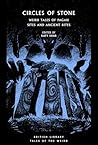
“Fairies have been associated with barrows since the twelfth century, but some megaliths also have fae connections: stone circles and standing stones were thought to mark the entrance to their realm. For example, the King Stone from the Rollright Stones in Oxfordshire is said to mark the entrance to the fairy kingdom beneath the circle. The devil has made a more recent appearance. By the mid eighteenth century, Stukeley reports that the stones in the northern inner circle of Avebury (the Cove) were known as the Devil’s Brand-Irons, and that Stonehenge’s Heel Stone was created when “the devil threw it at the builders”. Many of these traditions which associated megalithic monuments with the devil were originally associated with giants, and only latterly with Old Nick himself, showing how associations change depending on historical and social contexts. And where the devil goes, so too do witches. Stone circles were thought to be sites where witches would meet to practise their infernal rites. Isobel Gowdie, a seventeenth-century Scottish woman accused of witchcraft, noted in her confession that her and other witches would shoot elf-arrows at “the standing-stanes” at Auldern, where the devil would “sit on a blak kist”, presumably the remains of the prehistoric ring-cairn that was once in the centre of the four stones.”
― Circles of Stone: Weird Tales of Pagan Sites and Ancient Rites
― Circles of Stone: Weird Tales of Pagan Sites and Ancient Rites
“Christopher was wildly anxious to dig round it, expose the socket if possible, and see what he could find. He never mentioned it to anyone—nobody seemed to be interested. It never occurred to him to ask permission of anyone—least of all of the stone,” the Dean added quietly.”
― Circles of Stone: Weird Tales of Pagan Sites and Ancient Rites
― Circles of Stone: Weird Tales of Pagan Sites and Ancient Rites
“The stones were also thought to have a degree of agency. To tamper with or damage these stones was to court ill luck. In 1861 J. T. Blight, a Cornish archaeological artist, reported that the man responsible for pulling down a cromlech near Manyon in Cornwall began to suffer from misfortunes, such as his cattle dying and his crops failing. Many stones are also thought to be able to move by themselves, to turn round, turn over, or dance. Visiting water also seems to be a common theme: Maen Ceti, a Neolithic chambered cairn in West Glamorgan, is said to rise and go to the sea to bathe at Midsummer Eve and All-Hallow’s Eve.”
― Circles of Stone: Weird Tales of Pagan Sites and Ancient Rites
― Circles of Stone: Weird Tales of Pagan Sites and Ancient Rites
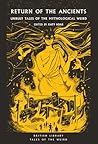
“Another alternative inspiration or source for Vaunus is Silvanus. Like Faunus, he was a rustic Roman divinity, associated primarily with the forests, but one who had no official temple in Rome. However, he became a popular deity in the northern Roman provinces, including Britain, where he seems to have been more popular than Faunus. While the latter is known only through the Thetford hoard, multiple altars were dedicated to Silvanus across Britain. He was often equated with Roman gods, such as Mars at Housesteads on Hadrian’s Wall, as well as local deities such as Vinotonus on Scargill Moor in County Durham. Intriguingly, at Lydney in Gloucestershire, he is equated with Nodens, the Celtic god that inspired some of the weird works of Arthur Machen.”
― Return of the Ancients: Unruly Tales of the Mythological Weird
― Return of the Ancients: Unruly Tales of the Mythological Weird
“She answered that her name was Dionea; for the rest, she was an Innocentina, that is to say, a foundling; then she began to sing:— “Flower of the myrtle! My father is the starry sky: The mother that made me is the sea.”
― Return of the Ancients: Unruly Tales of the Mythological Weird
― Return of the Ancients: Unruly Tales of the Mythological Weird
“Then I heard the song. It was high and shrill, and as I strained to catch the syllables I recognized phrases in Latin—“Procul oh! procul este profani!”
― Return of the Ancients: Unruly Tales of the Mythological Weird
― Return of the Ancients: Unruly Tales of the Mythological Weird
“What ‘they’—who are ‘they’?” “They—those who worship the Great Mother—she who is called Cybele. Those who get into contact with her; who know how to sacrifice nature, and by sacrifice win strength, and self-control. This faith, too, knows the new truth—‘He who would save his life must lose it’—aye, and”—here he muttered something which I could not hear. I did not then guess what he meant. Classics are so taught in this country that few boys realize the essential significance of the classical myths. Things like the story of Leda, or of the Bull, horrors like the tale of Io have not the reality of our native fairy stories. Why, boys can read about Marsyas and still admire Apollo.”
― Return of the Ancients: Unruly Tales of the Mythological Weird
― Return of the Ancients: Unruly Tales of the Mythological Weird
“Whether the oddments of superstition my mother told us when we were young were believed by her or were meant as a kind of amusement for us, like the Easter Bunny, Moss Babies and the Tooth Fairy, I am undecided; possibly something of both. She wouldn’t wear green (but that was due to family history: Great-Aunt Emma had an emerald green dress and her fiancé had perished at sea); Christmas decorations had to be totally removed by Twelfth Night as witches could get into the least scrap of tinsel or coloured paper. The snippets of lore were varied: never bring into the house bones, peacock feathers or may blossom; never mix red and white flowers in a vase (death ensued if you did); don’t look at the moon through glass; don’t put shoes on a table (surely just hygienic advice); sing before morning and you’ll cry before night; if you meet a piebald horse, make a cross in the dust on your shoe.”
― Circles of Stone: Weird Tales of Pagan Sites and Ancient Rites
― Circles of Stone: Weird Tales of Pagan Sites and Ancient Rites
“Another lad, returning from working in the vineyards near Marseilles, was walking up to his native village, high in our hills, one moonlight night. He heard sounds of fiddle and fife from a roadside barn, and saw yellow light from its chinks; and then entering, he found many women dancing, old and young, and among them his affianced. He tried to snatch her round the waist for a waltz (they play Mme Angot at our rustic balls), but the girl was unclutchable, and whispered, “Go; for these are witches, who will kill thee; and I am a witch also. Alas! I shall go to hell when I die.”
― Return of the Ancients: Unruly Tales of the Mythological Weird
― Return of the Ancients: Unruly Tales of the Mythological Weird
“What he really wanted was magic. And I have often wondered whether official Christianity, especially in this country, is not too hard on those who need magic. No doubt their claim is difficult to satisfy: but ought we not boldly to admit the fact that many people do not belong, religiously, to our period at all? Just as some are medieval, others Renascence, others Puritan—so some are primitive, and can understand nothing but the swift cruelty of the knife, or the harsh discipline of the blood-stained stone.”
― Return of the Ancients: Unruly Tales of the Mythological Weird
― Return of the Ancients: Unruly Tales of the Mythological Weird
“Alas! dear Donna Evelina, I have discovered, I fear, that there is nothing to discover; that Apollo was never in Styria; that Chaucer, when he called the Queen of the Fairies Proserpine, meant nothing more than an eighteenth century poet when he called Dolly or Betty Cynthia or Amaryllis; that the lady who damned poor Tannhäuser was not Venus, but a mere little Suabian mountain sprite; in fact, that poetry is only the invention of poets, and that that rogue, Heinrich Heine, is entirely responsible for the existence of Dieux en Exil…”
― Return of the Ancients: Unruly Tales of the Mythological Weird
― Return of the Ancients: Unruly Tales of the Mythological Weird
“Tiamat’s description in Enuma Elish is quite vague, and describes her both as woman and as a body of water, and at one point she is also said to have a tail. She has been associated with images of dragons, but these connections are dubious and there is no extant Mesopotamian imagery that reflects her this way.”
― Return of the Ancients: Unruly Tales of the Mythological Weird
― Return of the Ancients: Unruly Tales of the Mythological Weird
“The first lines of “The Ruin”, an Old English poem of the tenth century CE, describe old stones as “Wrætlic”. Usually translated as “wondrous”, Peter Ackroyd has read the line as “wraith-like”: “wraith-like is this native stone”. While the poem itself discusses the masonry of a crumbling Roman town, the phrase itself is certainly apt for thinking about the megalithic monuments that cover the British Isles. These native stones—stone circles, stone rows, standing stones (or menhirs), and dolmens—are indeed wraith-like, spectral, haunted. Standing for thousands of years within the landscape, their physical presence is evocative but their original purpose is tantalisingly vague. With no written records to inform us as to how and why they were initially built, they become a nexus for stories.”
― Circles of Stone: Weird Tales of Pagan Sites and Ancient Rites
― Circles of Stone: Weird Tales of Pagan Sites and Ancient Rites
“A fragment of papyrus from Egypt contains lines from a Mithraic initiation script, and from that, and iconography, it seems that initiation was the most important ritual in the Mithraeum. New initiates were stripped, blindfolded and bound, and then knelt before the highest initiate, the Father, who pointed a weapon at the initiate’s head. There were seven levels of initiation: Raven, Bridegroom, Soldier, Lion, Persian, Sun-Runner and, finally, Father.”
― Return of the Ancients: Unruly Tales of the Mythological Weird
― Return of the Ancients: Unruly Tales of the Mythological Weird
“Tanit’s roles are unclear, but she may be both celestial, connected with the moon, and chthonic (her cult was practised in caves in some Punic sites in Spain). She may also have been connected to sailors and to the maritime world. Her iconographical attributes include dolphins, fish, pomegranates, an open hand, and doves. She is often represented symbolically through the “sign of Tanit”, which may be a schematic rendering of the goddess with her arms raised, and is found on stela, coins, figurines, and in many other locations, and it increases in frequency as her popularity as a goddess rises from the fifth century BCE onwards.”
― Return of the Ancients: Unruly Tales of the Mythological Weird
― Return of the Ancients: Unruly Tales of the Mythological Weird
“Ahés (more often Dahut or Dahud) was the daughter of Gradlon, the semi-legendary fifth century “king” of Cornouaille in Brittany. In mythology, he is the king of the sunken land of Ys, whose capital city is Ker-Is. Dahut is warned against her wicked and lustful ways and wild pagan revelries by St Winwaloe but ultimately the city is punished and a storm floods Ys. Gradlon is warned of the imminent disaster and attempts to flee on horseback with Dahut, but she hinders his escape, and she either falls from the horse or is thrown from a cliff by her father, who then flees to safety.”
― Return of the Ancients: Unruly Tales of the Mythological Weird
― Return of the Ancients: Unruly Tales of the Mythological Weird
“Hannay was talking about his Cotswold house, which was on the Fosse Way, and saying that it always puzzled him how so elaborate a civilization as Roman Britain could have been destroyed utterly and left no mark on the national history beyond a few roads and ruins and place-names. Peckwether, the historian, demurred, and had a good deal to say about how much the Roman tradition was woven into the Saxon culture. “Rome only sleeps,” he said; “she never dies.”
― Return of the Ancients: Unruly Tales of the Mythological Weird
― Return of the Ancients: Unruly Tales of the Mythological Weird
“She also notes that the name Ahés may be related to a legendary Breton figure known as La Vieille Ahés, who goes back to at least the twelfth century and is represented as an ancient road-maker who believes herself to be immortal, and his parallels with the Welsh Elen Lluyddawc, patroness of Roman roads, and the Irish Cailleach Bheara (“the Hag of Baera”).”
― Return of the Ancients: Unruly Tales of the Mythological Weird
― Return of the Ancients: Unruly Tales of the Mythological Weird
“And yet,” said Morton, “one may believe that they are the same people still; mixed, no doubt, with Goths and Lombards, but mainly derived from the old stock that worshipped Tinia here before the days of Romulus.” “I like the idea,” said Bryant, “and, according to you, they still pay him a divided homage, though he has many rivals in Catholic hagiology. But I like to think that Chiarina’s ancestors followed Lars Porsena of Clusium to the siege of Rome—”
― Return of the Ancients: Unruly Tales of the Mythological Weird
― Return of the Ancients: Unruly Tales of the Mythological Weird
“Mithras is most famous as a Roman soldier god around whom a mystery cult developed, but his roots are more ancient, although there is no absolute consensus on his origins. The first reference of his name comes from the second millennium BCE, on a clay tablet from Boghazköy (Anatolia), the ancient capital of the Hittite Empire, in which Mitra is invoked as guarantor of a treaty between the Hittites and the Mitanians. He is best known from Persia, where in the Yast (hymn) to Mithra in the Avesta (Persian sacred texts) from the fourth and fifth centuries BCE, he is equated with the sun.”
― Return of the Ancients: Unruly Tales of the Mythological Weird
― Return of the Ancients: Unruly Tales of the Mythological Weird
“as Claude Lévi-Strauss once said “Les contes sont les mythes en miniature” (“folktales are myths in miniature”). Lévi-Strauss was talking about the structure and form of folktales and myths, but, as Elliot Oring states, the two can also be distinguished by the attitude of communities towards them, with myth considered to be a form of sacred truth within a larger ideological system and a setting outside of historical time.”
― Return of the Ancients: Unruly Tales of the Mythological Weird
― Return of the Ancients: Unruly Tales of the Mythological Weird
“The story of his head and the meaning of his name was thought to be connected to the tradition of keeping ravens at the Tower to guard the nation; however, research has shown that the tradition of keeping ravens at the tower cannot be traced before 1895. There is some speculation that Bendigeidfran is related or connected to Belatucadros, a Celtic god worshipped by the Britons in northern Britain.”
― Return of the Ancients: Unruly Tales of the Mythological Weird
― Return of the Ancients: Unruly Tales of the Mythological Weird
“The owl also has strong symbolic connections with Tezcatlipoca, one of the most important gods of the Toltecs and the Aztecs, and a god of the night who can roam freely between this world and the world of the dead. Tezcatlipoca’s name means “smoking mirror” or “dark mirror lord” which may relate to the obsidian mirrors used in Aztec necromancy. He is associated with the horned owl in the Mesoamerican calendar; Tezcatlipoca provides the souls of those born on the tenth day to the owl to carry to the afterlife.”
― Return of the Ancients: Unruly Tales of the Mythological Weird
― Return of the Ancients: Unruly Tales of the Mythological Weird