
Discover new books on Goodreads
See if your friends have read any of Mikiso Hane's books
Mikiso Hane’s Followers (12)


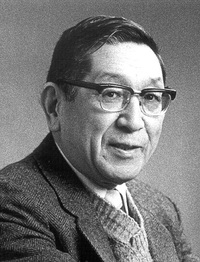
Mikiso Hane
Born
in Hollister, California, The United States
January 16, 1922
Died
December 08, 2003
Genre


|
Breve historia de Japón
by
—
published
2000
—
13 editions
|
|

|
Reflections on the Way to the Gallows: Rebel Women in Prewar Japan
—
published
1988
—
9 editions
|
|

|
Premodern Japan: A Historical Survey
—
published
1990
—
15 editions
|
|

|
Peasants, Rebels and Outcastes
—
published
1982
—
12 editions
|
|

|
Modern Japan: A Historical Survey
—
published
1970
—
29 editions
|
|

|
Eastern Phoenix: Japan Since 1945
—
published
1996
—
5 editions
|
|

|
Japan: A Short History (Short Histories) by Mikiso Hane (2000-09-28)
|
|
|
|
Emperor Hirohito and His Chief Aide De Camp the Honjo Diary, 1933-36
by |
|
|
|
Studies in Intellectual History Tokugawa
|
|
|
|
Japan: A culture in transition
|
|
“As for the significance of my nihilism…in a word, it is the foundation of my thoughts. The goal of my activities is the destruction of all living things. I feel boundless anger against parental authority, which crushed me under the high-sounding name of parental love, and against state and social authority, which abused me in the name of universal love.
Having observed the social reality that all living things on earth are incessantly engaged in a struggle for survival, that they kill each other to survive, I concluded that if there is an absolute, universal low on earth, it is the reality that the strong eat the weak. This, I believe, is the law and truth of the universe. Now that I have seen the truth about the struggle for survival and the fact that the strong win and the weak lose, I cannot join the ranks of the idealists and adopt an optimistic mode of thinking which dreams of the construction of a society that is without authority and control. As long as all living things do not disappear from the earth, the power relations based on this principle [of the strong crushing the weak] will persist. Because the wielders of power continue to defend their authority in the usual manner and oppress the weak—and because my past existence has been a story of oppression by all sources of authority—I decided to deny the rights of all authority, rebel against them, and stake not only my own life but that of all humanity in this endeavor.
For this reason I planned eventually to throw a bomb and accept the termination of my life. I did not care whether this act would touch off a revolution or not. I am perfectly content to satisfy my own desires. I do not wish to help create a new society based on a new authority in a different form.”
― Reflections on the Way to the Gallows: Rebel Women in Prewar Japan
Having observed the social reality that all living things on earth are incessantly engaged in a struggle for survival, that they kill each other to survive, I concluded that if there is an absolute, universal low on earth, it is the reality that the strong eat the weak. This, I believe, is the law and truth of the universe. Now that I have seen the truth about the struggle for survival and the fact that the strong win and the weak lose, I cannot join the ranks of the idealists and adopt an optimistic mode of thinking which dreams of the construction of a society that is without authority and control. As long as all living things do not disappear from the earth, the power relations based on this principle [of the strong crushing the weak] will persist. Because the wielders of power continue to defend their authority in the usual manner and oppress the weak—and because my past existence has been a story of oppression by all sources of authority—I decided to deny the rights of all authority, rebel against them, and stake not only my own life but that of all humanity in this endeavor.
For this reason I planned eventually to throw a bomb and accept the termination of my life. I did not care whether this act would touch off a revolution or not. I am perfectly content to satisfy my own desires. I do not wish to help create a new society based on a new authority in a different form.”
― Reflections on the Way to the Gallows: Rebel Women in Prewar Japan
“Los críticos ven en los poemas la expresión de los sentimientos naturales humanos que prevalecían en el país antes de la incorporación de los ideales confucianos de corrección y moderación.”
― Breve historia de Japón
― Breve historia de Japón
“Haiku – a seventeen syllable poem – also emerged as a popular form of poetry among the townspeople. Its composition and appreciation were not limited to the townspeople. The greatest haiku poet, Matsuo Bashō (1644–94), a member of the samurai class, wandered around the countryside as a Buddhist monk.”
― Japan: A Short History
― Japan: A Short History
Topics Mentioning This Author
| topics | posts | views | last activity | |
|---|---|---|---|---|
| Challenge: 50 Books: Shannon's 50 Books Challenge - COMPLETED! | 79 | 280 | Jan 03, 2010 09:52AM | |
The History Book ...:
 THREE - 2015 - Readathon Four Date: August 22nd, 2015 - 4PM - 8PM - Check-In - CHECKPOINT THREE - THIRD CHECK IN
|
73 | 37 | Aug 22, 2015 11:01PM | |
|
The History Book ...:
*
BOOKS READ IN 2015/2016 READATHONS
|
12 | 133 | Mar 27, 2016 11:19AM | |
|
The History Book ...:
SEVEN - CHECK OUT HERE - 2015 - Readathon Four - Date: August 22, 2015 - 8 AM ON AUGUST 23RD - FINAL CHECKOUT - THIS IS CHECKPOINT SEVEN - WHICH IS CHECKOUT - LAST STOP - MANDATORY FOR TOTALS - FINAL TALLIES - MANDATORY CHECKPOINT - ONLY CHECK OUT THREAD
|
66 | 67 | Mar 28, 2016 08:51AM | |
| Catching up on Cl...: Aubrey's Personal Challenges - Classics Beyond the Pale | 53 | 232 | Sep 04, 2021 06:45PM | |
| The Challenge Fac...: Denise's Backyard Bird Challenge | 16 | 17 | Dec 10, 2023 02:19AM |