
Discover new books on Goodreads
See if your friends have read any of Gerhard O. Forde's books
Gerhard O. Forde’s Followers (18)


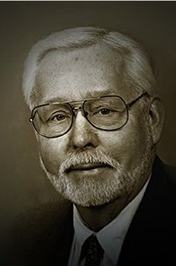
Gerhard O. Forde
Born
in The United States
September 10, 1927
Died
August 09, 2005
More books by Gerhard O. Forde…


“As sinners we are like addicts - addicted to ourselves and our own projects. The theology of glory simply seeks to give those projects eternal legitimacy. The remedy for the theology of glory, therefore, cannot be encouragement and positive thinking, but rather the end of the addictive desire. Luther says it directly: "The remedy for curing desire does not lie in satisfying it, but in extinguishing it." So we are back to the cross, the radical intervention, end of the life of the old and the beginning of the new.
Since the theology of glory is like addiction and not abstract doctrine, it is a temptation over which we have no control in and of ourselves, and from which we must be saved. As with the addict, mere exhortation and optimistic encouragement will do no good. It may be intended to build up character and self-esteem, but when the addict realizes the impossibility of quitting, self-esteem degenerates all the more. The alcoholic will only take to drinking in secret, trying to put on the facade of sobriety. As theologians of glory we do much the same. We put on a facade of religious propriety and piety and try to hide or explain away or coddle our sins....
As with the addict there has to be an intervention, an act from without. In treatment of alcoholics some would speak of the necessity of 'bottoming out,' reaching the absolute bottom where one can no longer escape the need for help. Then it is finally evident that the desire can never be satisfied, but must be extinguished. In matters of faith, the preaching of the cross is analogous to that intervention. It is an act of God, entirely from without. It does not come to feed the religious desires of the Old Adam and Eve but to extinguish them. They are crucified with Christ to be made new.”
― On Being a Theologian of the Cross: Reflections on Luther's Heidelberg Disputation, 1518
Since the theology of glory is like addiction and not abstract doctrine, it is a temptation over which we have no control in and of ourselves, and from which we must be saved. As with the addict, mere exhortation and optimistic encouragement will do no good. It may be intended to build up character and self-esteem, but when the addict realizes the impossibility of quitting, self-esteem degenerates all the more. The alcoholic will only take to drinking in secret, trying to put on the facade of sobriety. As theologians of glory we do much the same. We put on a facade of religious propriety and piety and try to hide or explain away or coddle our sins....
As with the addict there has to be an intervention, an act from without. In treatment of alcoholics some would speak of the necessity of 'bottoming out,' reaching the absolute bottom where one can no longer escape the need for help. Then it is finally evident that the desire can never be satisfied, but must be extinguished. In matters of faith, the preaching of the cross is analogous to that intervention. It is an act of God, entirely from without. It does not come to feed the religious desires of the Old Adam and Eve but to extinguish them. They are crucified with Christ to be made new.”
― On Being a Theologian of the Cross: Reflections on Luther's Heidelberg Disputation, 1518
“What is necessary, Luther insisted, was an entirely different mode of thinking, an ad modum scripturae (in the manner of scripture), a fundamental change of the story. As early as his Lectures on Romans he remaks that the biblical story of the exodus had been interpreted (tropologically) to mean the exodus from vice to virtue. Now, however, it must be interpreted as the exodus from virtue to the grace of God! Grace must be the story. It is grace that determines the relationship between God, the creature, creation, and its destiny. Grace is what God is all about. Grace is what God is up to. And a graced creation is what God aims to arrive at.”
― A More Radical Gospel: Essays on Eschatology, Authority, Atonement, and Ecumenism
― A More Radical Gospel: Essays on Eschatology, Authority, Atonement, and Ecumenism
“bitterest pills for modern man to swallow: the problem of divine sovereignty as it is expressed particularly in the doctrine of predestination.”
― Where God Meets Man: Luther's Down-to-Earth Approach to the Gospel
― Where God Meets Man: Luther's Down-to-Earth Approach to the Gospel